

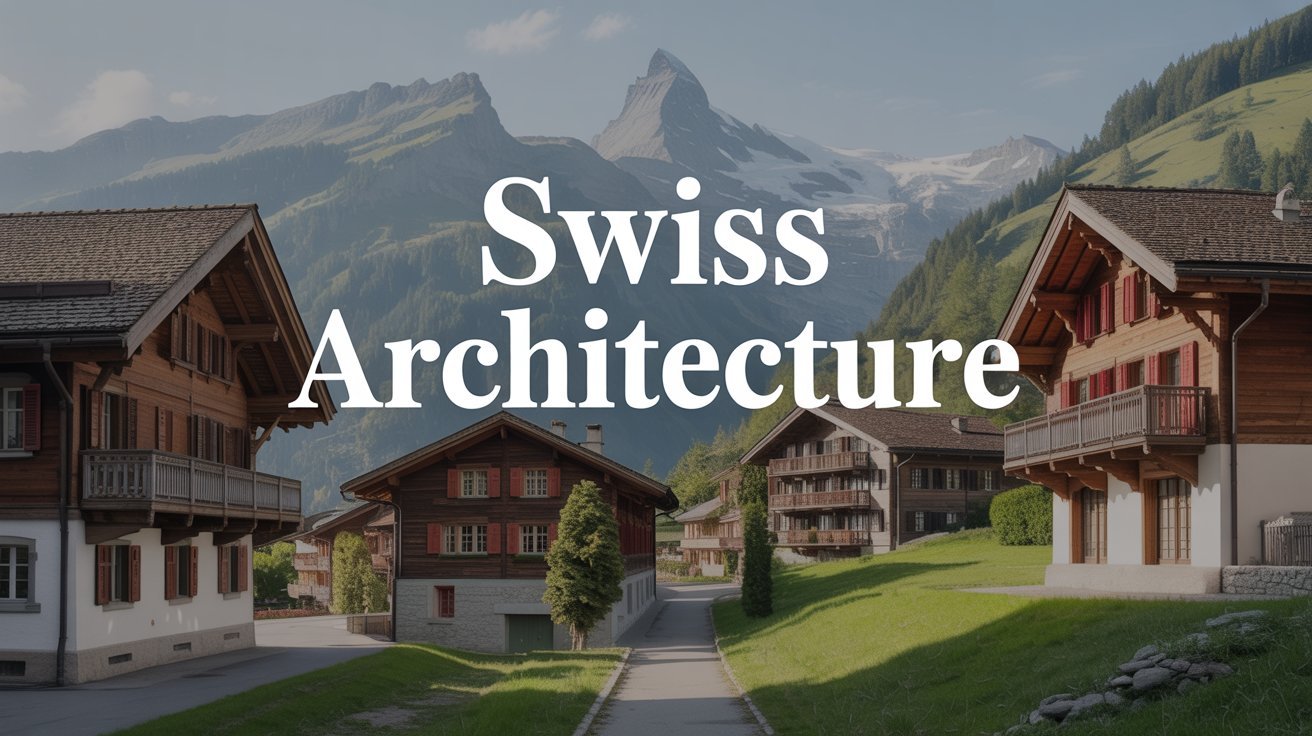
I want to take you on a tour through Swiss architecture. You’ll see how this small Alpine nation created buildings that inspire the world.
Swiss buildings are famous for three things. Precision in every detail. Smart use of natural resources. Beauty that lasts for centuries.
It shows us how to build with nature, not against it. Swiss architects think about the environment first. They use local materials. They make buildings that save energy.
In this guide, you’ll learn about traditional chalets and modern glass towers. You’ll meet world-famous architects. You’ll see how Swiss ideas changed building design everywhere.
Swiss architects face unique challenges. Building on steep slopes. Working with extreme weather. Creating structures that last centuries. These challenges forced innovation.
From mountain villages to city centers, Swiss architecture tells a story. It’s about respecting the land while creating something new.
A Glimpse into Switzerland’s Architectural Landscape
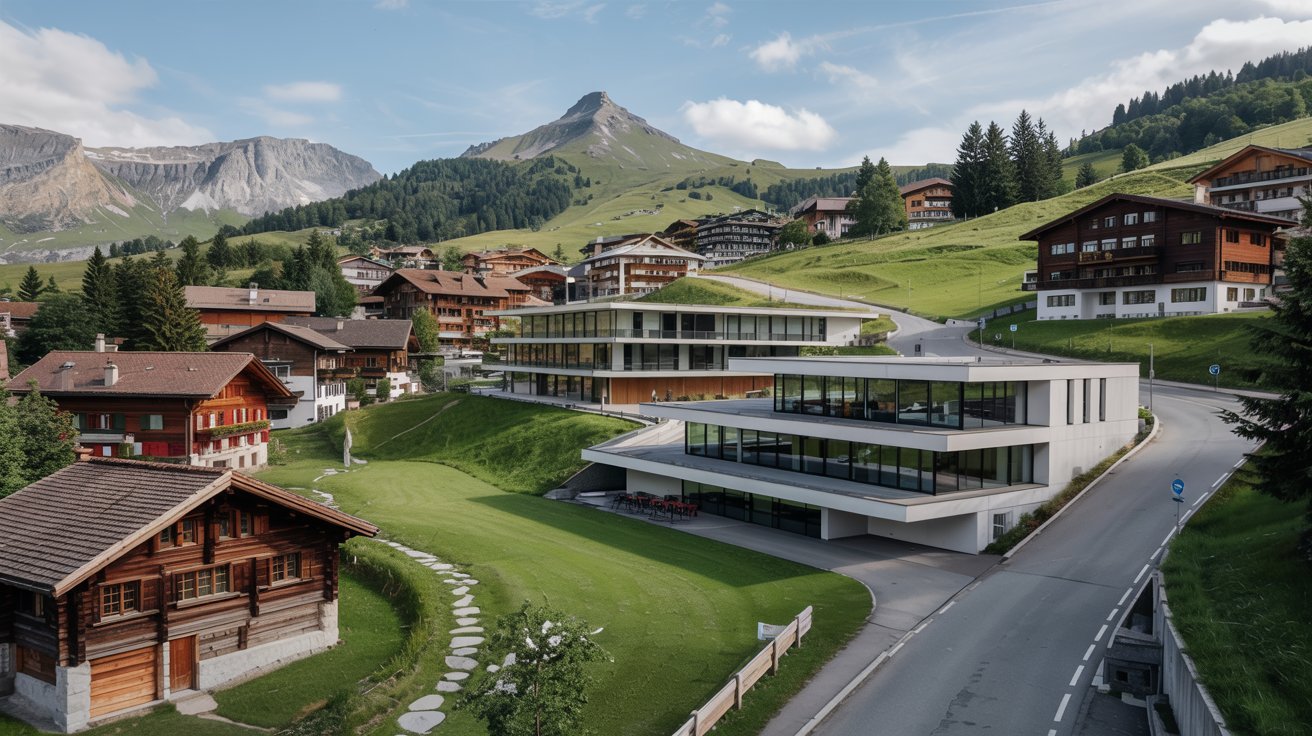
Switzerland’s landscape shapes everything. The Alps create dramatic backdrops. Valleys provide shelter. Cities are squeezed between mountains and lakes.
Climate drives design choices. Heavy snow means steep roofs. Long winters require thick walls. Bright summers call for large windows and deep overhangs.
Materials come from nearby. Stone from local quarries. Wood from Alpine forests. Modern buildings add steel and glass, but they still feel connected to the land.
Three cultures meet in Switzerland. German influence in the north brings sturdy, practical buildings. French style in the West adds refinement. Italian flair in the south creates warmth and color.
Each region has its personality. But they all share something important. Buildings must work with nature, not fight it.
Traditional Swiss Architectural Styles
Chalet Style
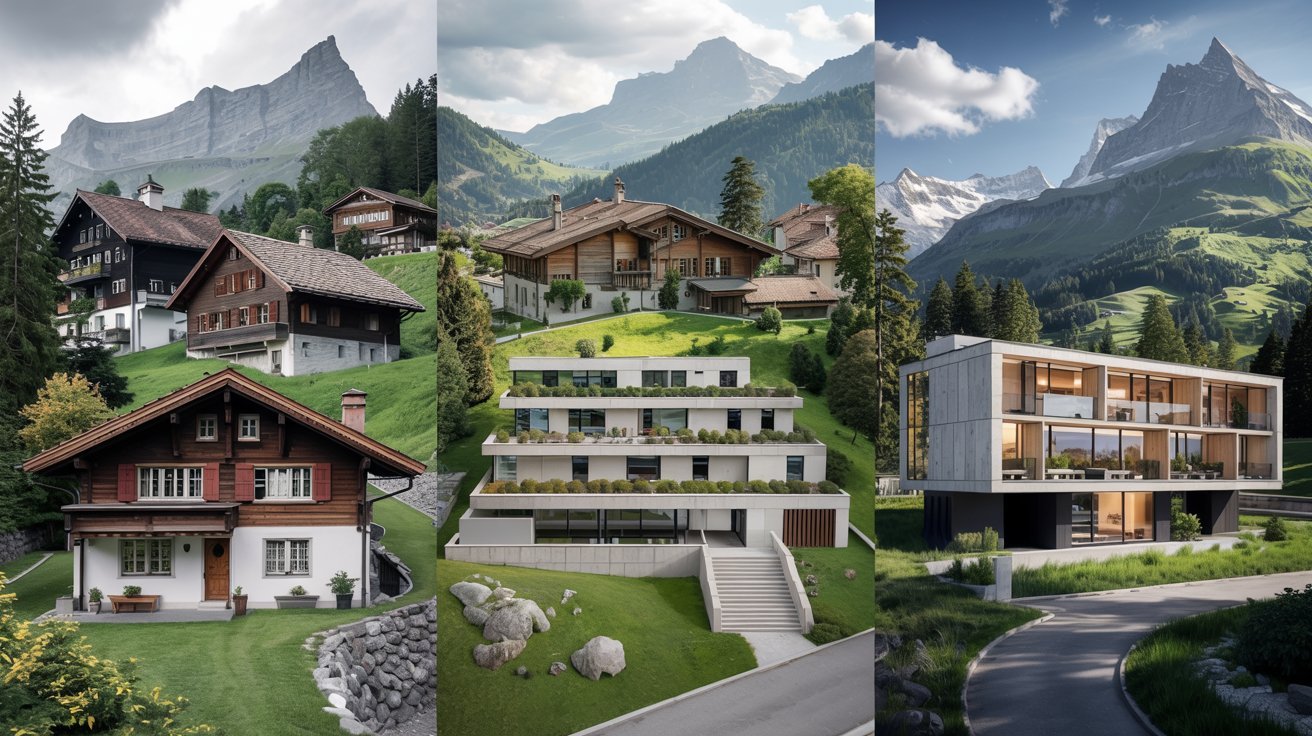
The classic Swiss chalet is more than pretty. It’s a smart solution to mountain living.
Wide eaves protect walls from snow. Steep roofs shed water quickly. Thick wooden walls keep heat inside. Everything has a purpose.
Ground floors were often stone. Upper floors used wood. Animals lived downstairs in winter. Families stayed warm upstairs. Heat from animals helped warm the whole building.
Traditional chalets face south. This catches maximum sunlight. Windows are smaller on the north side. Larger on the south. Simple physics makes homes comfortable.
Farmhouses & Rural Buildings
Swiss farmhouses served many purposes. Home, barn, and storage all in one building.
Stone foundations resist moisture. Wooden upper sections are lighter and warmer. Roofs extend far beyond walls. This creates covered work areas.
Local materials defined each region. Granite in the east. Sandstone in the center. Limestone in the west. Each stone type created a different look.
Rural buildings teach us about efficiency. Every space had multiple uses. Nothing was wasted. Form followed function perfectly.
Medieval Influence
Medieval Switzerland was built for defense. Castles crown hilltops. City walls protect markets. Towers watch over valleys.
Old towns like Bern show careful planning. Streets follow natural terrain. Buildings cluster for protection. Public spaces bring communities together.
Medieval builders used what they had. Local stone. Nearby timber. Simple tools. But they created structures that still stand today.
Churches dominated skylines. They showed community pride. They provided gathering spaces. Their towers helped people navigate through towns.
The Evolution Through History
Renaissance & Baroque Periods
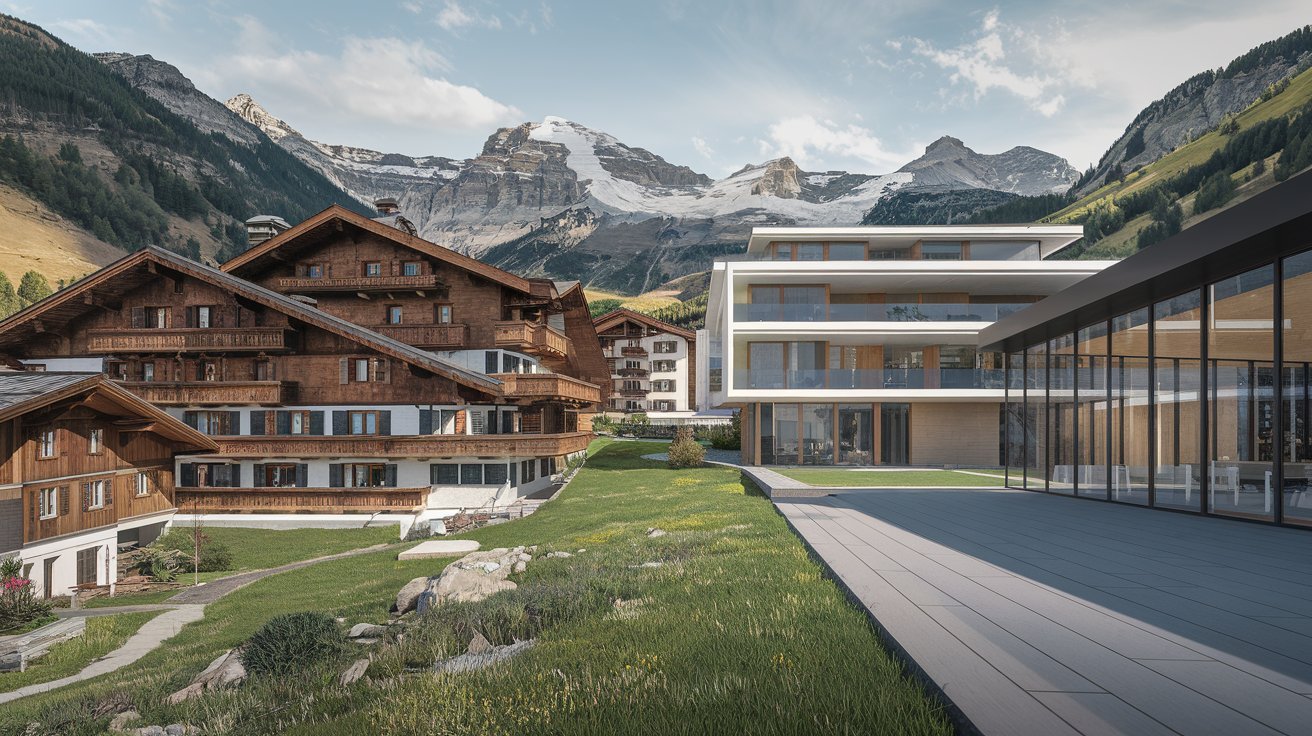
Italian influence crept north. Churches gained decorative details. Civic buildings showed off wealth. Classical proportions appeared in city centers.
But Swiss builders stayed practical. They added beauty without losing function. Ornament-enhanced structure rather than hiding it.
Baroque churches in cities like Lucerne show this balance. Rich decorations inside. Sturdy, simple exteriors. Beauty serves the community without showing off.
19th Century & Industrialization
Railways changed everything. New materials arrived easily. Steel and brick became common. Cities grew quickly.
Grand hotels served wealthy tourists. These buildings mixed Swiss tradition with international style. They put Switzerland on the world map.
Industrial buildings used new techniques. Larger spans. More windows. Factory design influenced homes and offices.
Urban planning became important. Cities needed sewers, water systems, and public buildings. Swiss precision helped manage this growth.
20th Century Movements
Modernism found fertile ground in Switzerland. Clean lines matched Swiss values. Function over decoration felt natural.
Le Corbusier, though born in Switzerland, worked internationally. His ideas about light, space, and efficiency influenced Swiss architects at home.
The Bauhaus movement connected with Swiss design thinking. Simple forms. Quality materials. Buildings designed for daily life.
Swiss architects adapted modern ideas to local conditions. They kept mountain traditions alive while embracing new possibilities.
Modern and Contemporary Swiss Architecture
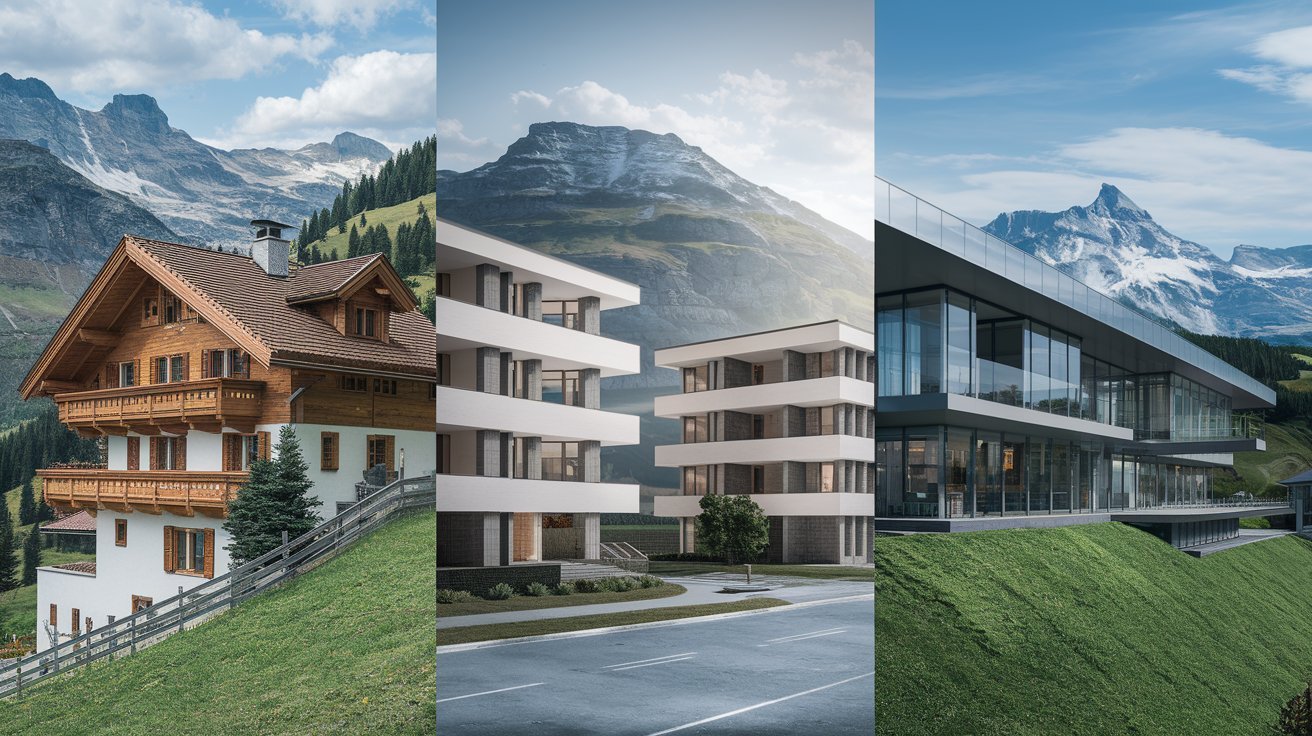
Minimalism and Clean Lines
Today’s Swiss architects are global stars. Peter Zumthor creates buildings that feel both ancient and modern. Herzog & de Meuron design museums and stadiums worldwide.
Their secret? They focus on materials and light. Concrete becomes warm. Steel feels natural. Glass connects inside and outside.
Swiss minimalism isn’t cold. It’s calm. Spaces feel peaceful. Details are perfect. Everything unnecessary disappears.
These architects study traditional Swiss buildings. They learn from chalet construction. They apply old wisdom to new challenges.
Sustainable & Green Architecture
Switzerland leads in green building. Energy efficiency is required by law. Solar panels cover roofs. Heat pumps warm homes.
Passive design reduces energy needs. Buildings face south for solar gain. Thick insulation keeps heat inside. Natural ventilation cools summers.
Old chalets inspire new eco-homes. Traditional techniques meet modern technology. Ancient wisdom guides future construction.
Swiss buildings often produce more energy than they use. Solar panels, geothermal systems, and smart design create energy-positive structures.
Integration with Nature
Swiss architects hide buildings in landscapes. Homes disappear into hillsides. Offices reflect the surrounding forests. Museums blend with mountain views.
Natural materials age gracefully. Wood weathers to gray. Stone develops patina. Buildings become part of their environment over time.
Large windows frame mountain views. Outdoor spaces extend living areas. The line between inside and outside blurs.
Water features cool summer air. Green roofs insulate and manage rainwater. Buildings work with natural systems.
Notable Swiss Architects and Projects
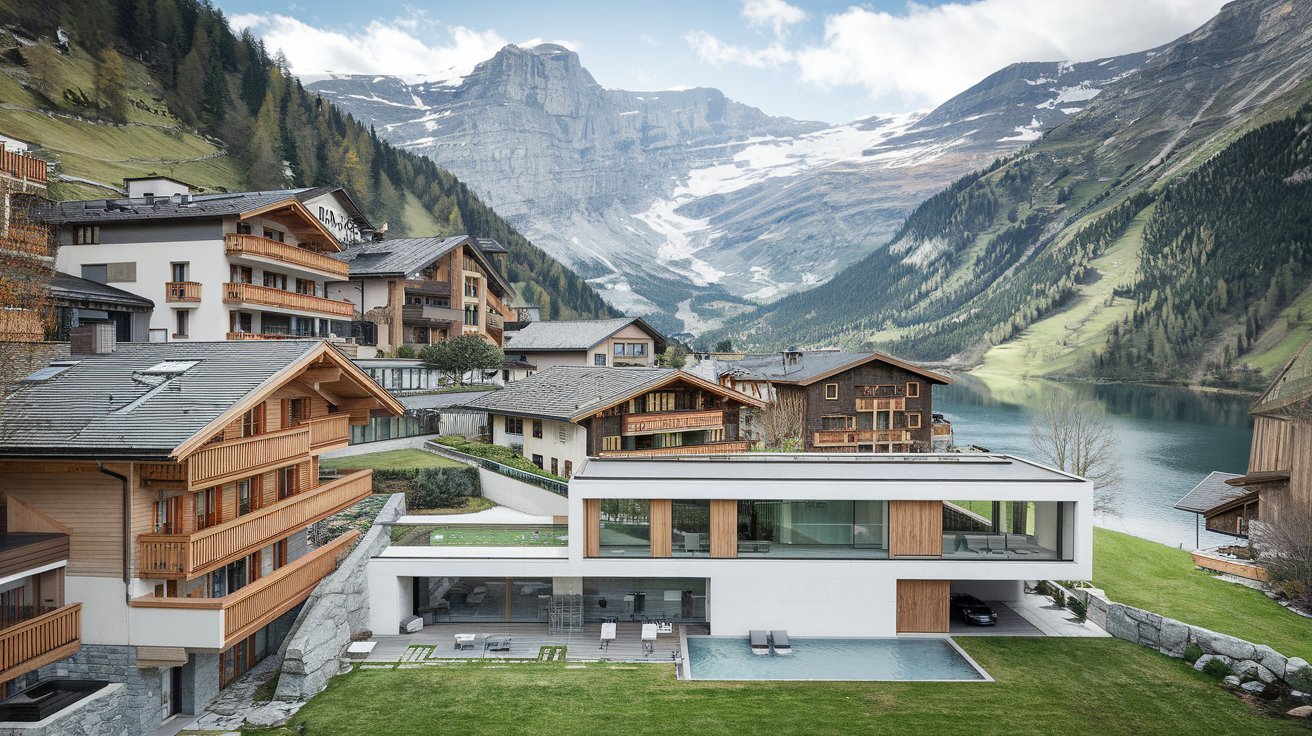
Peter Zumthor creates atmospheric spaces. His Therme Vals spa is carved into a mountainside. Visitors feel like they’re inside a natural spring.
Herzog & de Meuron designed London’s Tate Modern. They changed an old power station into a beloved museum. Their Basel office shows how Swiss precision works globally.
Mario Botta builds with simple shapes and strong materials. His Church of San Giovanni Battista uses local stone and dramatic lighting.
These architects prove Swiss design travels well. They win international competitions. They influence architecture schools. They show that Swiss values work everywhere.
Swiss firms design in Asia, America, and across Europe. They bring careful craftsmanship to global projects. Quality over quantity defines their approach.
Swiss Architecture’s Modern Influence
Swiss design changed global architecture. Minimalism started here. Sustainable building practices began in Alpine valleys.
International firms copy Swiss methods. Clean lines appear in offices worldwide. Green roofs spread from Switzerland to Singapore. Passive house standards become global requirements.
Swiss architects teach at top universities. Harvard, MIT, and Columbia invite Swiss professors. Students learn Swiss precision and environmental thinking.
ETH Zurich produces world-class architects. The school’s approach combines technical skill with creative vision. Graduates work on major projects globally.
Swiss building standards influence international codes. Energy efficiency requirements spread. Construction quality improves worldwide.
Tips for Tourists & Architecture Enthusiasts
- Visit Zurich for modern masterpieces and traditional buildings side by side.
- Explore Basel’s architecture, museums, and contemporary structures
- Walk through Bern’s medieval old town for historical context
- See Peter Zumthor’s Therme Vals for modern Alpine architecture
- Tour traditional chalets in mountain villages like Grindelwald
- Visit the Kunsthaus Zurich for Herzog & de Meuron’s latest addition
- Experience Mario Botta’s buildings in the Ticino region
- Check the ETH Zurich campus for cutting-edge student projects
- Ride mountain railways to see infrastructure integrated with the landscape
- Stay in converted historic buildings now serving as hotels
Conclusion
Swiss architecture proves that tradition and innovation work together beautifully. You’ve seen how mountain chalets inspired modern eco-homes. How medieval planning influences today’s cities.
Swiss builders respect their environment. They use local materials thoughtfully. They create buildings that last for generations. These lessons matter more than ever as we face climate challenges.
What makes Swiss architecture special? It’s honest about materials. It responds to the climate. It serves people’s real needs. It doesn’t show off or waste resources.
Swiss architects continue influencing global design. Their students teach worldwide. Their methods spread to new continents. Their values guide sustainable building everywhere.
Next time you see a green roof or a minimalist building, think of Switzerland. Small country, big influence. That’s the power of doing things right.
Frequently Asked Questions
What makes Swiss architecture unique?
Swiss architecture combines practical mountain-building traditions with modern innovation. It emphasizes using local materials, responding to the climate, and creating energy-efficient buildings that work with natural landscapes rather than against them.
Who are the most famous Swiss architects?
Peter Zumthor, Herzog & de Meuron, and Mario Botta are internationally recognized Swiss architects. They’ve designed major museums, spas, churches, and cultural buildings worldwide while maintaining Swiss principles of precision and material honesty.
How do traditional Swiss chalets influence modern architecture?
Modern architects study chalet features like steep roofs for snow loads, thick walls for insulation, and south-facing orientations for solar gain. These traditional techniques inspire today’s sustainable design practices and passive building strategies.
What cities have the best Swiss architecture to visit?
Zurich offers both historical and contemporary buildings. Basel features excellent museums and modern structures. Bern preserves medieval architecture beautifully. Each city shows different aspects of Swiss architectural evolution and regional influences.
How has Swiss architecture influenced global building practices?
Swiss architects pioneered minimalist design, sustainable building methods, and integration with natural environments. Their emphasis on energy efficiency, quality materials, and precise craftsmanship now influences building codes and architectural education worldwide.
