


Your small church deserves a beautiful worship space that won’t break the bank.
You’re dealing with old furniture, cramped spaces, and a tight budget. I’ve been there. Over the past years, I’ve helped 50+ small churches fix these exact problems.
This article gives you 11 simple design ideas that actually work for small churches. You’ll get real solutions you can afford, examples from churches just like yours, and mistakes that waste money. I’ll show you easy altar updates, better seating choices, and lighting that works.
You’ll also learn about cheap materials, simple tech setups, and how to make your small space feel bigger. I only suggest stuff that real churches can actually do. No fancy budgets or major construction needed.
When you’re done reading, you’ll know exactly how to make your worship space better and bring in more people.
Why Modern Design Helps Small Churches

Small churches have something big churches don’t – real connections between people. Good design makes these connections even stronger.
Here’s what I’ve seen work: Simple layouts make tiny spaces feel bigger. Smart choices help your money go further. Flexible setups grow with your church.
Old church design wastes space. Heavy pews you can’t move. Dark corners nobody uses. Furniture that serves one purpose. Modern design fixes all this.
Your people want to feel close to God and each other. Good design removes anything that gets in the way.
11 Simple Ideas for Small Modern Church Interiors
1. Keep Your Altar Simple

When space is tight, less is always better.
I tell churches to use a simple wooden table instead of a big, fancy altar. Pick natural wood like oak or walnut. It feels warm without taking over your space.
Best materials for simple altars:
- Reclaimed oak for character and warmth
- Walnut for rich, natural beauty
- Pine for budget-friendly options
- Bamboo for eco-conscious churches
Don’t pile on decorations. One cross or candle has more impact than lots of stuff.
Here’s a tip: Put your cross on the wall behind the altar. People will look up, and your ceiling will seem higher.
2. Get Chairs You Can Move
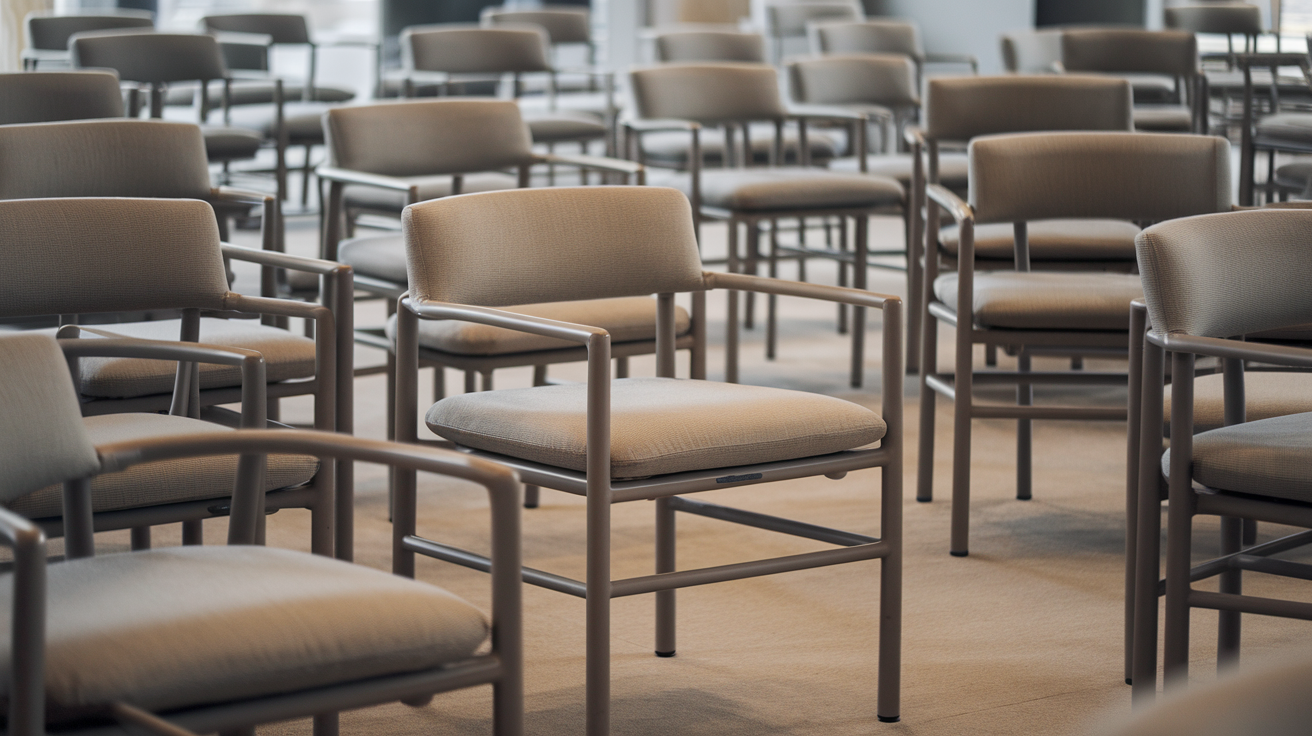
Fixed pews kill your flexibility.
Stackable chairs let you change things up. Wedding this Saturday? Push chairs to the sides. Youth group tonight? Make a circle.
Look for chairs that:
- Link together so rows stay straight
- Have storage under the seat for books
- Come with cushions in colors that work with everything
These chairs cost more at first. But you’ll save money because you won’t need different furniture for other events.
3. Let in More Natural Light
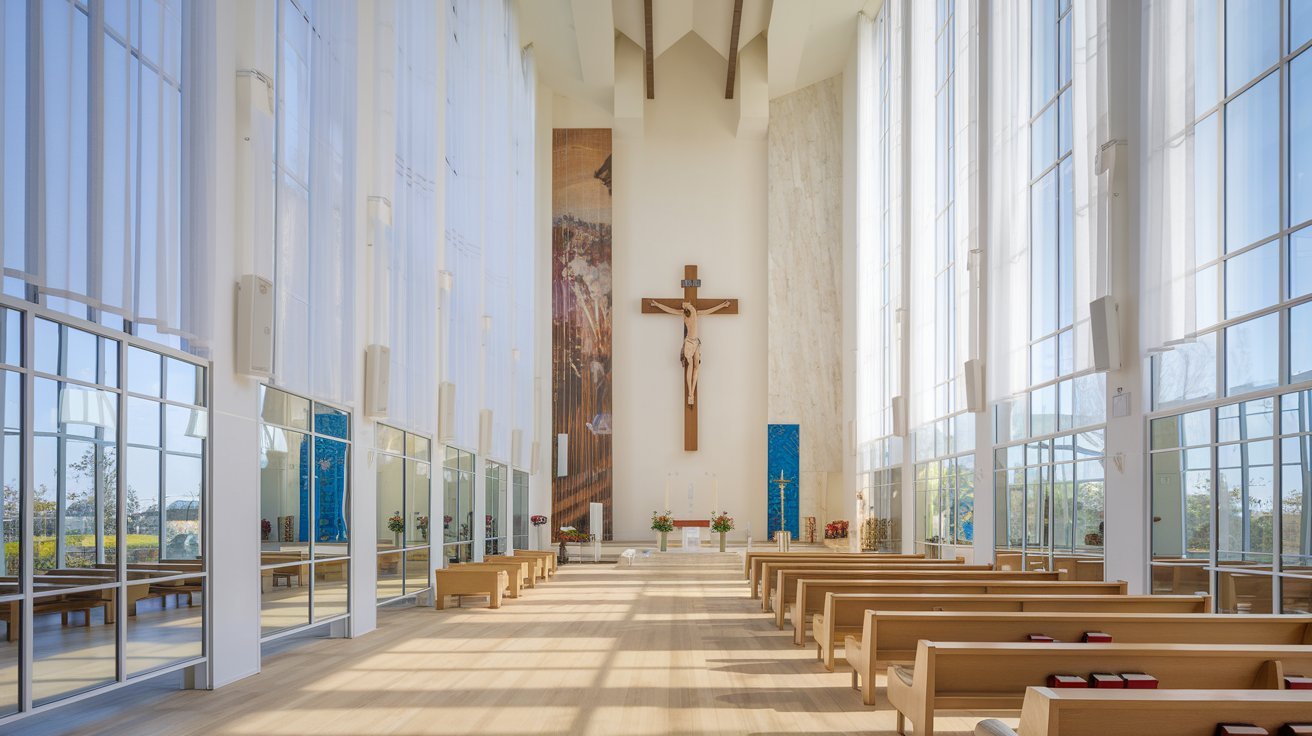
Natural light is free and makes everything better.
It opens up your space. It saves on electric bills. And it creates the calm feeling people need during worship. Start with what you have. Take down heavy curtains. Clean your windows really well. Cut back bushes that block light.
Quick wins for better natural light:
- Remove dark, heavy window treatments
- Clean windows inside and outside monthly
- Trim landscaping that blocks windows
- Add mirrors across from windows to bounce light
Don’t forget mirrors. One mirror in the right spot can make your light feel twice as bright.
4. Stick to Light, Natural Colors
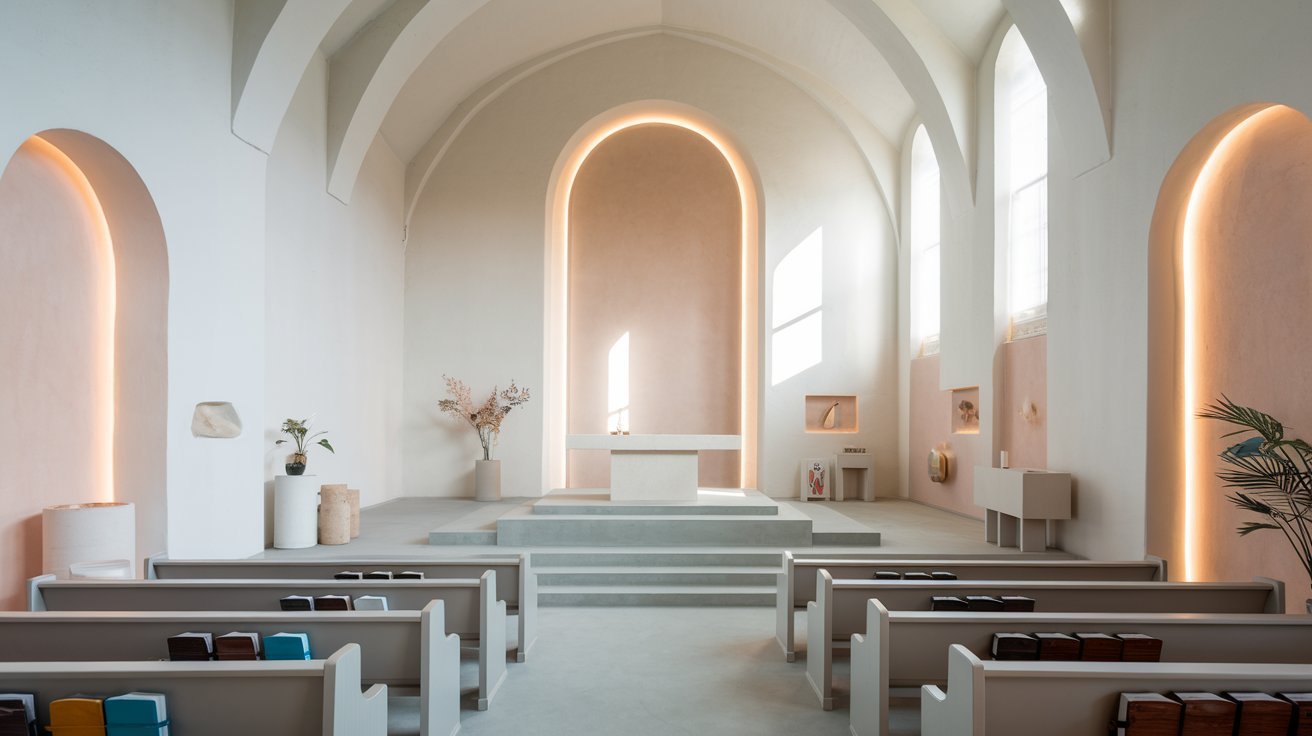
Colors change how people feel more than you might think.
I always start with warm white walls. They bounce light around and feel clean. Plus, they make small rooms look bigger.
Colors that work best in small churches:
- Warm white for walls and ceilings
- Soft beige for cozy, welcoming feel
- Light gray for modern, clean look
- Off-white for classic, timeless appeal
Stay away from dark colors on big walls. They soak up light and make spaces feel tiny. One darker accent wall can look good. Just don’t overdo it.
5. Choose Materials That Last
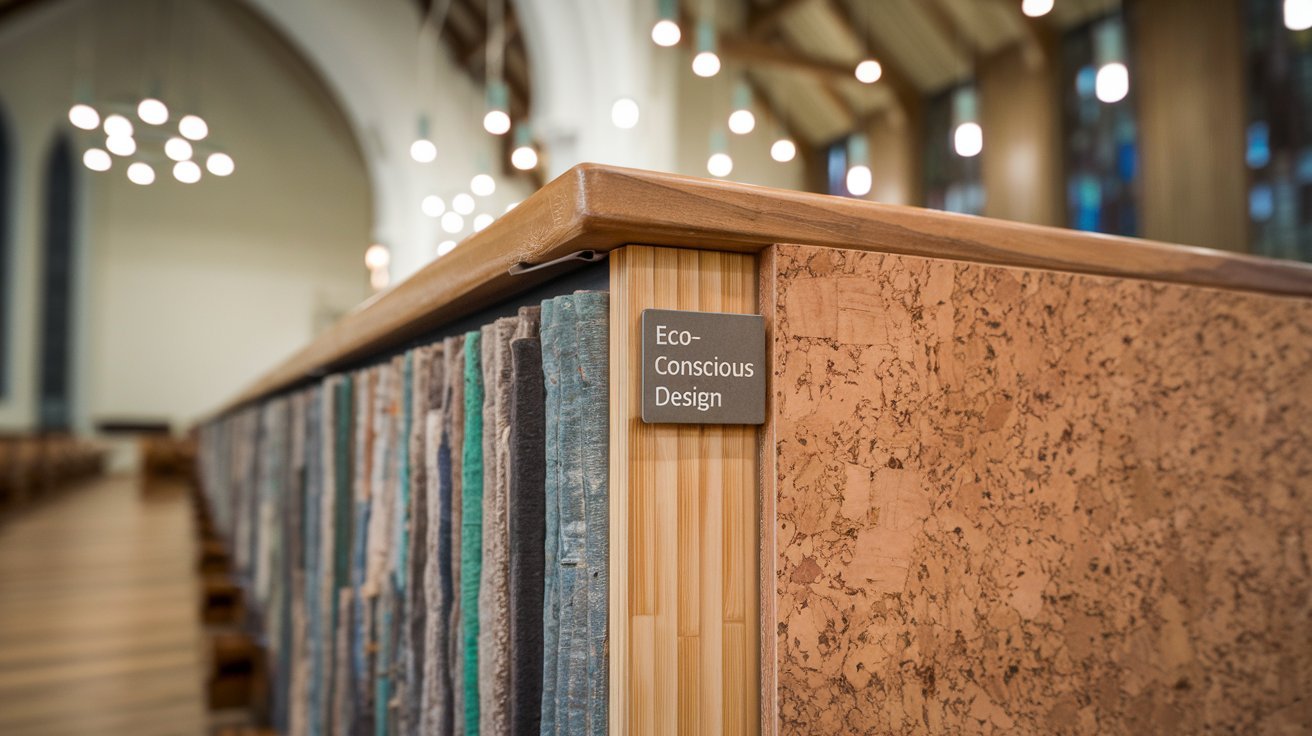
Your church cares about taking care of God’s creation.
Show this in your design choices. Old barn wood for accent walls tells a story. Bamboo floors grow fast and look great.
Good options that won’t hurt your budget:
- Cork floors feel good to stand on
- Paint with low chemicals keeps air clean
- LED lights use less power and last longer
- Recycled glass tiles for small accent areas
These often cost less than expensive traditional stuff. And they line up with Christian values about caring for the earth.
6. Add Technology That Doesn’t Show

Modern worship needs modern tools.
But tech shouldn’t take over your space. Speakers hidden in walls sound better than ones you can see. Screens mounted high show song words without blocking anyone’s view.
Essential tech for modern worship:
- Wireless microphone systems for clear sound
- Short-throw projectors that work in normal light
- Sound systems with different zone controls
- Simple lighting controls with preset scenes
Hide all the wires. Nothing ruins peaceful worship like cables everywhere.
7. Keep Religious Art Simple
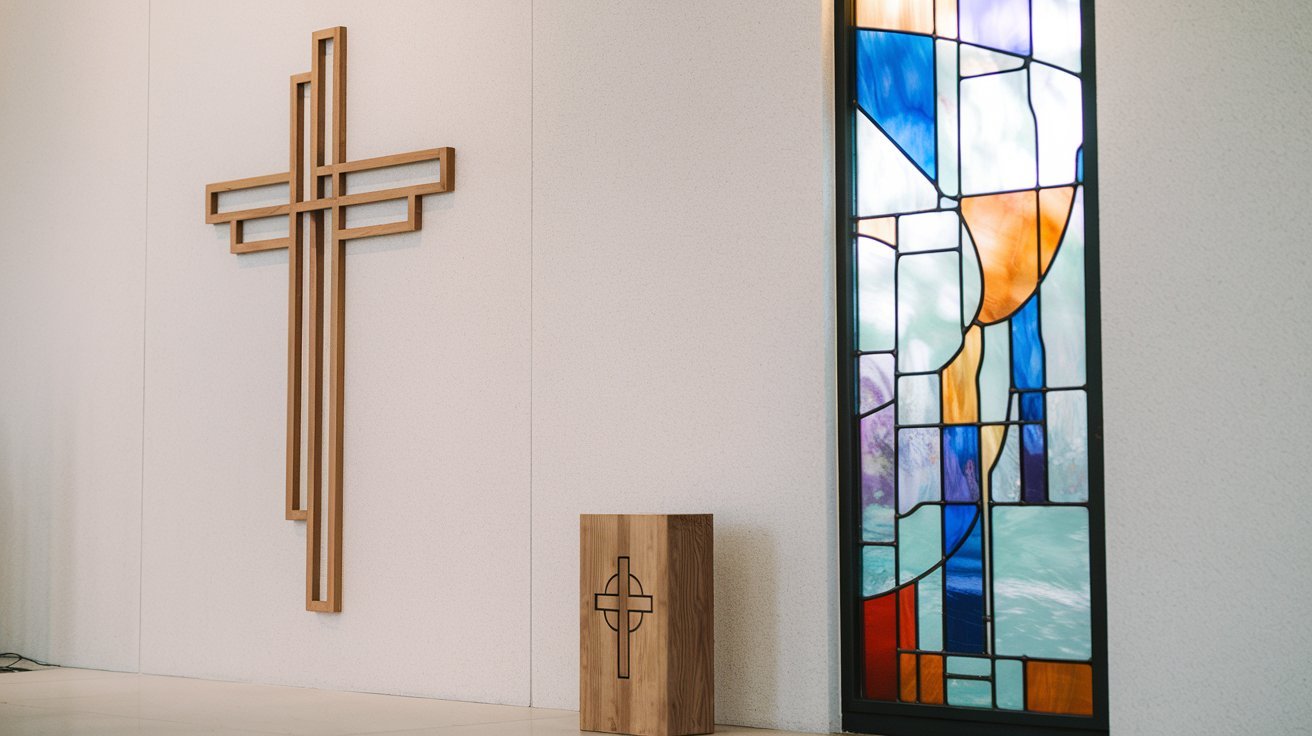
Sacred symbols don’t need to be fancy to be meaningful.
Simple crosses drawn with clean lines can touch hearts more than ornate carvings. Modern stained glass uses shapes and patterns instead of detailed pictures.
Ideas for modern religious art:
- Line-drawn crosses in metal or wood
- Abstract stained glass with geometric patterns
- Scripture verses in clean, readable fonts
- Natural materials like stone or driftwood crosses
Think about hiring local artists. This helps your community and gives you art that reflects your specific church family.
Simple, abstract religious art often connects better with younger people than traditional styles.
8. Make Your Front Area Work for Everything
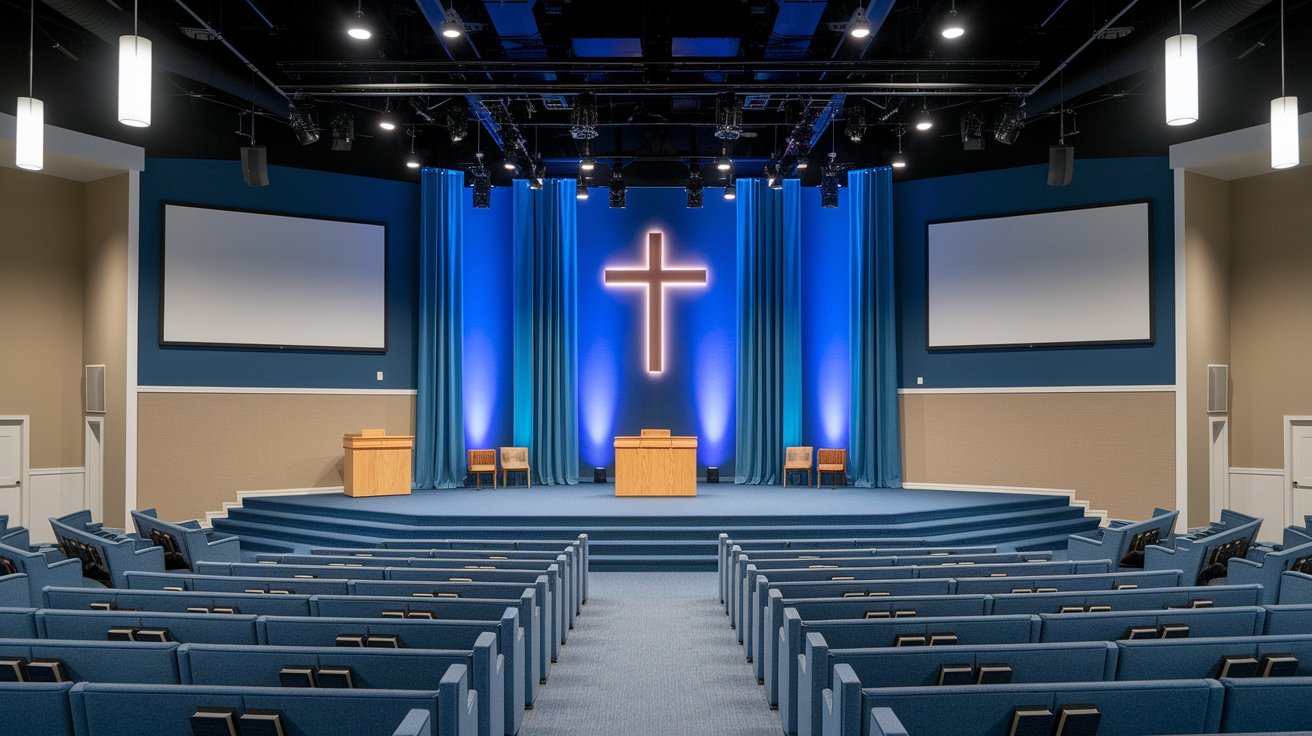
Your altar space should do more than just Sunday morning.
Pulpits on wheels let you change the setup for concerts, plays, or community meetings. Platforms that roll can make your stage bigger when needed.
Add these flexible features:
- Wireless presentation gear
- Screens that pull down when needed
- Backdrop pieces you can rearrange
- Storage spaces you can’t see
This lets your building serve more purposes. More use means you’re being smart with your church’s money.
9. Create One Special Wall
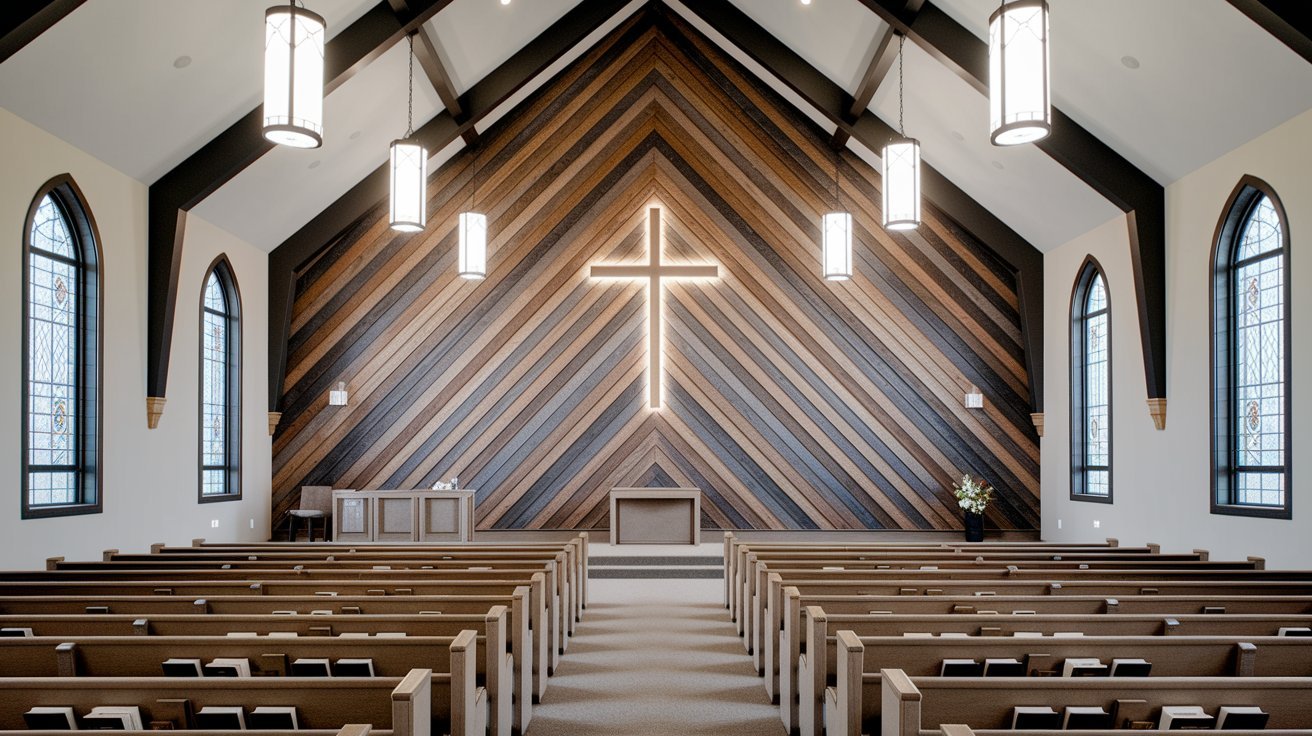
One dramatic wall can change how your whole space feels.
I love using old barn wood for texture. It adds warmth and reminds people how God makes new things from old.
Options for your statement wall:
- Reclaimed barn wood for rustic warmth
- Stone veneer for natural texture
- Painted scripture in large, readable fonts
- Wood slat accent for modern appeal
Scripture walls work great when done right. Pick verses that matter to your church in fonts that are easy to read. Vinyl letters cost less than painting and look more professional.
Textured walls also help with sound – a nice bonus in small spaces where voices can echo.
10. Use Wall Space for Storage

Small churches need smart storage.
Built-in cabinets along one wall can hold communion supplies, kids’ materials, and seasonal decorations. Pick doors that match your wall color so they blend in.
Ideas for vertical storage:
- Coat racks that fold up when not needed
- High shelves for stuff you don’t use often
- Storage that pulls out from under built-in seating
- Hidden compartments in your altar platform
Good storage keeps everything looking neat. First-time visitors notice when things are organized.
11. Add Plants for Life
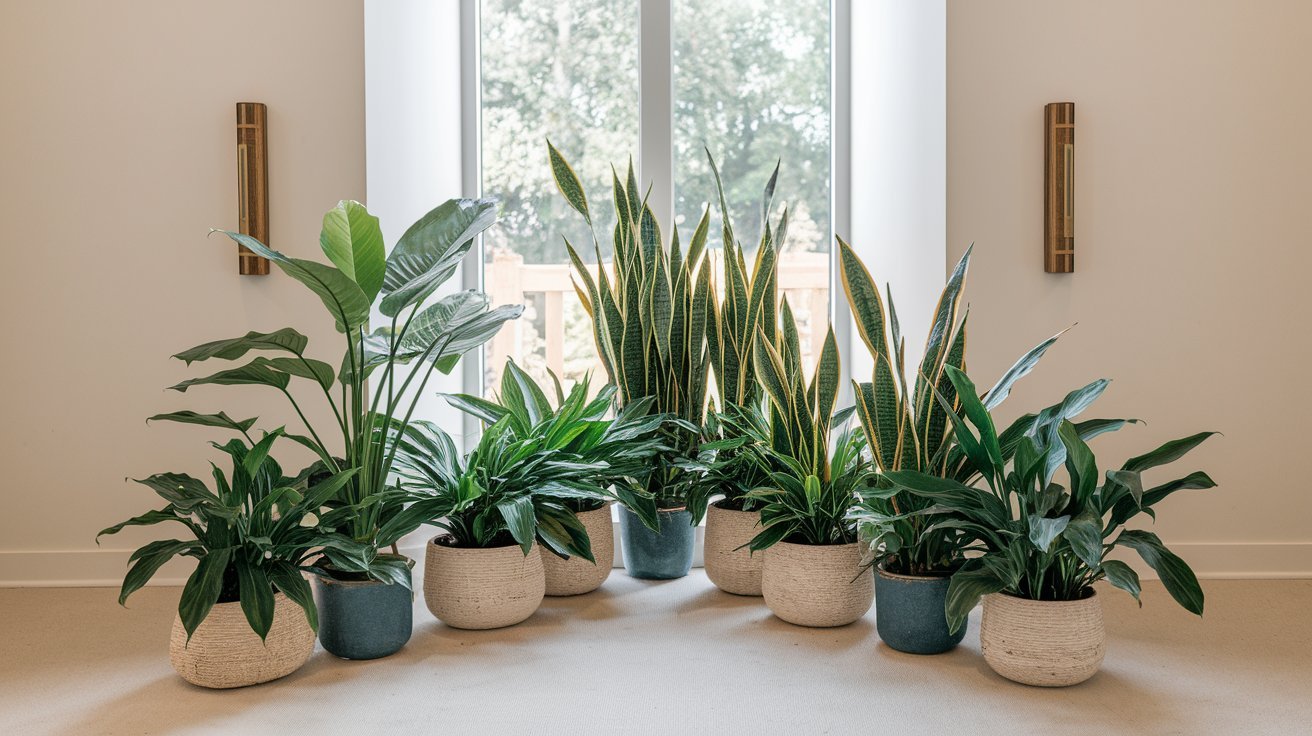
Plants make worship spaces feel alive.
They also clean the air and help people feel calm. Pick plants that don’t need much care since volunteers will be taking care of them.
Best plants for churches:
- Peace lilies (they mean something and are hard to kill)
- Snake plants (survive if you forget to water them)
- Pothos (grow fine in low light)
- Rubber trees (look impressive but are easy)
Group plants in nice planters that match your style. A few grouped together look better than plants scattered around.
Real Churches That Made It Work
First Baptist Church of Millfield spent $15,000 to change their 150-seat sanctuary. They painted their dark pews white. Added LED lights behind the altar. Put up one accent wall with old wood.
What happened? 30% more people started coming in just six months.
The Community Fellowship Church in Texas kept it even simpler. They got rid of their fixed pews completely. Added stackable chairs and tables on wheels. Now they use the same space for worship, meals, and community meetings.
They rent the space for events and make enough to cover all their building costs.
St. Mark’s Methodist just worked on lighting. They added skylights and swapped heavy curtains for light shades. The space feels twice as big with just that change.
These stories show that small changes can make a big difference.
How to Do This on a Small Budget
You don’t need tons of money to make your space beautiful. Start with paint. It’s the cheapest way to change any room. Use light colors everywhere to make the most of your light.
Projects you can do yourself:
- Sand down and restain old furniture
- Make art with Bible verses
- Build basic storage
- Install simple track lighting
Spread improvements over several years. Do one area each year. This way you don’t strain your budget but still show progress.
Ask your congregation for help. Many people have skills they’d love to use for the church. Others might donate materials.
Check thrift stores and salvage yards. You can find amazing pieces for almost nothing.
Don’t Make These Mistakes
Don’t put too much stuff in a small space. It gets cluttered fast. Pick fewer things that make a bigger impact.
Don’t use dark colors on big areas. They make spaces feel cramped and unwelcoming.
Don’t forget about sound. Hard surfaces make voices echo. Add soft things like cushions, curtains, or carpet to absorb sound.
Don’t try to make everything match perfectly. Things that go together but aren’t identical look more interesting.
Don’t skip storage planning. Messy spaces feel chaotic. Plan where everything will go before you start.
Don’t follow trends that will look old fast. Stick to timeless ideas that will still look good in 10 years.
Don’t ignore lighting. Bad lighting makes even pretty spaces feel depressing.
Remember: You’re creating a place where people meet God. Every choice should help that happen.
Conclusion
Your small church can become beautiful and welcoming without costing a fortune. These 11 ideas show you how.
Start small. Pick one or two things that fit your budget. Paint those dark walls. Add some plants. Move your chairs around. You don’t need everything perfect right away. You just need to get started.
Here’s what really matters: Your church’s strength comes from the people, not the building. But a well-designed space helps those people connect better.
Modern design isn’t about being trendy. It’s about removing anything that gets between people and God. Pick one idea from this list this week. Start there. Your church family will notice and appreciate the effort.
Make your worship space work better for what God is calling you to do.
Frequently Asked Questions
How much does it cost to update a small church?
Most small churches spend $5,000 to $25,000 for a complete makeover. Simple changes like paint and better lighting can make a huge difference for under $2,000.
Can we keep our traditional stuff and still add modern touches?
Yes. Modern design works with traditional elements, not against them. Keep your cross, stained glass, and special items while updating everything else.
What’s the biggest mistake churches make when renovating?
Putting too much stuff in the space and choosing dark colors. Small spaces need clean, simple design and light colors to feel open and welcoming.
How do we get our church members to support design changes?
Start with practical fixes that solve real problems like bad lighting or uncomfortable seating. Show people how the changes will help your ministry grow and serve the community better.
Should we hire someone or do it ourselves?
Do simple projects like painting and moving furniture yourself. Hire professionals for electrical work, big structural changes, or if you want a complete plan
