


Have you noticed cracks appearing where walls meet atop the ceiling or a door that suddenly won’t close properly?
Your home might actually be trying to tell of something important about its foundation due to these seemingly minor issues now.
As someone who has inspected countless homes over the years, I have learned that foundations often settle along with announcing it through subtle warning signs that homeowners tend to dismiss.
The truth is, if you spot foundation problems with some haste, that can save you thousands of dollars and prevent some structural damage that is major down the road.
I share seven typical warning signs that foundations are settling today. These signals every homeowner should notice. Are you prepared as the top advocate for your home?
Why Foundation Settlement Happens
Foundation settlement occurs when the soil beneath your home shifts, compresses, or moves in ways that affect your foundation’s stability. Different soil types react differently to moisture and weight.
Clay soils expand when wet and shrink when dry, creating constant movement, while sandy soils can wash away during heavy rains. Poor drainage around your home causes water to pool near the foundation, softening soil and creating instability.
Drought conditions cause soil to shrink and pull away from foundations, leaving them unsupported.
Inadequate soil preparation during construction can lead to future settlement if builders don’t properly compact the soil or account for local conditions.
Even well-built homes experience some natural settlement as they age, as the weight of the structure gradually compresses the soil underneath, though this process should be minimal and uniform across the entire foundation.
Let’s have a detailed look at the causes.
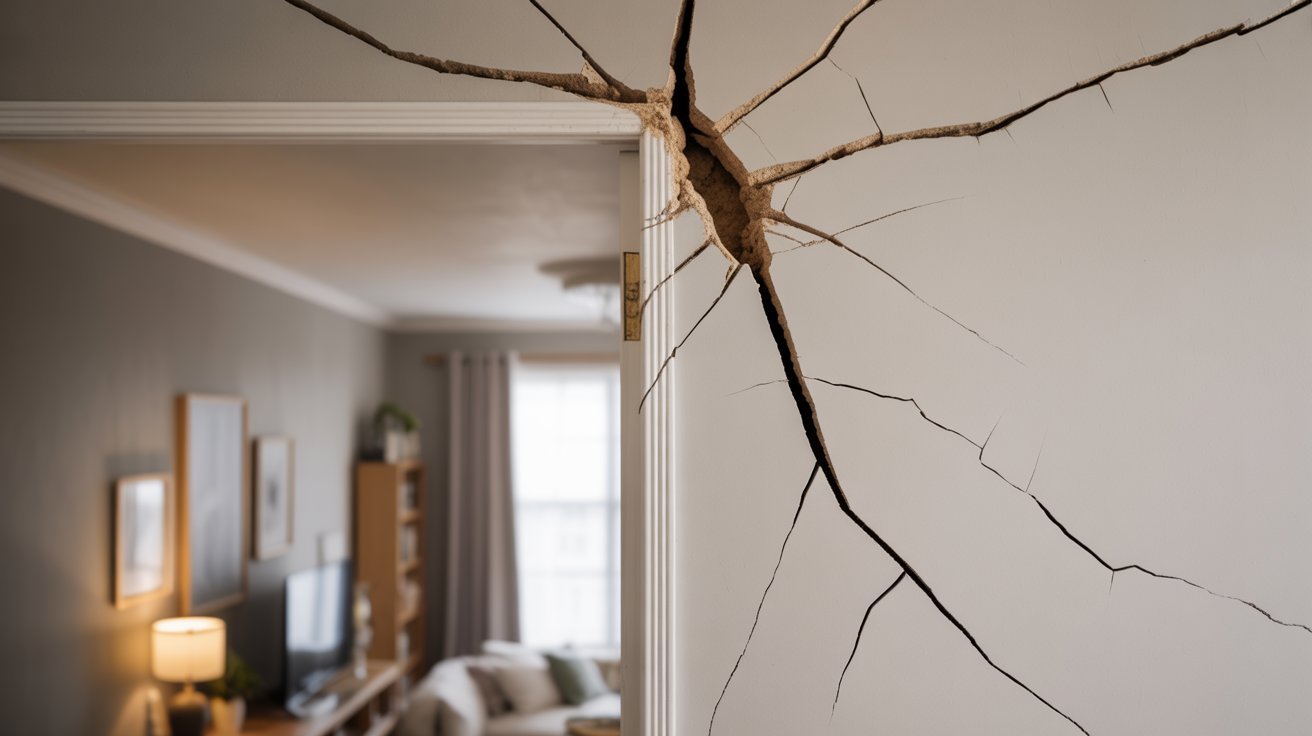
1. Diagonal Cracks in Drywall
What They Look Like
You’ll notice these cracks forming near the corners of doors and windows, typically running at a 45-degree angle. They often start small but can extend several inches as the foundation continues to shift.
Why It Matters
These diagonal cracks serve as one of the most reliable indicators that your foundation is moving. Unlike hairline cracks from normal house settling, these cracks signal that structural movement is affecting your home’s framework.
When to Take Action
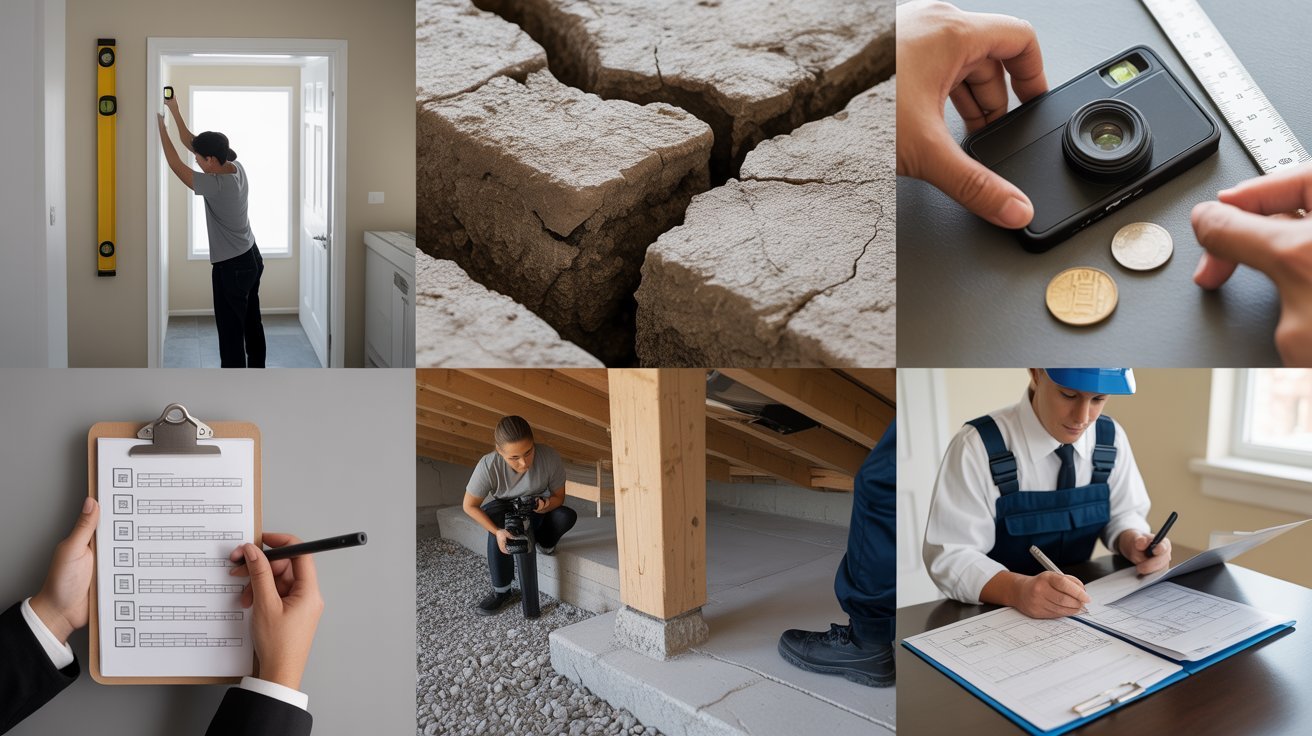
Pay close attention if these cracks grow larger over time or keep coming back after you’ve patched them. This pattern shows ongoing foundation movement that requires professional evaluation to prevent further damage.
2. Sticking Doors and Windows

Common Symptoms
You might find doors that refuse to latch properly or require extra force to close completely. Windows may jam halfway through opening or create a grinding sound when you try to slide them up or down.
What Causes It
When your foundation shifts unevenly, it distorts the frames around doors and windows. This movement throws these openings out of their original square shape, making normal operation difficult or impossible.
DIY Tip
Grab a level and check your door and window frames for straightness. Place the level vertically along the sides and horizontally across the top. If you see significant gaps between the level and frame, foundation movement is likely the culprit.
3. Sloping or Uneven Floors

How to Spot It
You’ll notice marbles or balls rolling toward one side of the room without any push. Walking across certain areas might feel like you’re on a slight hill, and furniture may rock or sit unevenly despite appearing level.
Underlying Problem
This happens when the piers, joists, or footings beneath your home start shifting or sinking. As these support structures move, they create an uneven base that affects everything above them.
When It’s Serious
Take immediate action if floors feel unstable underfoot or you can visually see dips and low spots in certain areas. These conditions indicate significant structural movement that could worsen rapidly without professional intervention.
4. Cracks in Exterior Brick or Masonry
Types of Cracks
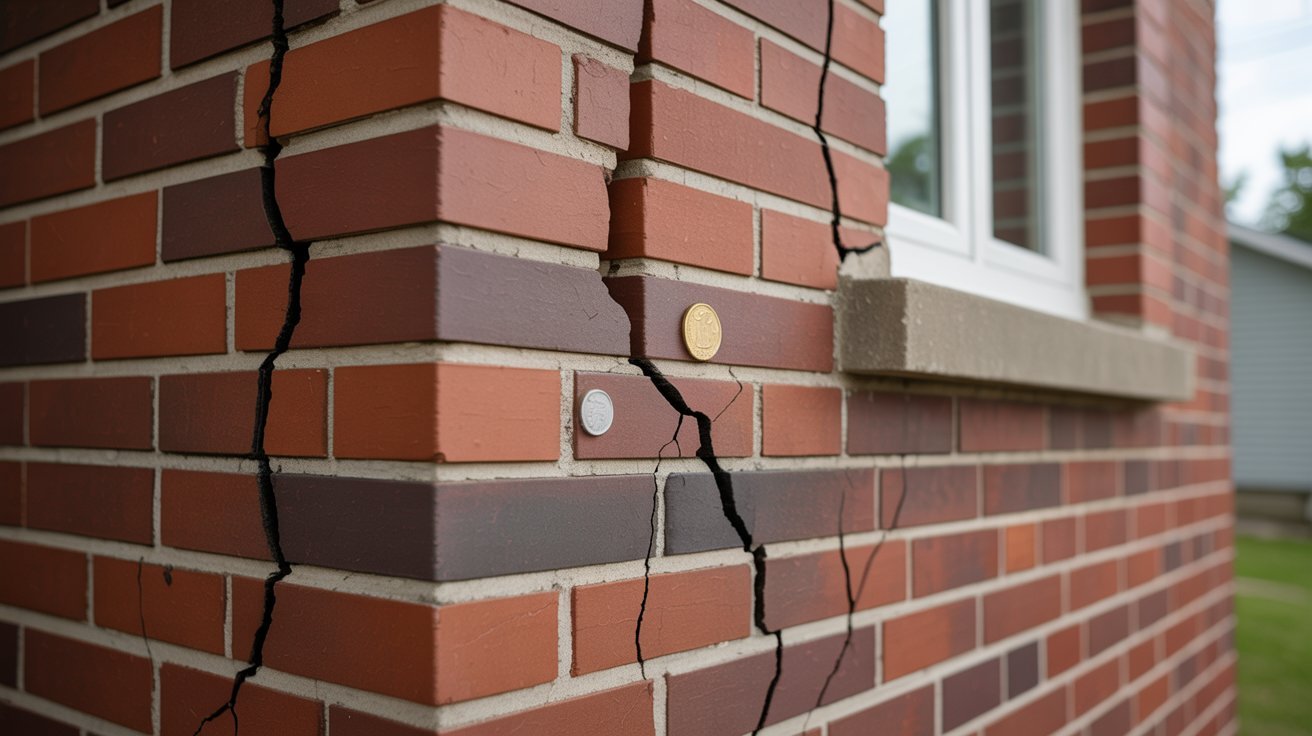
Look for stair-step patterns following the mortar lines between bricks, or straight vertical cracks running through individual bricks. These cracks often start near corners or openings and can extend several feet.
Why They Occur
When your foundation experiences stress and movement, that pressure transfers upward to the rigid brick and masonry materials on your home’s exterior. Since these materials can’t flex like other building components, they crack under the strain.
What to Monitor
Keep a close eye on any cracks that become wider or extend further along the wall over time. Take photos with a coin for scale and date them to track changes. Growing cracks signal ongoing foundation issues that need professional attention.
5. Separation Around Doors, Windows, and Trim
Visible Clues
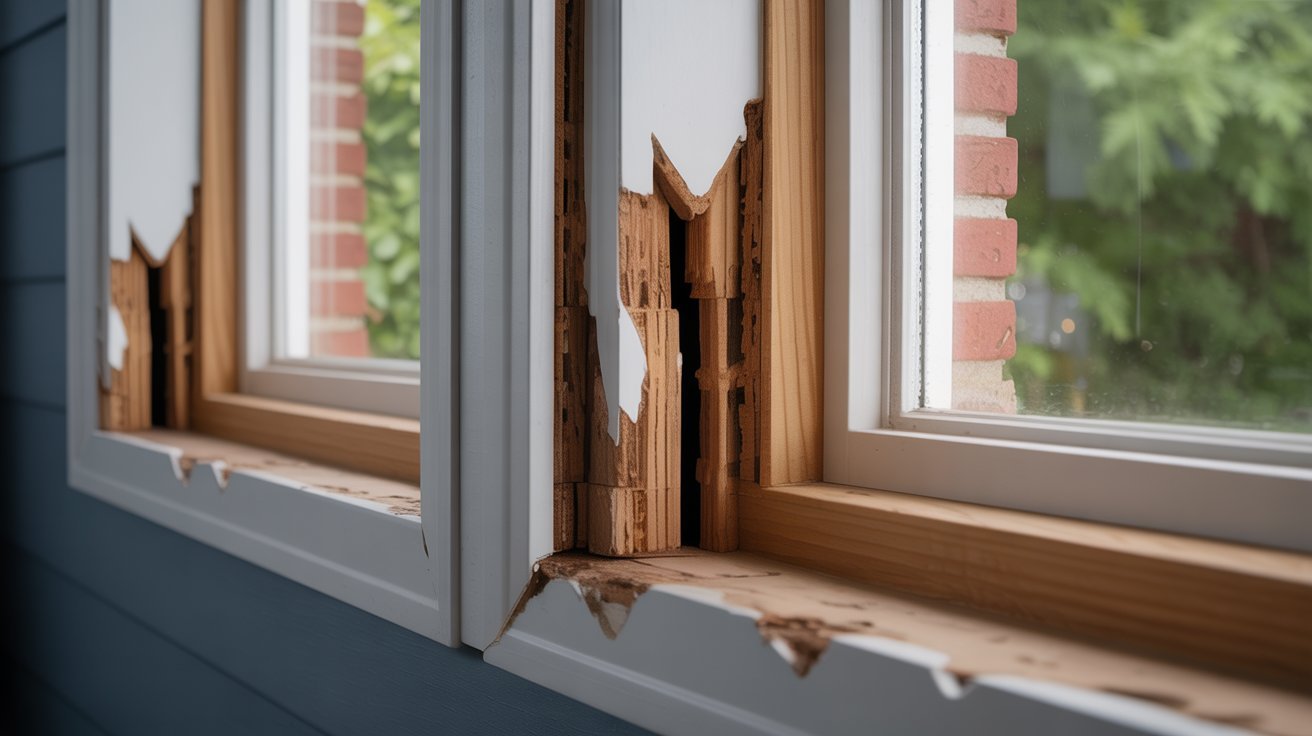
You’ll see gaps forming between frames and walls, with trim pieces pulling away from siding or brick surfaces where everything once fit tightly together.
Resulting Issues
These gaps allow drafts and moisture to enter your home, increasing energy costs and creating potential water damage or mold problems.
When to Call a Pro
Contact a specialist if gaps are large enough to see daylight through or feel air movement. These visible separations indicate serious structural movement requiring immediate professional assessment.
6. Water Intrusion in the Basement or Crawl Space
Warning Signs
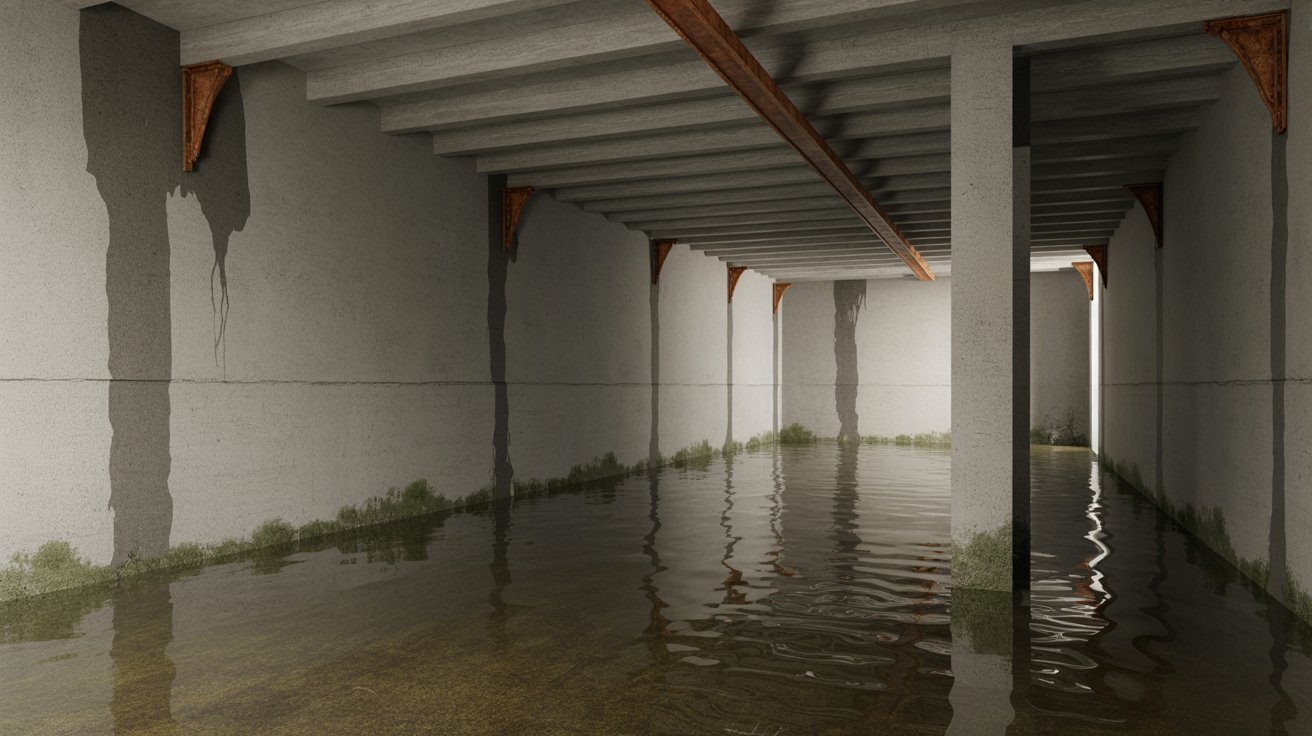
Look for standing water, persistent dampness, or a musty odor in your basement or crawl space. You might also notice water stains on walls or rust forming on metal components.
How Settlement Plays a Role
As your foundation settles and shifts, it develops cracks that create entry points for water during heavy rains or snow melts. These openings bypass your home’s normal waterproofing systems.
Secondary Risks
Water intrusion leads to mold growth that threatens indoor air quality and your family’s health. Persistent moisture also weakens wooden structural components, creating additional stability concerns throughout your home.
7. Bowing Walls or Chimney Gaps
Basement Walls
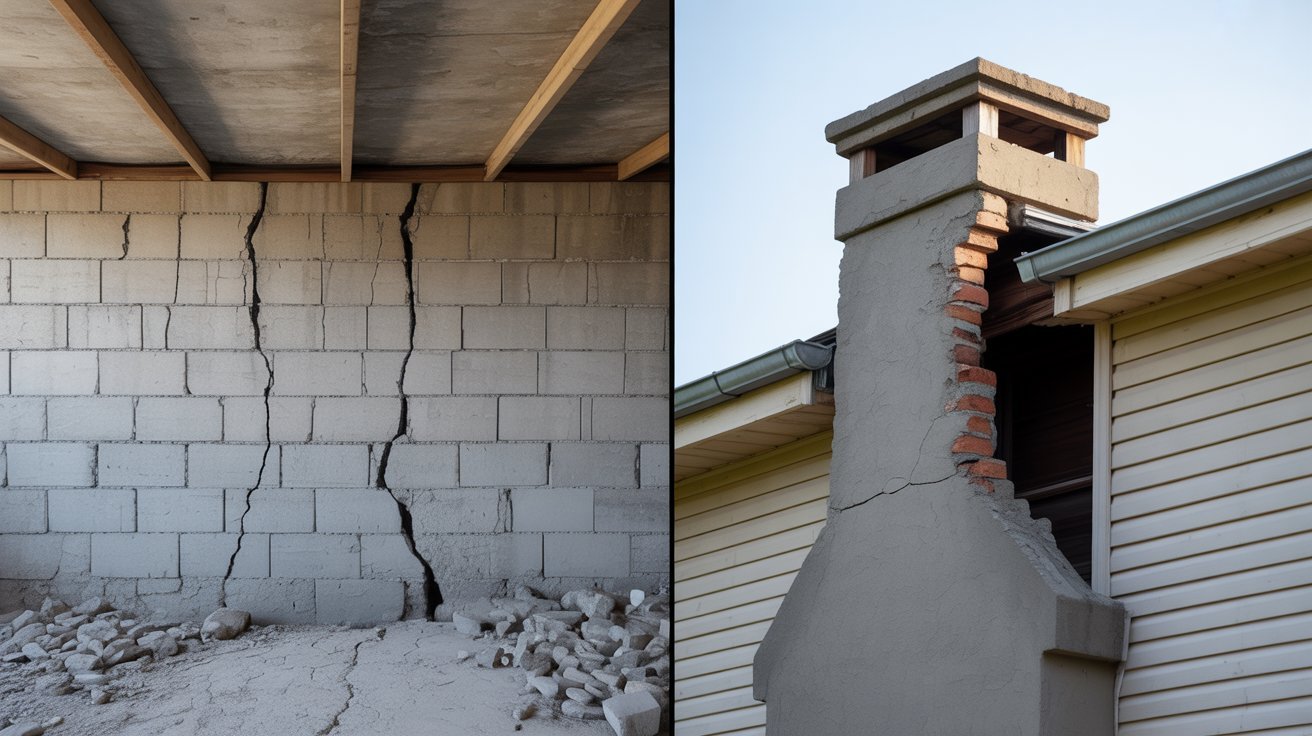
Check your basement walls for inward curving or bulging, especially in concrete or block construction. You might notice horizontal cracks running along mortar lines or see the wall leaning noticeably toward the interior space.
Chimney Shifting
Examine the areas where your chimney connects to your home’s siding or roofline. Look for visible gaps or spaces that weren’t there before, indicating the chimney is pulling away from the main structure.
Long-Term Risks
These issues pose serious safety threats if left untreated. Bowing walls can eventually collapse under pressure, while a shifting chimney may detach completely from your home, causing significant property damage and potential injury.
When to Take Action
;:
- Monitor regularly: Check cracks, doors, windows, and floors every 2-4 weeks. Note any changes in size or severity.
- Document with photos – Take pictures with coins for scale and dates. Store in a dedicated folder for professionals.
- Schedule a professional inspection – Contact a foundation specialist immediately after noticing warning signs. Early intervention prevents emergencies.
- Don’t delay repairs – Foundation problems worsen and never self-correct. $500 repairs can become $15,000 replacements if ignored.
- Keep maintenance records – Save all reports and work completed. This proves responsible ownership to insurance and buyers.
Conclusion
After helping hundreds of homeowners identify foundation issues over the past many years, I’ve learned that detecting problems early on does matter.
These signs of foundation settlement are not to scare you. They empower you with knowledge for saving both your wallet and your home.
I have seen some families deal with minor settlement earlier on and fix up the issues for a few thousand dollars, but other families waited, so they faced some repairs with costs of tens of thousands.
Foundation problems rarely fix themselves, and these problems become more expensive.
When needed, call a specialist for a professional assessment if something feels wrong, and also trust your instincts.
Frequently Asked Questions
How long does foundation settlement typically take to occur?
Foundation settlement can happen gradually over several years or more rapidly within months, depending on soil conditions and environmental factors. Most settlement issues develop slowly, giving homeowners time to notice warning signs before major damage occurs.
Can I fix foundation settlement problems myself?
Minor cosmetic repairs like patching small cracks can be DIY projects, but actual foundation settlement requires professional expertise and specialized equipment. Attempting major foundation repairs without proper knowledge can worsen the problem and create safety hazards.
How much does foundation repair typically cost?
Foundation repair costs vary widely from $500 for minor crack sealing to $15,000 or more for major structural work. Early intervention typically costs significantly less than waiting until problems become severe and require extensive reconstruction.
Will my homeowner’s insurance cover foundation settlement damage?
Most standard homeowner’s insurance policies exclude coverage for foundation settlement caused by normal soil movement or poor construction. However, sudden damage from covered events like plumbing leaks or natural disasters may qualify for coverage.
How often should I inspect my home for foundation settlement signs?
Perform a basic visual inspection of your home’s foundation warning signs every 2-3 months, particularly after heavy rains or seasonal changes. Professional inspections should occur annually or immediately when you notice any concerning symptoms.
