

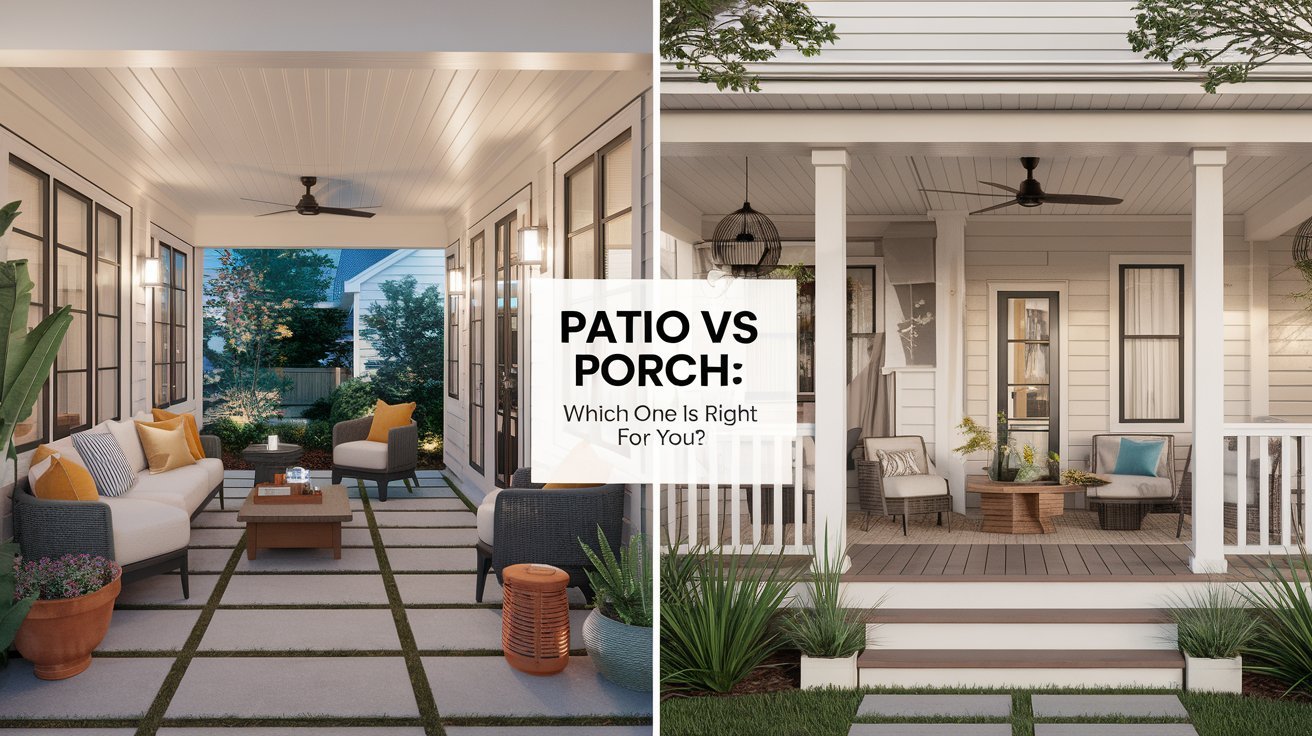
As a landscape designer who’s helped hundreds of families create their ideal outdoor spaces, I’ve learned that the right choice between a patio and porch can transform how you live and enjoy your home.
Outdoor living areas have become essential extensions of our indoor spaces, providing retreats for relaxation, entertainment, and family gatherings that significantly boost both lifestyle quality and property value.
Over my years in the industry, I’ve watched homeowners struggle with this decision, often choosing based on aesthetics alone rather than functionality.
The truth is, both porches and patios offer unique advantages, but the right choice depends on your specific needs, budget, and home style.
This article draws from my real-world experience designing both options to help you make an informed decision that you’ll love for years to come.
What Is a Porch?
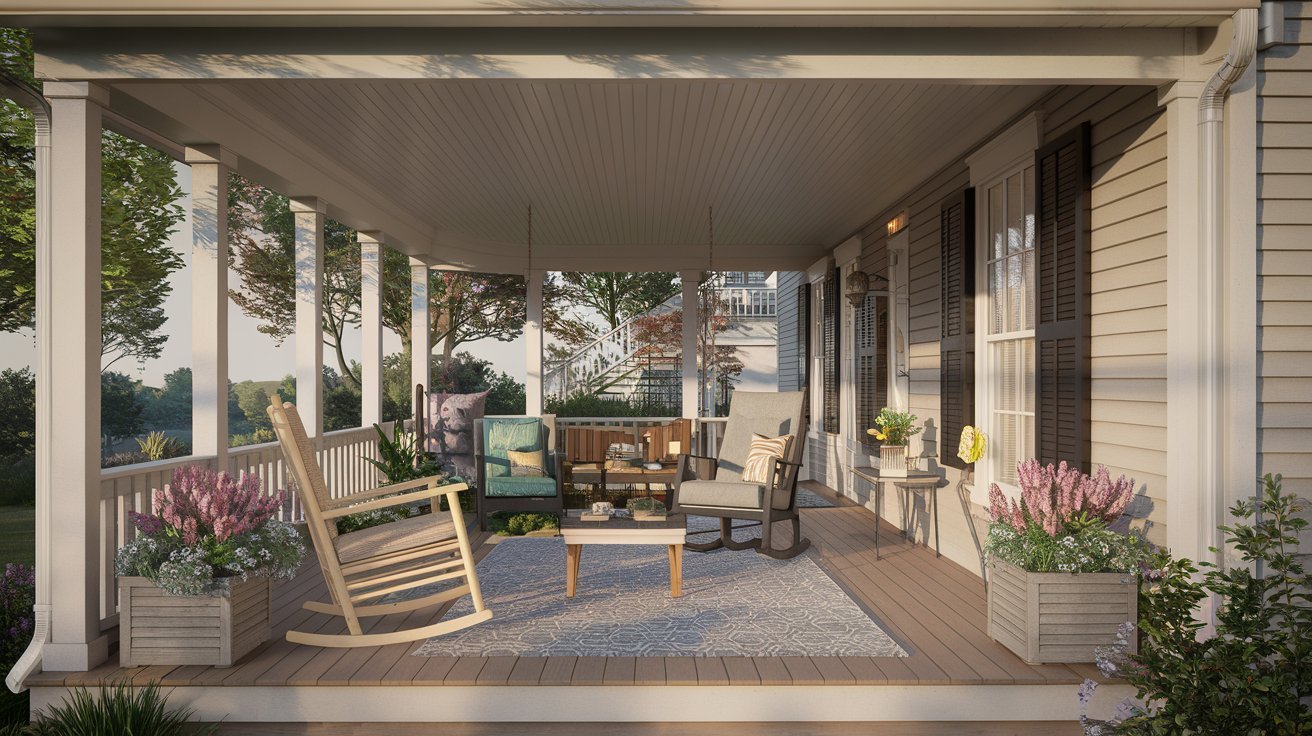
A porch is a covered outdoor structure attached to a house, typically featuring a roof and sometimes walls or screens for protection from weather and insects.
This architectural feature serves as a transitional space between indoor and outdoor living, providing shelter while maintaining a connection to the surrounding environment.
Architectural Styles and History
Porches are commonly found in Queen Anne, Victorian, Spanish Colonial, and Greek Revival homes, where they serve as defining architectural elements.
These structures add historical charm and significant architectural value to properties, often becoming the focal point of a home’s curb appeal.
The tradition of porch building reflects American social customs where front porches served as community gathering spaces and symbols of hospitality.
Types of Porches
- Enclosed porches: Feature walls and windows, creating indoor-outdoor rooms usable year-round regardless of weather conditions
- Screened-in porches: Offer protection from insects while maintaining airflow and outdoor ambiance, perfect for areas with bug problems
- Porticos: Smaller, columned structures that primarily cover entryways, providing architectural interest and weather protection for front doors
Styling and Use
Furniture options include classic rocking chairs, porch swings, and outdoor rugs that create comfortable seating areas for relaxation and socializing.
Planters filled with seasonal flowers and foliage add natural beauty, while seasonal decorations reflect changing holidays and personal style preferences.
Screens provide essential insect protection, allowing comfortable use during warmer months when bugs are most active.
What Is a Patio?
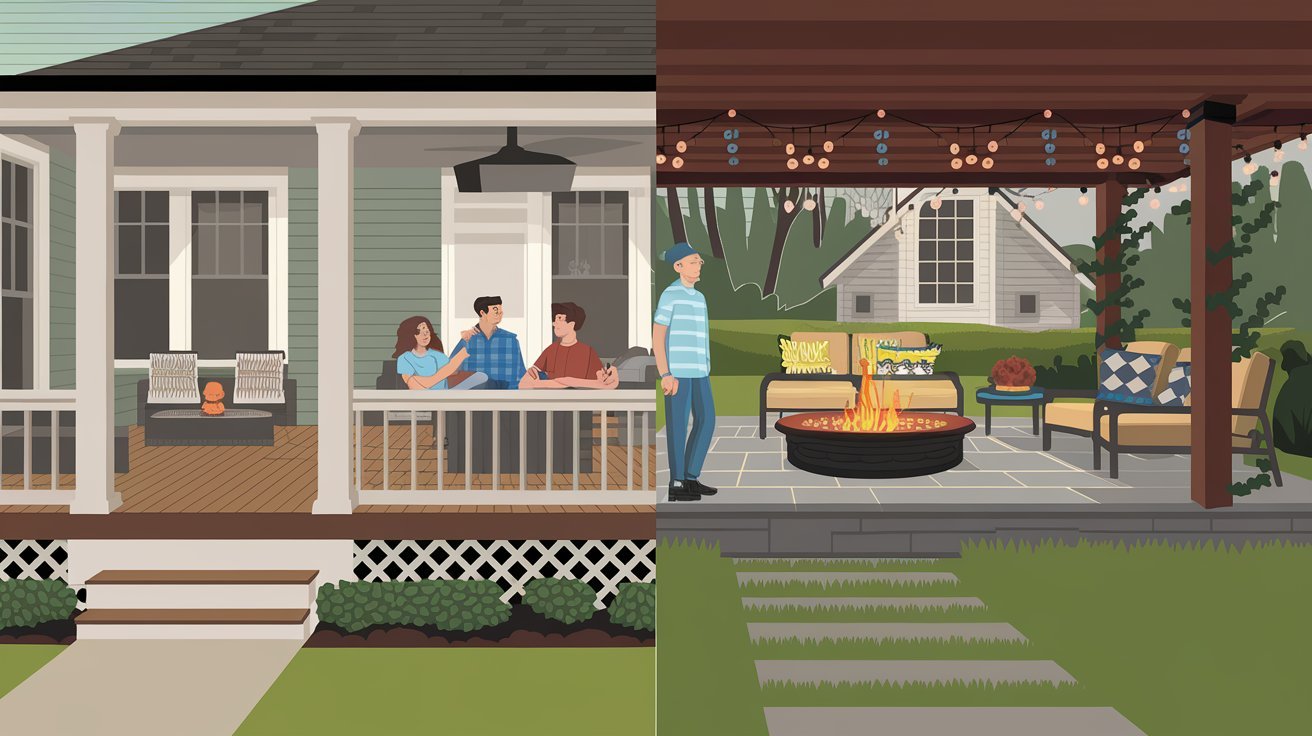
A patio is an uncovered outdoor living space typically located at ground level, designed for dining, entertainment, and relaxation activities.
Unlike porches, patios are open-air structures without roofs, creating a direct connection to the sky and surrounding landscape while providing a solid foundation for outdoor furniture and activities.
Historical Background
Patios trace their origins to Spanish and Latin American courtyard designs, where central outdoor spaces served as the heart of residential living.
These open areas provided cool gathering spots in warm climates and facilitated social interaction among family members.
Greek architecture heavily influenced patio development, emphasizing outdoor living as an integral part of daily life rather than an occasional luxury, establishing the foundation for modern outdoor entertaining spaces.
Common Features
- Paved or gravel surfaces: Concrete, brick, stone, or gravel provide stable, level foundations for furniture and foot traffic
- Fire pits and grills: Central gathering points for cooking and warmth that extend usability into cooler seasons
- String lights and water features: Ambient lighting and decorative elements that create atmosphere and visual interest
- Open layout design: Flexible spaces that accommodate dining sets, lounge areas, and entertainment zones without structural constraints
Styling and Use
Minimalist furniture with waterproof fabrics works best for year-round patio use, resisting weather damage while maintaining style and comfort.
Outdoor cooking setups, including built-in grills, prep stations, and dining areas, create functional entertainment spaces for family gatherings and social events.
Relaxation zones with comfortable seating, shade umbrellas, and side tables provide quiet retreats for reading, conversation, or simply enjoying the outdoors.
Comparison Table
| Feature | Porch | Patio |
| Location | Attached to the house (front, side, or back) | Usually separate, back or side of the house |
| Structure | Roofed, sometimes enclosed or screened | Open-air, no roof |
| Flooring/Materials | Wood, composite, cedar, redwood | Concrete, brick, stone, gravel |
| Function | Protects entryway, relaxation, casual seating | Entertainment, dining, recreation |
| Climate Use | Usable in rain or cooler weather | Best for warm months only |
| Architectural Style | Common in historical styles: Queen Anne, Victorian, Spanish Colonial, Greek Revival | Can suit any home style, flexible design |
| Cost | Higher (roof, flooring, structure) | Lower (mainly paving or brick) |
Factors to Consider When Choosing
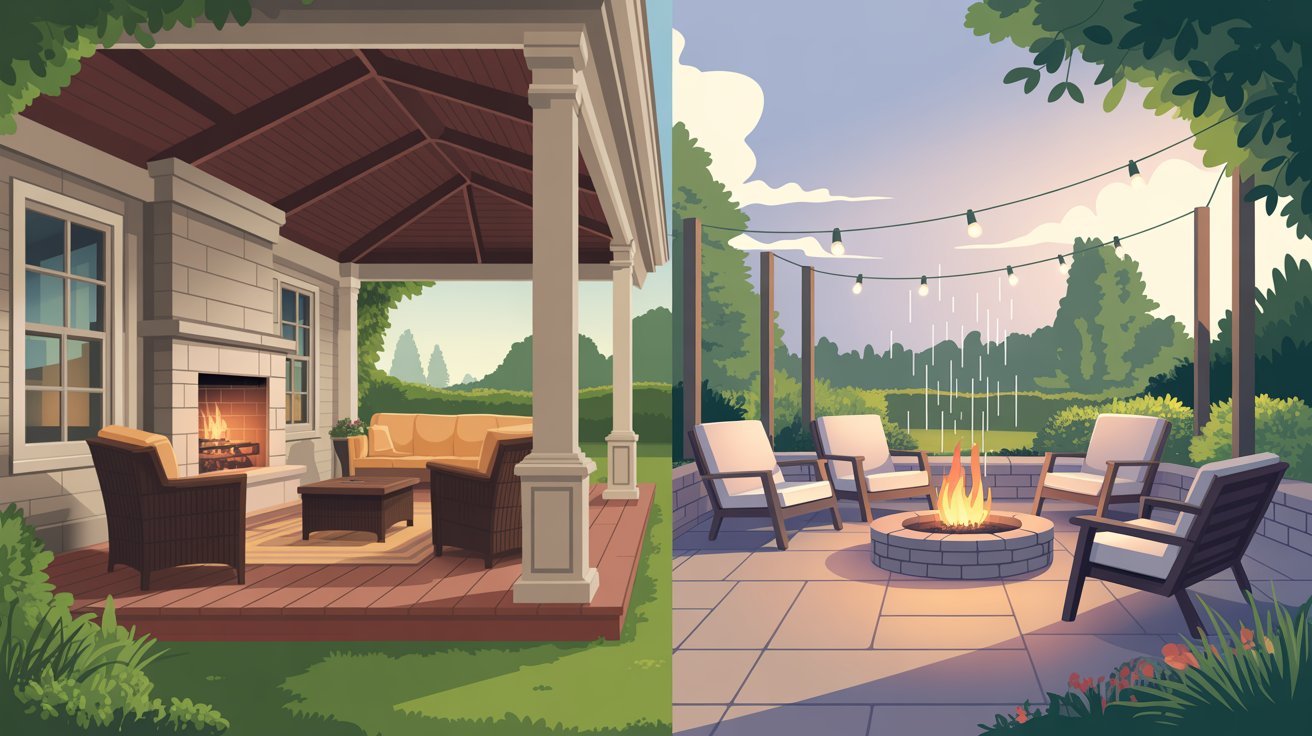
Several key factors, including cost, materials, lifestyle needs, climate conditions, and local regulations, determine the best outdoor space choice.
1. Cost
Porches: Higher cost due to roofing, flooring, and structural additions that require foundation work, framing, and weather-resistant materials. The complexity of attaching to existing structures and ensuring proper drainage increases labor and material expenses significantly.
Patios: Generally more affordable option, mainly involving paving or brick installation with minimal structural requirements. The ground-level construction eliminates roofing costs and reduces labor complexity, making it accessible for most budgets.
2. Materials
Porches: Wood options include cedar, redwood, and composite materials that provide durability and weather resistance for covered structures. These materials require regular maintenance but offer natural beauty and can be painted or stained to match home exteriors.
Patios: Concrete, brick, stone, and gravel surfaces provide long-lasting foundations that handle weather exposure and heavy foot traffic. These materials require minimal maintenance while offering various aesthetic options from rustic to contemporary styles.
3. Purpose and Lifestyle
Consider whether you prefer hosting large gatherings or creating quiet personal retreat spaces for relaxation and solitude.
Indoor-outdoor living preferences also matter – some homeowners want seamless transitions between interior and exterior spaces, while others prefer distinct separation between indoor comfort and outdoor adventure.
4. Climate Considerations
Patios: Open-air design works best during warm months but becomes unusable during rain, snow, or extreme temperatures without additional shelter options.
Porches: Usable in rain or cooler weather due to roof protection, with potential for heating elements or insulation to extend seasonal use significantly.
5. Regulations and Permits
Research HOA rules, local building codes, and permit requirements before beginning construction to avoid costly violations or project delays.
Some areas restrict porch additions or require specific setbacks, while patio installations may have drainage or size limitations.
Maintenance Tips
Regular upkeep ensures both porches and patios remain safe, attractive, and functional throughout their lifespan while protecting your investment.
- Regular sweeping – Remove debris from both porches and patios weekly to prevent staining and material damage over time
- Clean furniture appropriately – Use suitable cleaning products based on material type and wash screens monthly to maintain visibility and airflow
- Annual pressure washing – Remove built-up dirt, mildew, and stains from porch flooring and structural elements to keep surfaces fresh
- Hose down patio surfaces – Regular hosing removes surface dirt and prevents permanent staining on concrete, brick, or stone surfaces
- Protect furniture from weather – Use covers or indoor storage during harsh weather to extend furniture lifespan and maintain appearance
Making the Right Choice
Choose between porches and patios by evaluating cost, style, climate, and personal lifestyle needs.
Porches require higher investment but offer year-round weather protection, while patios provide affordable open-air entertainment space.
Consider your home’s architecture, intended use, and maintenance preferences.
Consult professionals or real estate advisors for guidance on permits and property value impacts.
Balance immediate enjoyment with long-term resale potential to make the best decision for your specific situation and local market conditions.
Conclusion
After designing countless outdoor spaces, I’ve learned that choosing between porches and patios depends on your lifestyle, budget, and climate needs.
Porches offer covered year-round comfort at higher costs, while patios provide affordable open-air entertainment for warm weather.
The best choice comes from honestly assessing how you live and what your family needs most.
Both options create valuable gathering spaces that strengthen relationships and improve quality of life.
Select the space that matches your real lifestyle patterns, not just aspirational ideas, and you’ll create an outdoor area you’ll use and love for years.
Frequently Asked Questions
What is the main difference between a patio and a porch?
A porch is a covered structure attached to your house with a roof for weather protection. A patio is an uncovered outdoor space at ground level, typically made of concrete, brick, or stone without overhead shelter.
Which option costs more to build and maintain?
Porches generally cost more due to roofing, structural framing, and foundation requirements for attachment to the house. Patios are more budget-friendly, mainly requiring surface materials like concrete or pavers with minimal structural work needed.
Can I use my outdoor space year-round with either option?
Porches offer year-round usability due to roof protection from rain, snow, and harsh weather conditions. Patios work best during warm, dry months since they lack overhead cover and become unusable during inclement weather.
Which option adds more value to my home?
Both add property value, but porches typically provide higher returns due to their architectural appeal and weather protection. Patios offer good value for the investment cost but may have less impact on resale value than covered outdoor spaces.
How do I decide which option fits my lifestyle better?
Consider how you plan to use the space – patios work well for large gatherings and outdoor cooking activities. Porches suit quiet relaxation, reading, and year-round use regardless of weather conditions affecting your comfort.
