

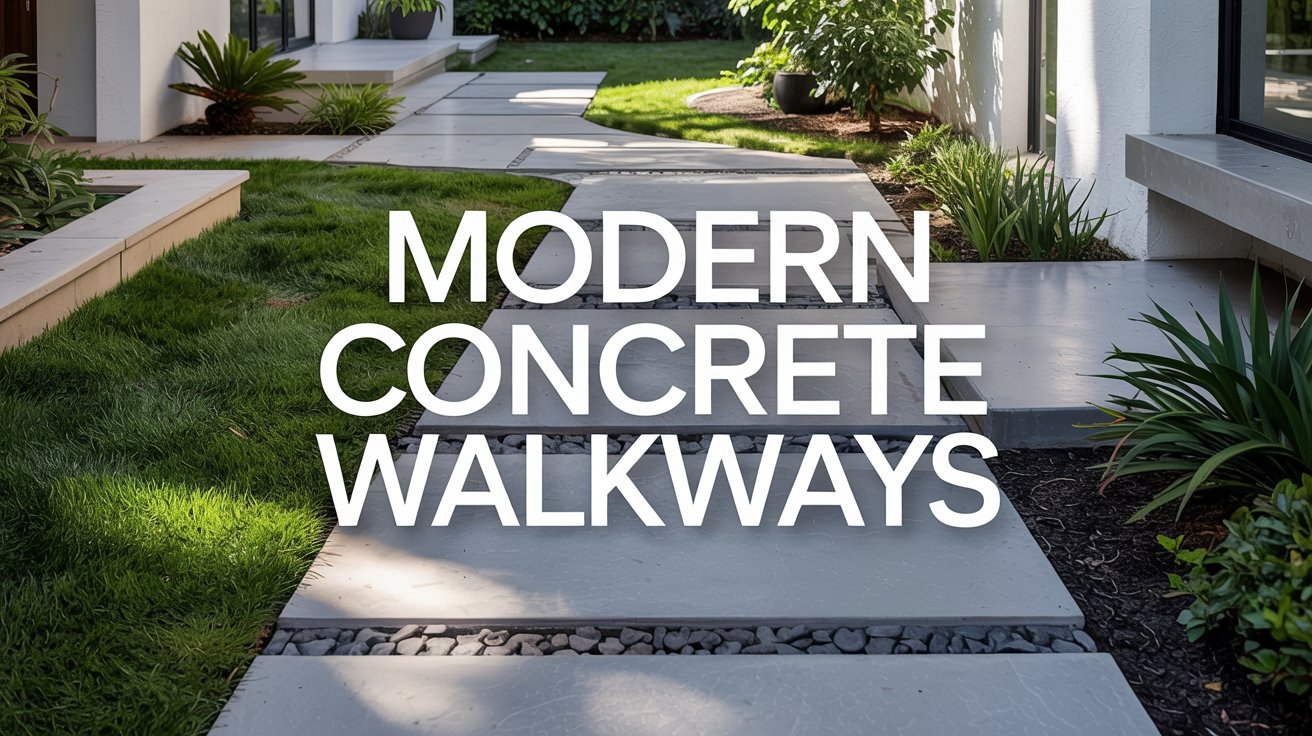
I love how concrete walkways can completely change an outdoor space. They’re not just functional paths anymore. Modern concrete walkways have become design statements that add serious style to any property.
Why are they so popular? Simple. They offer that clean, contemporary look everyone wants. Plus, they’re incredibly durable and require minimal upkeep compared to other materials.
You don’t need a massive budget or complex construction to make an impact. Sometimes the simplest designs create the most dramatic results.
Concrete has come a long way from basic gray sidewalks. Today’s options include varied textures, colors, and patterns that rival expensive natural materials.
These 17 ideas will help you create a walkway that not only guides visitors to your door but also makes them stop and admire your outdoor style.
Let’s examine options that range from ultra-minimalist to creatively textured.
Sleek & Minimalist Looks
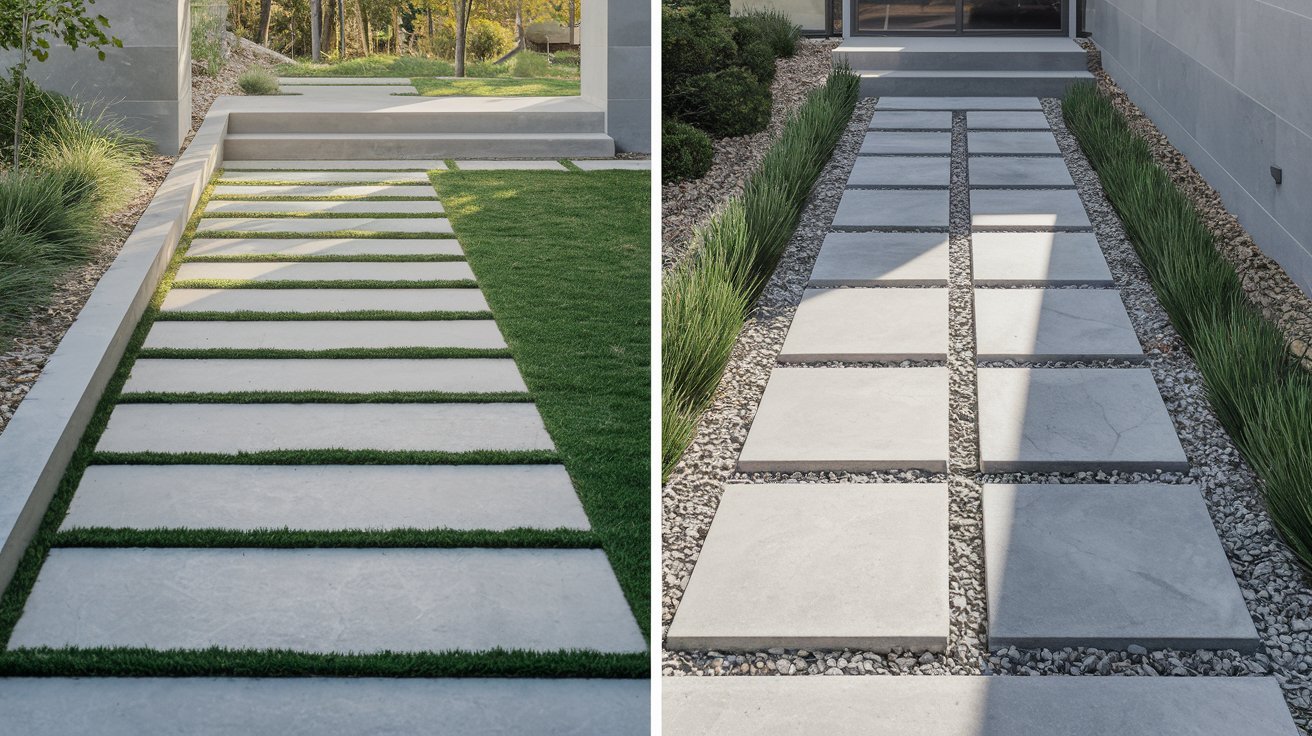
1. Smooth Concrete Slab Walkway
Clean lines define this approach. The seamless appearance creates a contemporary feel that works with almost any architectural style.
Pour concrete in long, uninterrupted sections for maximum impact. The smooth surface reflects light beautifully and creates visual flow from the street to the entrance.
2. Geometric Concrete Pavers
Square or rectangular blocks with equal spacing create rhythm and symmetry. This method allows for perfect alignment and consistent gaps between each piece.
The repetitive pattern draws the eye forward while maintaining that structured, modern appearance. You can adjust spacing based on your preferred look.
Nature Meets Modern
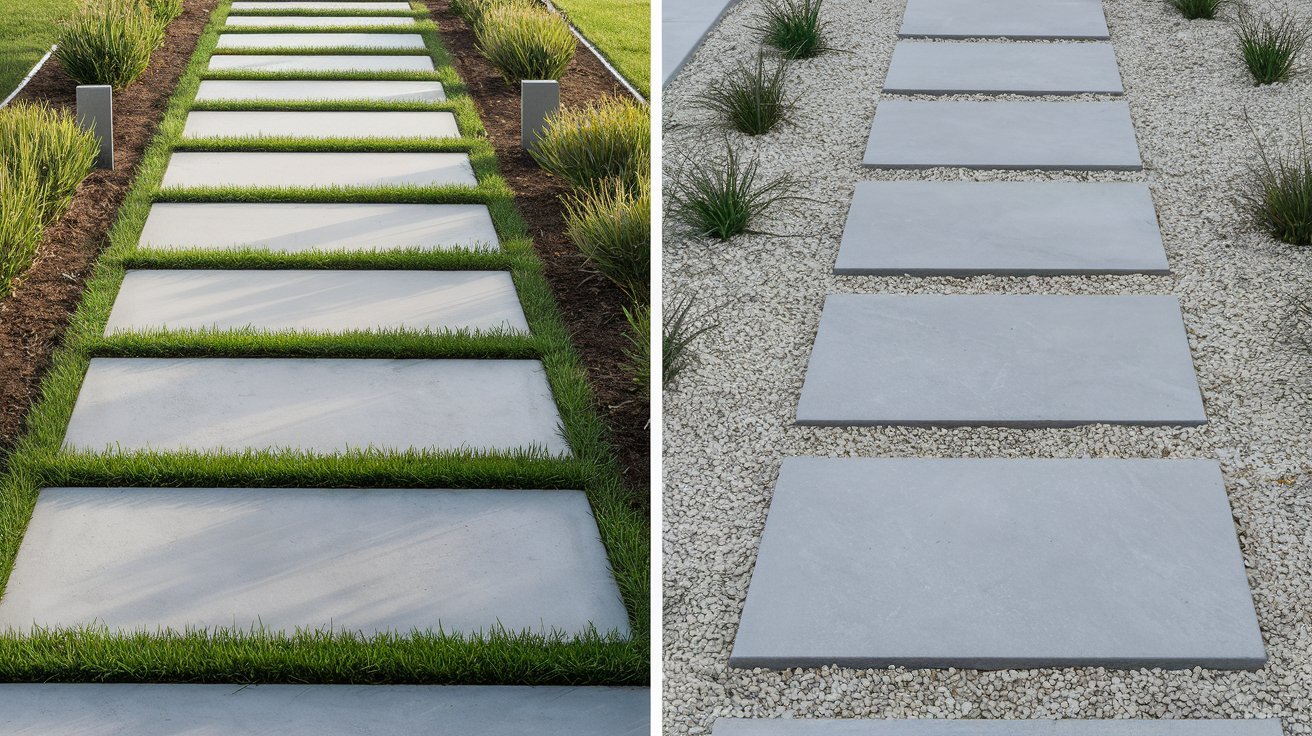
3. Concrete with Grass Joints
Grass or groundcover between concrete slabs creates a lush, eco-modern look. This design softens the hardscape while maintaining clean geometric lines.
The green spaces provide natural drainage and add color contrast. Choose low-maintenance ground covers for best results.
4. Stepping Stones on Gravel
Concrete slabs placed over gravel offer contrast and excellent drainage. The gravel base prevents water issues while creating textural interest.
Space the slabs at comfortable walking intervals. This design works particularly well in areas with heavy rainfall or poor soil drainage.
Enhanced Textures
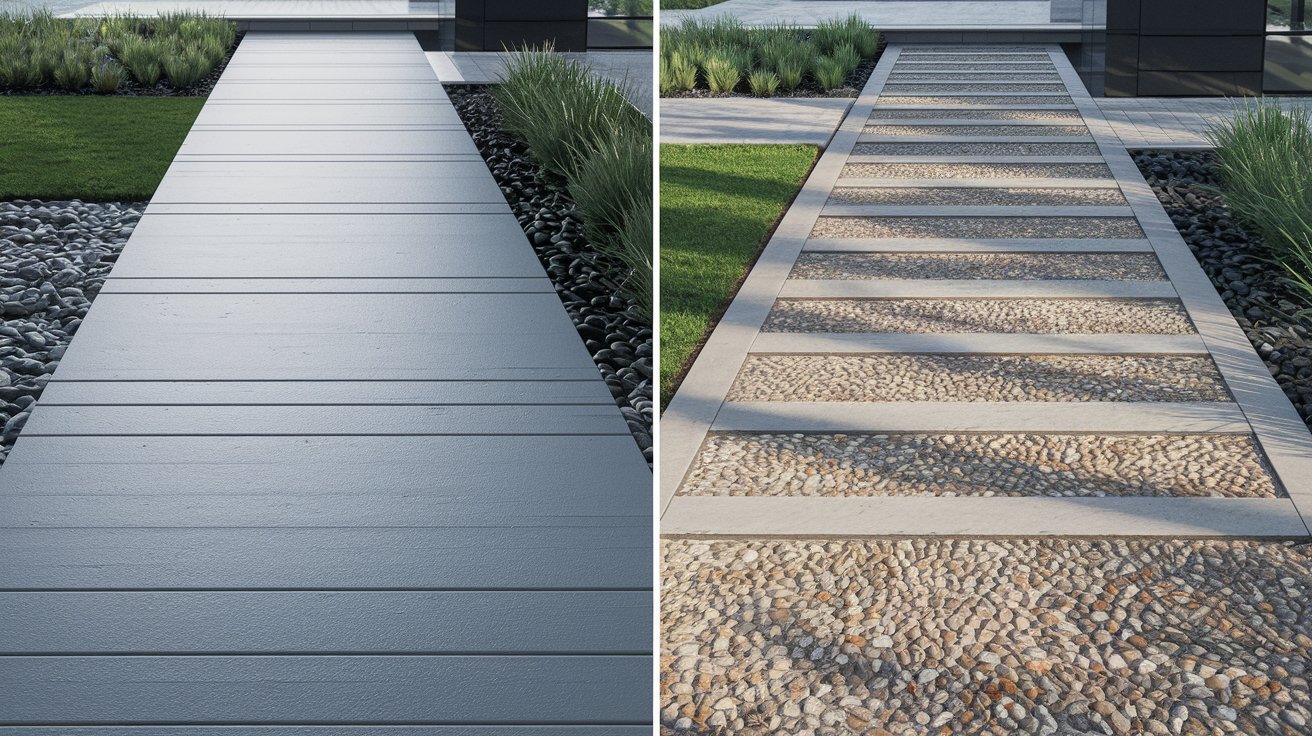
5. Brushed Finish Concrete Walkway
This adds subtle texture without overpowering the minimalist design. The brushed surface provides slip resistance and visual interest through light and shadow play.
Apply the brush technique while the concrete is still workable for consistent results. This finish hides minor imperfections naturally.
6. Exposed Aggregate Walkway
This showcases the stones inside concrete, giving a natural-modern texture.
The process reveals decorative stones, creating a speckled appearance that’s both functional and attractive. The exposed surface provides excellent traction and adds visual depth to plain concrete.
Play with Shapes
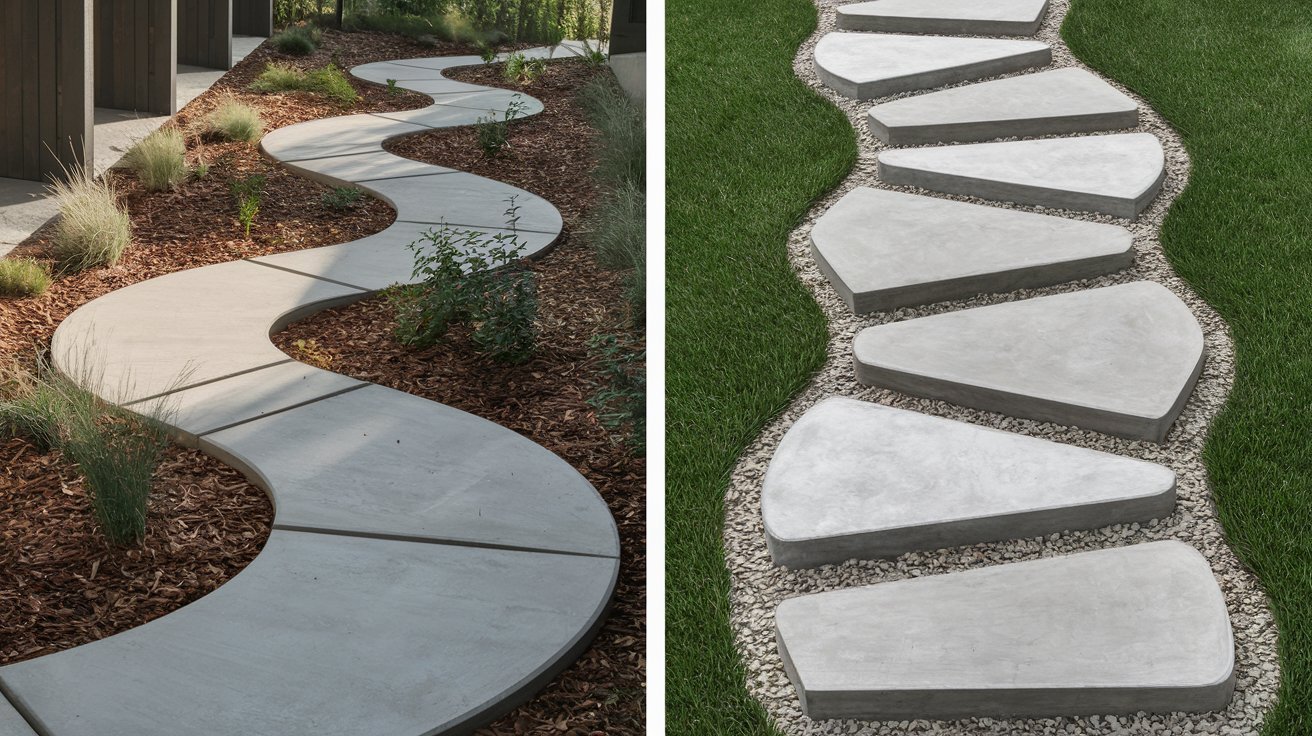
7. Curved Concrete Pathway
Gentle, flowing lines soften a modern landscape. Curves create a more organic feel while maintaining contemporary appeal.
This approach works especially well in larger yards where you have space to create graceful arcs. The curved design naturally guides foot traffic.
8. Irregular Cut Slabs
Randomly sized concrete pieces create a custom, creative look. This approach breaks away from rigid geometry while maintaining modern sensibility.
Each slab becomes unique, creating visual interest through varied proportions. Plan the layout carefully to ensure proper walking surfaces.
Mix & Match Materials
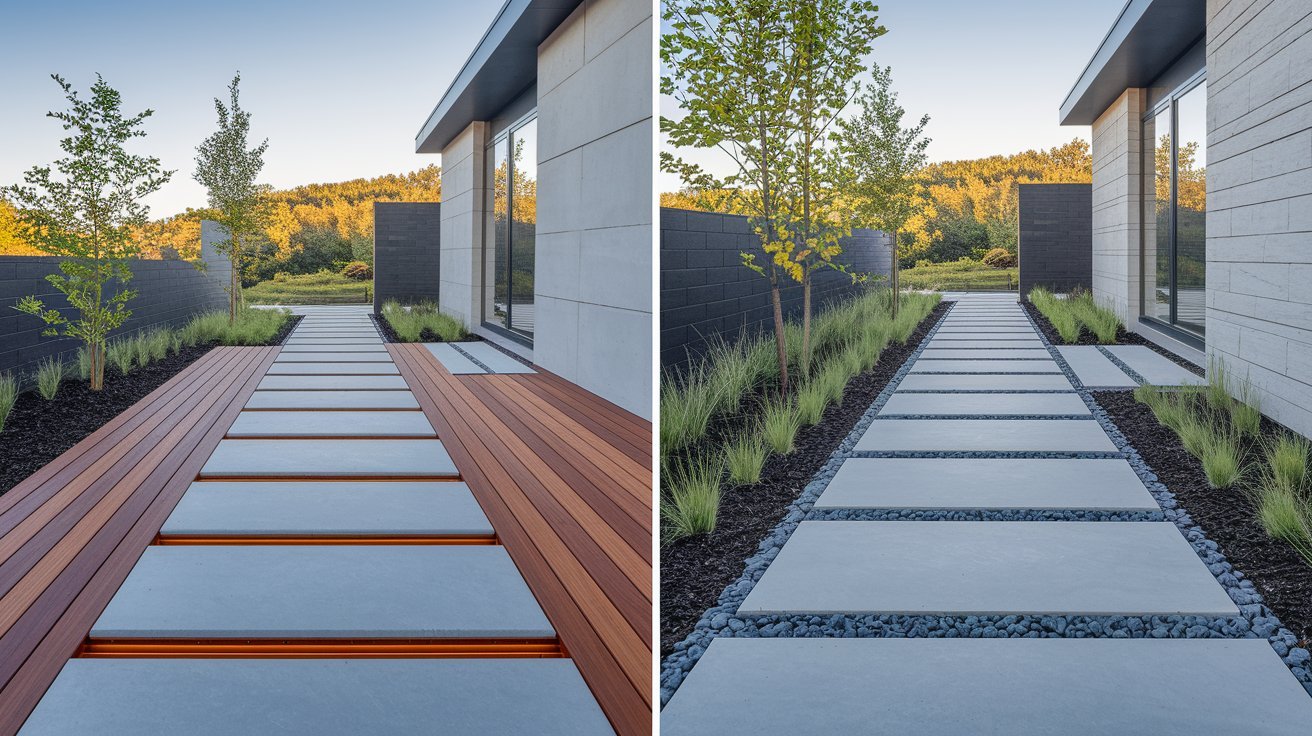
9. Concrete and Wood Blend
Concrete paths with wood accents or borders add warmth and contrast. The combination balances the coolness of concrete with organic wood tones.
Use weather-resistant wood species for longevity. This pairing works beautifully with contemporary home designs.
10. Concrete and Stone Combo
Integrate stone slabs or pebbles with poured concrete for a layered design. This approach combines different textures and colors for visual complexity.
Natural stone adds organic elements while concrete provides structure. Consider local stone varieties for regional appeal.
Floating Effects
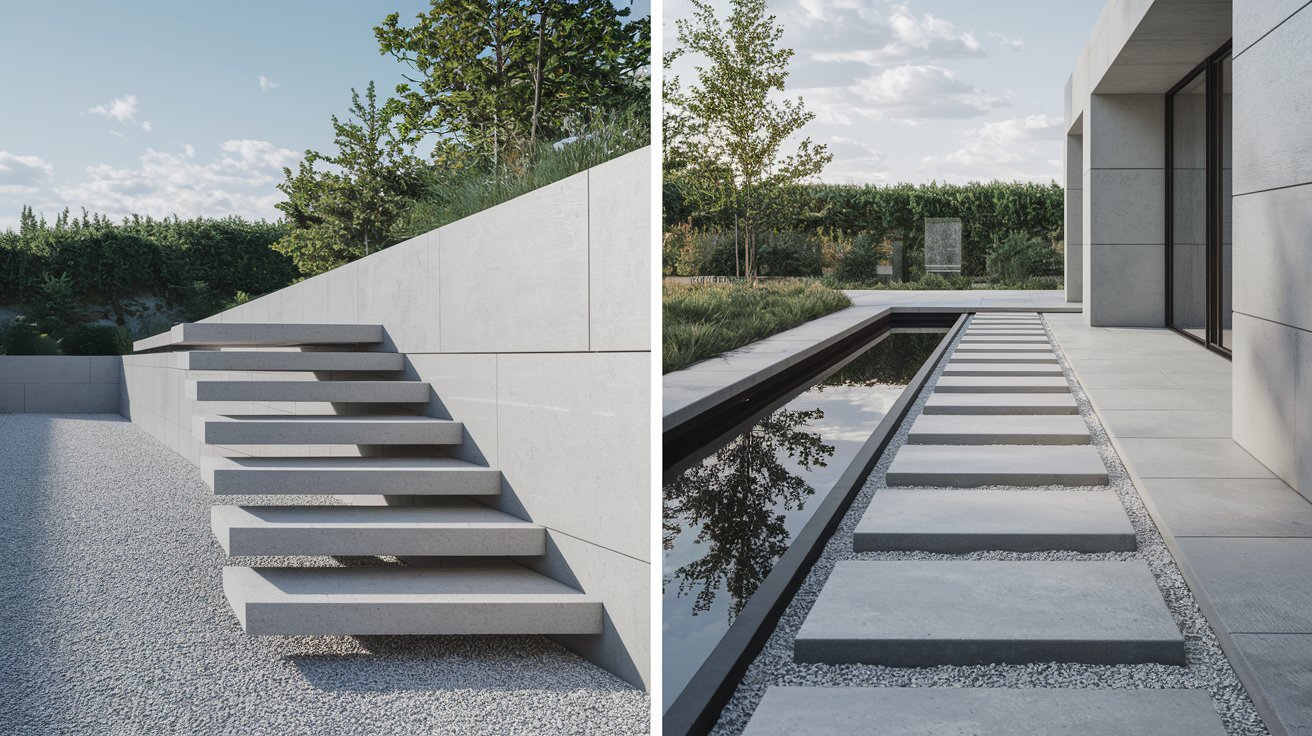
11. Cantilevered Concrete Steps
Steps that appear to float above the ground create a sleek and dramatic effect. This engineering feat requires proper structural support but delivers incredible visual impact.
The floating appearance defies expectations and creates architectural interest.
12. Floating Concrete Pavers Over Water or Gravel
Create visual interest by placing pavers above reflective water or decorative rock beds. This design adds an element of surprise and sophistication.
The gap beneath the pavers creates shadows and depth. Consider lighting underneath for evening drama.
Modern Garden Integration
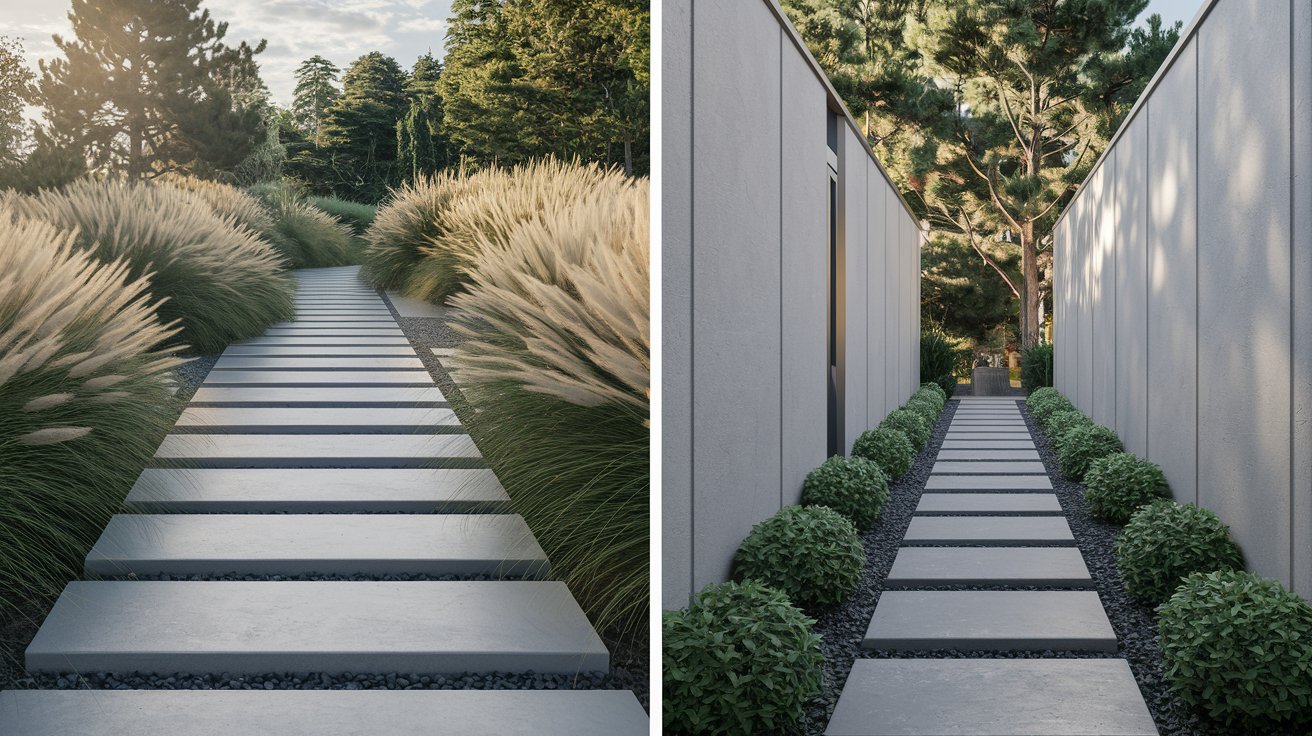
13. Concrete Path Through Ornamental Grass
Let tall grasses border your walkway for texture and contrast. The soft, flowing grass movement contrasts beautifully with rigid concrete lines.
Choose grasses that maintain their structure through seasons. This combination creates year-round visual interest.
14. Narrow Concrete Path for Tight Spaces
Long, slim paths work perfectly for side yards or small garden corners. These pathways maximize functionality in limited space while maintaining style.
Keep proportions appropriate to avoid overwhelming smaller areas. Consider the path width for comfortable walking.
Front Yard Impact
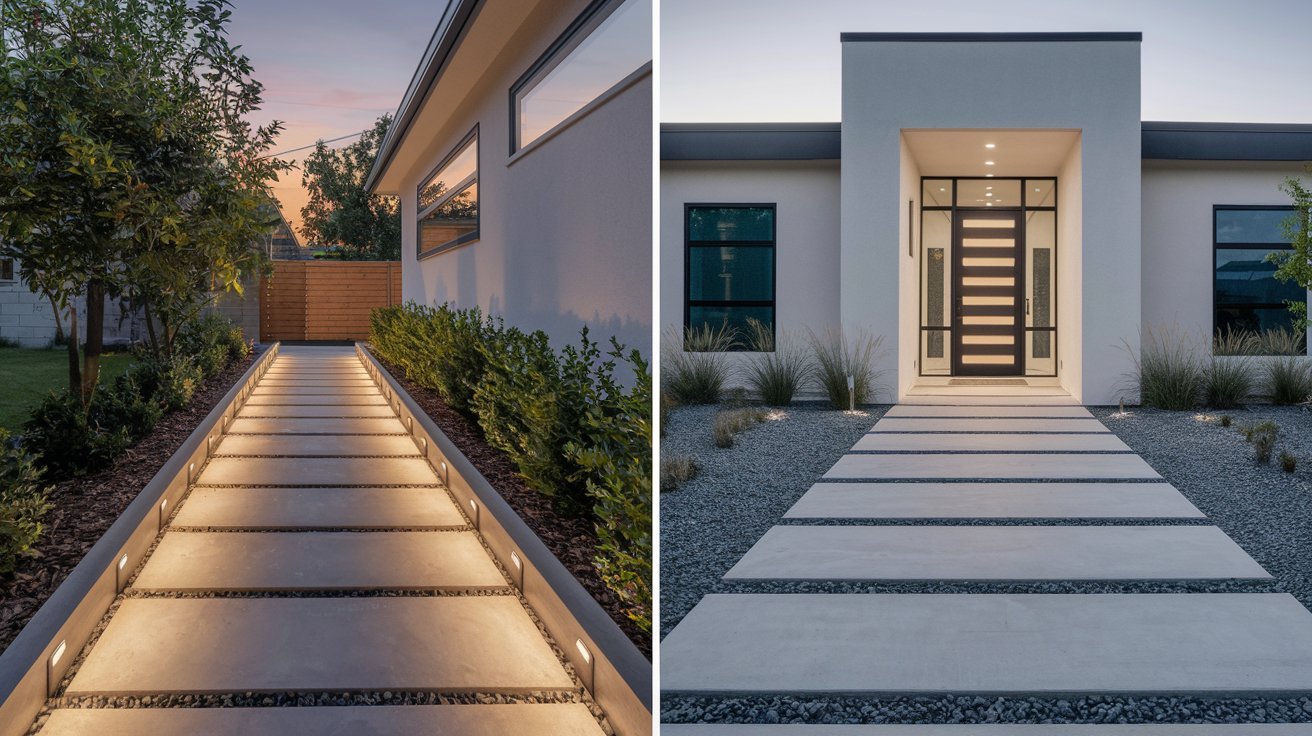
15. Concrete Walkway with Built-in Lighting
Embedded LED strips or path lights boost safety and modern style. Integrated lighting eliminates the need for separate fixtures and creates clean lines.
Plan electrical work during initial construction for best results. Choose warm or cool light temperatures based on your design preference.
16. Bold Entryway Path with Large Concrete Slabs
Oversized slabs leading to the entrance create a grand, bold statement. These substantial pieces command attention and establish a strong first impression.
Ensure proper foundation support for heavy slabs. The scale should complement your home’s proportions.
One-of-a-Kind Statement
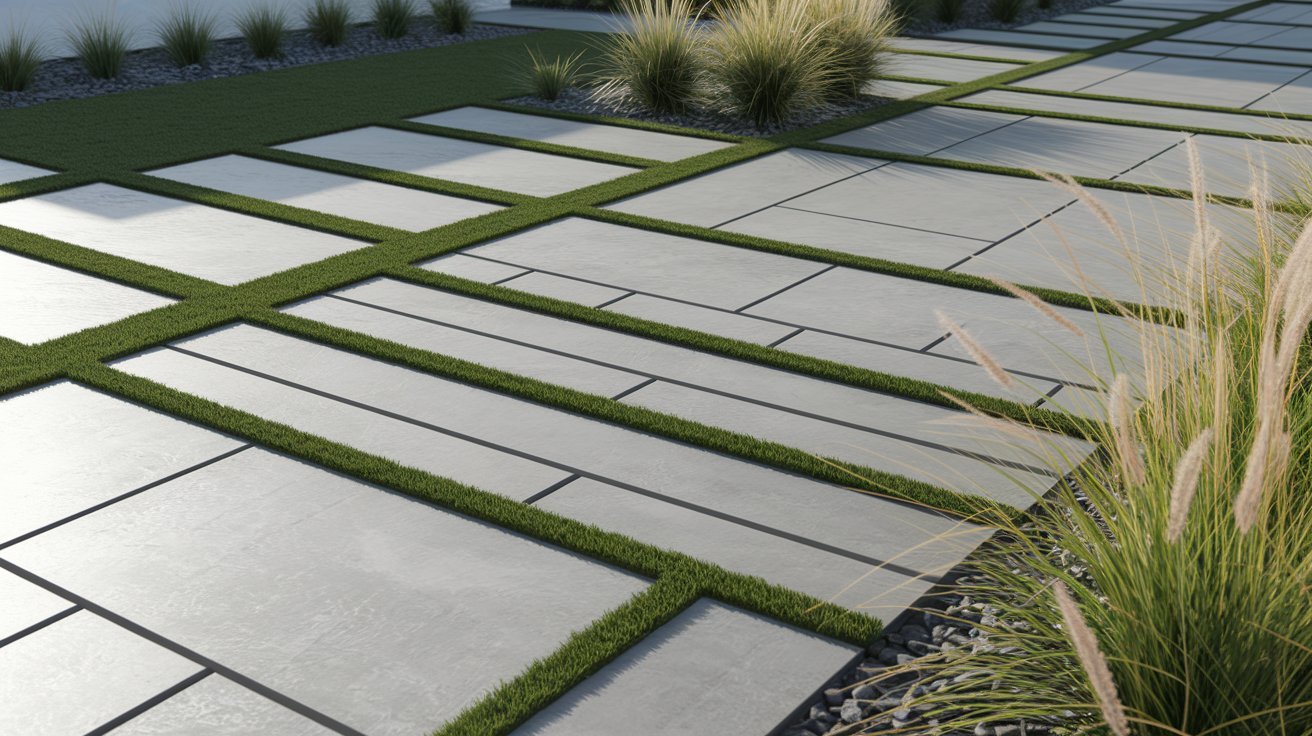
17. Stamped Concrete with Modern Patterns
Use linear, grid, or abstract stamps for a subtle yet modern decorative look. This technique adds texture and pattern while maintaining concrete’s durability. Choose contemporary stamp designs that complement your home’s architecture. Avoid overly busy patterns that compete with other design elements.
Bonus Tips
- Seal your concrete to uplift durability and color protection
- Keep lines clean for a truly modern look using formwork or spacing tools
- Choose neutral tones like charcoal, sand, or light gray
- Consider drainage and slope to avoid water pooling
- Use plants strategically to soften the harshness of concrete
- Plan for maintenance with easy-to-clean surfaces and accessible areas
- Match your home’s style to create a cohesive outdoor design
- Consider the climate when selecting finishes and installation methods
Conclusion
Modern concrete walkways offer incredible versatility for creating outdoor style that lasts. You’ve seen 17 different approaches, from ultra-minimalist slabs to textured surfaces that blend with nature.
The key is choosing a design that complements your home’s architecture and your style. Don’t feel pressured to follow trends that don’t speak to you.
Start with one section and build from there. Many of these ideas can be installed in phases, allowing you to spread costs and refine your vision over time.
Think about how you use your outdoor space. A walkway should feel natural and comfortable, not just look good in photos. Consider foot traffic patterns and daily routines when making your choice.
The right concrete walkway changes your property’s first impression and daily experience. Choose wisely, and you’ll enjoy the results every time you come home.
Frequently Asked Questions
How long do concrete walkways typically last?
With proper installation and maintenance, concrete walkways can last 25-30 years or more. Regular sealing every 2-3 years helps extend their lifespan significantly.
What’s the best thickness for a concrete walkway?
Most residential walkways should be 4 inches thick minimum. For areas with heavy foot traffic or potential vehicle access, consider 6 inches for added durability.
Can I install a concrete walkway myself?
Simple, straight walkways are DIY-friendly for experienced homeowners. Complex designs with curves, stamps, or integrated lighting are best left to professionals.
How do I prevent cracks in my concrete walkway?
Proper ground preparation, adequate thickness, control joints every 4-6 feet, and appropriate concrete mix all help prevent cracking. Avoid pouring in extreme temperatures.
What’s the difference between concrete pavers and poured concrete?
Concrete pavers are pre-made units that interlock, offering easier repairs and more design flexibility. Poured concrete creates seamless surfaces but requires full replacement if damaged.
