

The Middle Ages spanned from the 5th to 15th century. During this time, builders created some of the world’s most impressive structures. Medieval buildings still stand today, inspiring millions of visitors each year.
This article will help you understand medieval building styles. You’ll learn about the key features that made these structures unique. We’ll find how builders balanced practical needs with religious faith and creative expression.
Our research draws from leading historians and architectural experts. We’ve visited dozens of medieval sites across Europe. This firsthand experience, combined with scholarly sources, gives you accurate information you can trust.
Whether you’re a student, traveler, or history lover, this guide answers your questions. You’ll find how medieval builders solved complex engineering problems.
Let’s check how faith, function, and creativity shaped an entire era of building.
Key Features of Medieval Buildings
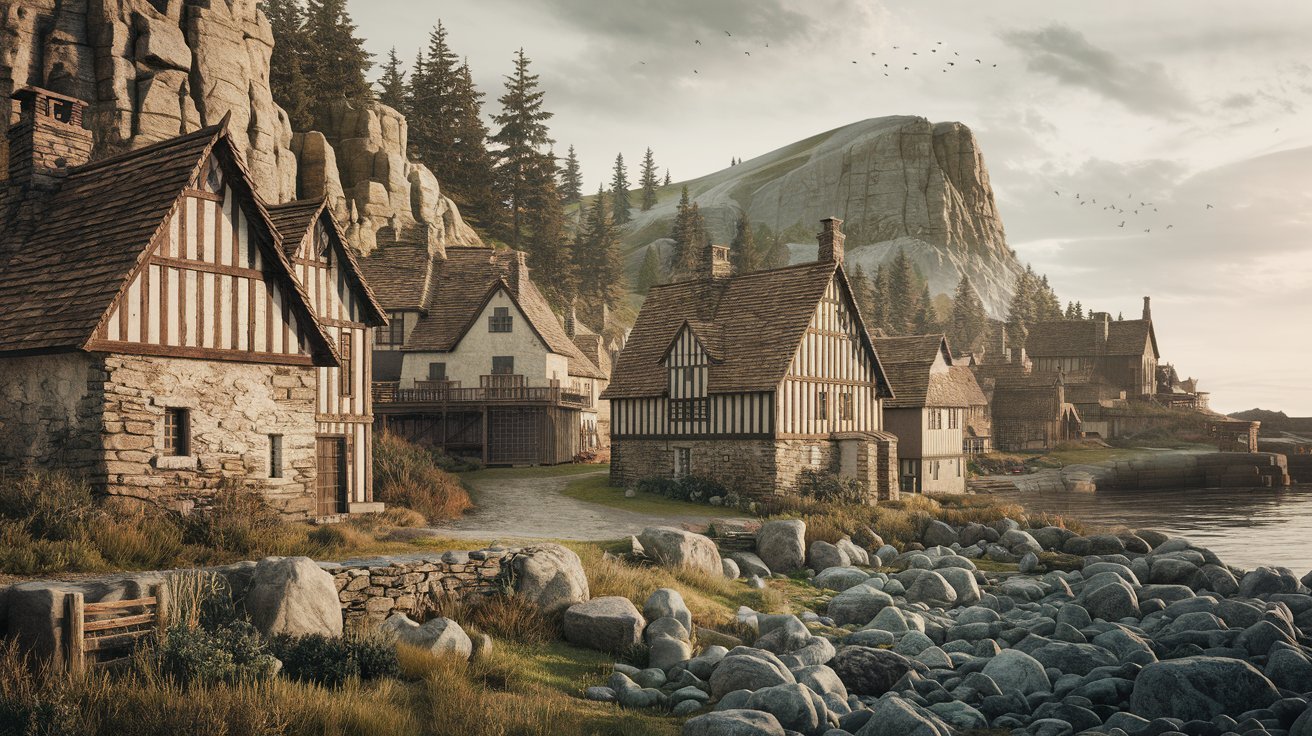
Medieval builders worked with what they could find nearby. They used stone, timber, straw, and daub – a mixture of clay, water, and organic materials. The choice depended on what the local area offered and what the climate demanded.
Working with What Nature Provided
In rocky regions, builders quarried stone from local hills. Forest areas relied heavily on timber frames. Coastal communities often mixed materials, using stone foundations with wooden upper floors. This practical approach kept costs down and made construction faster.
Built to Last and Protect
Medieval structures needed to serve multiple purposes. Thick walls provided insulation during harsh winters. These same walls offered protection during conflicts. The massive stone construction also helped buildings survive fires that destroyed thinner structures.
Smart Solutions for Weather
Builders angled roofs steeply to shed snow and rain quickly. This prevented water damage and structural collapse. Early medieval windows stayed small due to engineering limits. Large openings would have weakened the thick stone walls that held everything together.
These practical choices created the distinctive look we associate with medieval times.
Three Main Building Styles
Medieval builders developed distinct styles over the centuries. Each reflected the needs and values of its time.
Romanesque: Built Like Fortresses
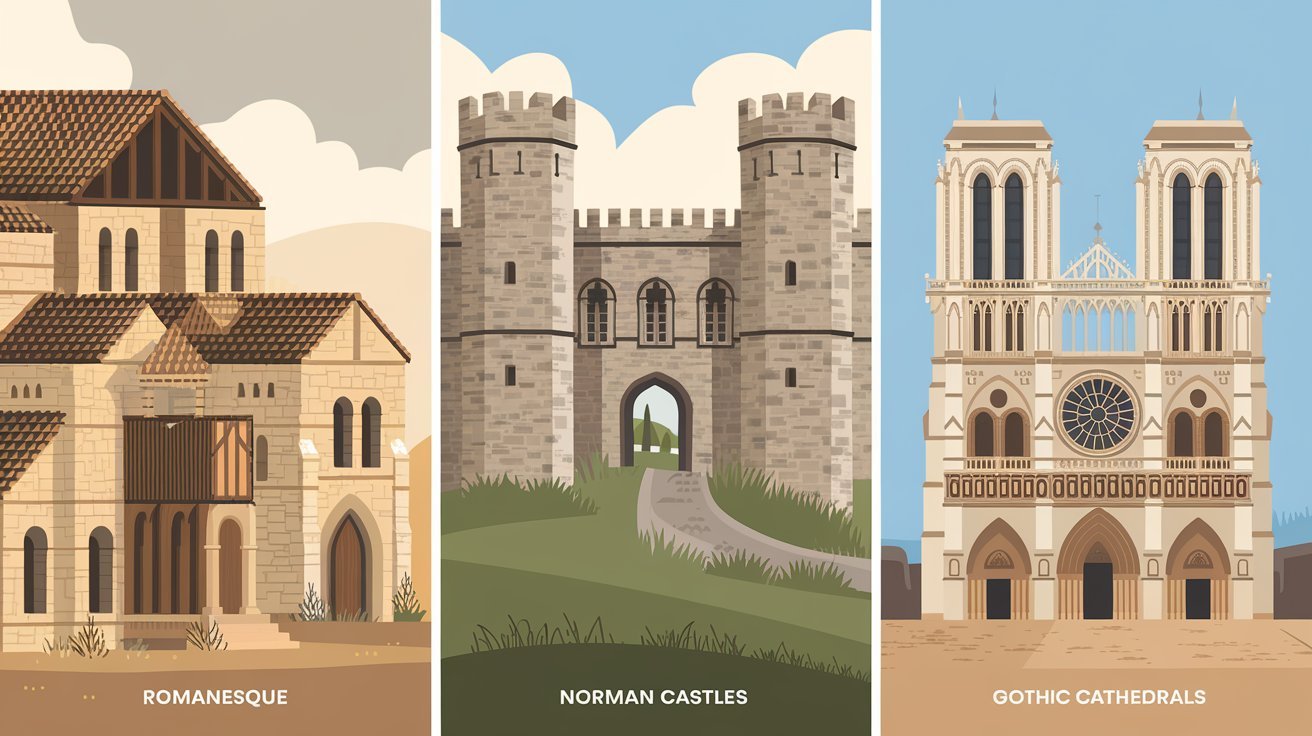
The 11th and 12th centuries saw the rise of Romanesque buildings. These structures featured rounded arches and barrel vaults – curved stone ceilings that distributed weight evenly. The walls stayed thick and strong.
Churches and castles from this period look like fortresses. Builders prioritized strength over beauty. Small windows and heavy stone created dark, protected spaces. This style worked well during unstable political times.
Norman: Military Might in Stone
After 1066, Norman conquerors brought their building methods to England. Their style focused on military needs. Massive stone keeps dominated castle designs. Windows remained narrow – wide enough for archers but too small for attackers.
The Normans added pointed decorative arches while keeping structures defensive. The Tower of London shows this approach perfectly. Form followed military function.
Gothic: Reaching for the Sky
The 12th century brought economic growth and cultural change. Gothic style emerged with revolutionary techniques. Pointed arches replaced rounded ones. Ribbed vaults and flying buttresses supported incredible heights.
Builders could now create thin walls with large windows. Stained glass filled interiors with colored light. Every detail showed craftsmanship. Notre Dame Cathedral in Paris represents this style’s peak achievement.
Religious Buildings: Faith Made Stone
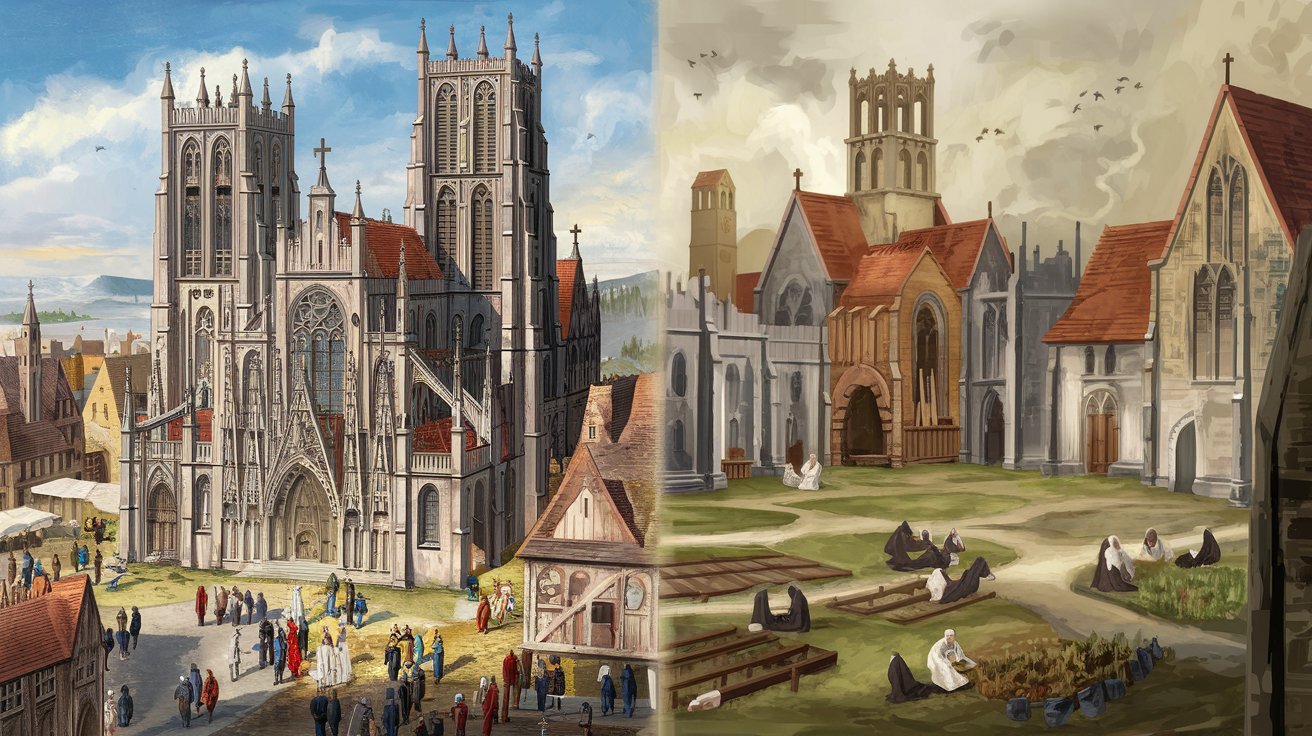
Medieval religious structures served as more than places of worship. They became the heart of community life and showcased the era’s greatest building achievements.
Cathedrals: Community Centers and Spiritual Homes
Cathedrals stood at the center of medieval towns and cities. These massive buildings served multiple roles. People gathered for religious services, but also for town meetings, markets, and festivals.
Builders designed cathedrals to create feelings of wonder and reverence. Soaring ceilings and intricate stonework represented Heaven brought to Earth. Every carved detail had meaning for the faithful.
Construction took generations to complete. Some cathedrals required decades, others stretched across centuries. Entire families of craftsmen worked on single projects. Grandfathers began work their grandsons would finish.
Monasteries: Places of Learning and Innovation
Monasteries and abbeys housed religious communities living apart from the world. These complexes included churches, living quarters, workshops, and libraries.
Monks combined daily religious practice with hands-on building work. This created perfect conditions for architectural experimentation. Without pressure from outside clients, they could try new techniques.
This freedom led to both breakthroughs and amusing failures. Some monastery walls lean at odd angles. Others show repairs where ambitious vaults collapsed. These “mistakes” taught valuable lessons that improved later construction methods.
Buildings Built for Battle
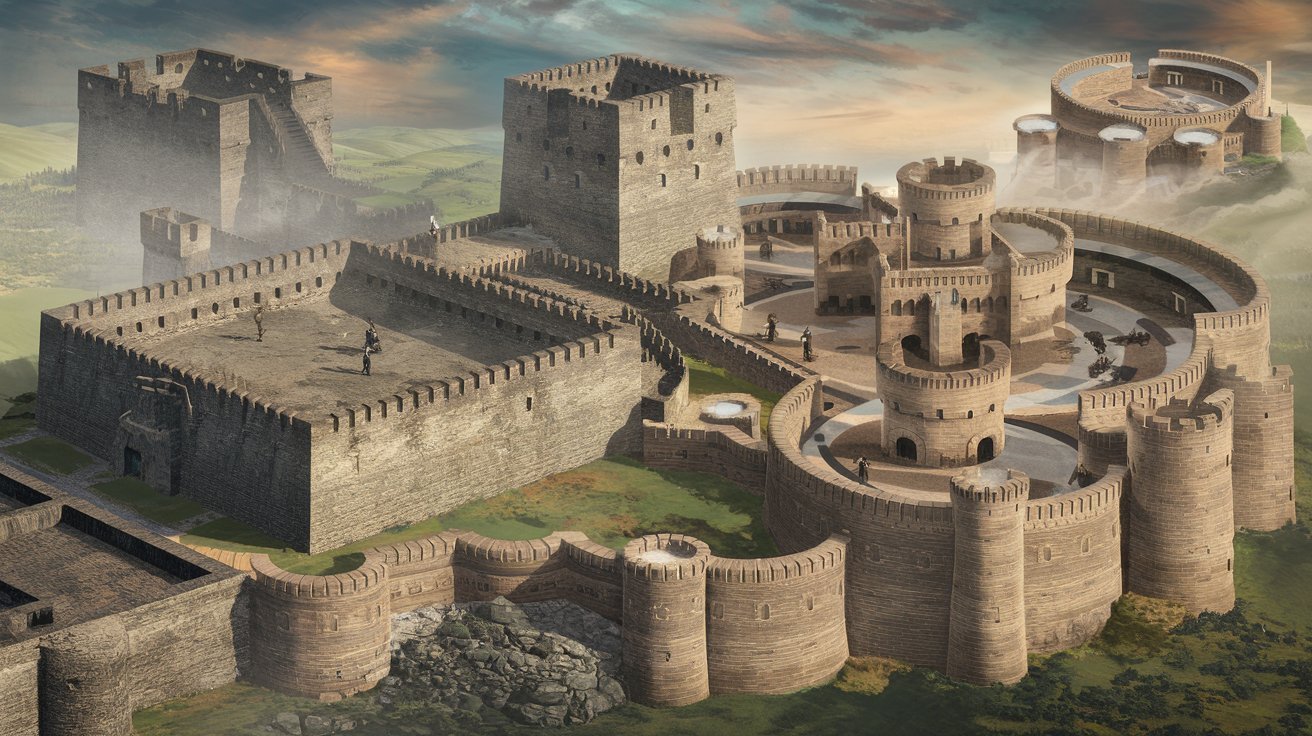
Medieval warfare shaped how people built their homes and communities. Defense came first, comfort second.
Castles: Fortresses of Stone
Castle design focused entirely on protection. Early builders created square keeps – tall, thick towers that could withstand attacks. These structures housed the lord’s family and served as the last line of defense.
By the late 12th century, military engineers made important changes. They shifted from square towers to round or many-sided ones. Curved walls deflected stones and arrows better than flat surfaces. Attackers found fewer weak corners to target.
These strongholds included clever military features. Murder holes allowed defenders to drop rocks on intruders. Spiral staircases wound clockwise, giving right-handed defenders an advantage with their swords.
Everyday Buildings: Timber Takes Over
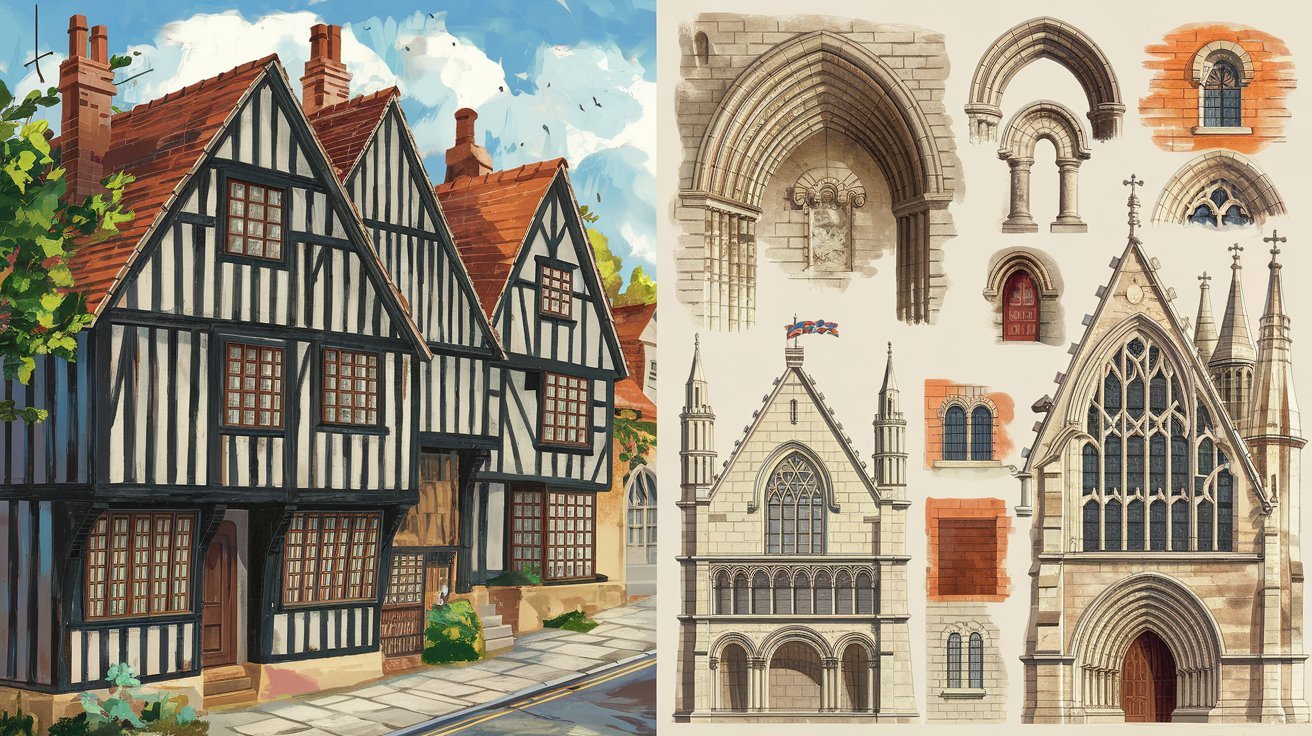
Not everyone lived in stone castles. Common people needed affordable housing that still offered basic protection.
The Rise of Wood and Plaster Homes
Starting in the 15th century, timber-framed houses became popular. Builders created strong wooden skeletons, then filled the gaps with white daub – a mixture of clay, straw, and animal hair.
These half-timbered buildings used exposed wooden beams as decoration. The contrast between dark wood and white plaster created the classic medieval town look we recognize today.
This building method was practical and economical. Towns could expand quickly using local materials and skilled carpenters.
When Building Goes Wrong: Medieval Mistakes That Make Us Smile
Medieval builders worked without detailed plans or computer models. They figured things out as they built, leading to some wonderfully imperfect results.
Learning by Doing
Master builders relied on experience and intuition rather than precise drawings. They started construction with basic ideas, then solved problems along the way. This approach created buildings with real personality.
Arches sometimes don’t line up perfectly. Vaults change height mid-construction. Windows appear in odd places where builders changed their minds. These quirks make each building unique and human.
Modern visitors often find these imperfections more interesting than perfect symmetry. The buildings tell stories of real people solving real problems with medieval tools and knowledge.
Famous Flaws That Became Features
Canterbury Cathedral shows how builders adapted when things went wrong. The triforium level – the gallery above the main arches – varies in height and style. Different construction phases created a patchwork effect that adds visual interest.
Durham Cathedral’s builders miscalculated their vault measurements. Instead of starting over, they adjusted the design mid-construction. The result works beautifully, even if it wasn’t planned.
Wells Cathedral faced a structural crisis when the central tower began sinking. The solution? Massive stone arches that locals nicknamed “angry owls” due to their fierce appearance. These emergency supports saved the building and became its most famous feature.
These “mistakes” remind us that medieval builders were human, creative, and remarkably adaptable.
Conclusion
Medieval architecture represents something rare: the perfect blend of art, faith, practical needs, and human imperfection. These builders created structures that served their communities while expressing deep spiritual beliefs. They solved engineering problems with creativity and adapted when things went wrong.
Today we study these buildings not just for their historical value, but for their honest approach to construction. Every stone tells a story of human ambition, faith, and ingenuity.
These structures still stand centuries later, inviting us to experience them firsthand. Walk through a Gothic cathedral or explore a Norman castle. Touch the stones that medieval hands shaped.
Medieval buildings offer lessons about resilience, creativity, and the power of human determination. They remind us that great architecture comes from combining practical skills with bold vision – and accepting that perfection isn’t always the goal.
Frequently Asked Questions
What materials did medieval builders use?
Medieval builders used local materials like stone, timber, straw, and daub. They chose materials based on what was available nearby and what worked best for their climate.
How long did it take to build a medieval cathedral?
Most cathedrals took decades to complete, with some requiring centuries of work. Multiple generations of craftsmen and their families often worked on the same project.
Why do medieval buildings have such thick walls?
Thick walls provided insulation during cold winters and offered protection during attacks. They also supported the heavy stone roofs and upper floors without modern engineering techniques.
What’s the difference between Romanesque and Gothic styles?
Romanesque buildings feature rounded arches, thick walls, and fortress-like appearances from the 11th-12th centuries. Gothic style emerged later with pointed arches, flying buttresses, and tall windows that let in more light.
Why do some medieval buildings look crooked or uneven?
Medieval builders worked without detailed blueprints and learned through trial and error. These imperfections happened when builders adapted their plans during construction or made repairs over time.
