


Lines form the foundation of every interior design decision, quietly influencing how we experience and interact with our living spaces.
From the sharp angles of contemporary furniture to the gentle curves of architectural details, linear elements establish rhythm, create visual pathways, and define the character of a room.
These fundamental components work behind the scenes to guide our eyes, establish mood, and bring harmony to chaotic spaces.
Understanding how to effectively use linear elements can completely change your approach to decorating.
This post will show you practical ways to incorporate different types of lines into your home, helping you create spaces that feel intentional, balanced, and perfectly suited to your lifestyle and aesthetic preferences.
Understanding Line in Interior Design
What is a Line in Design Terms?
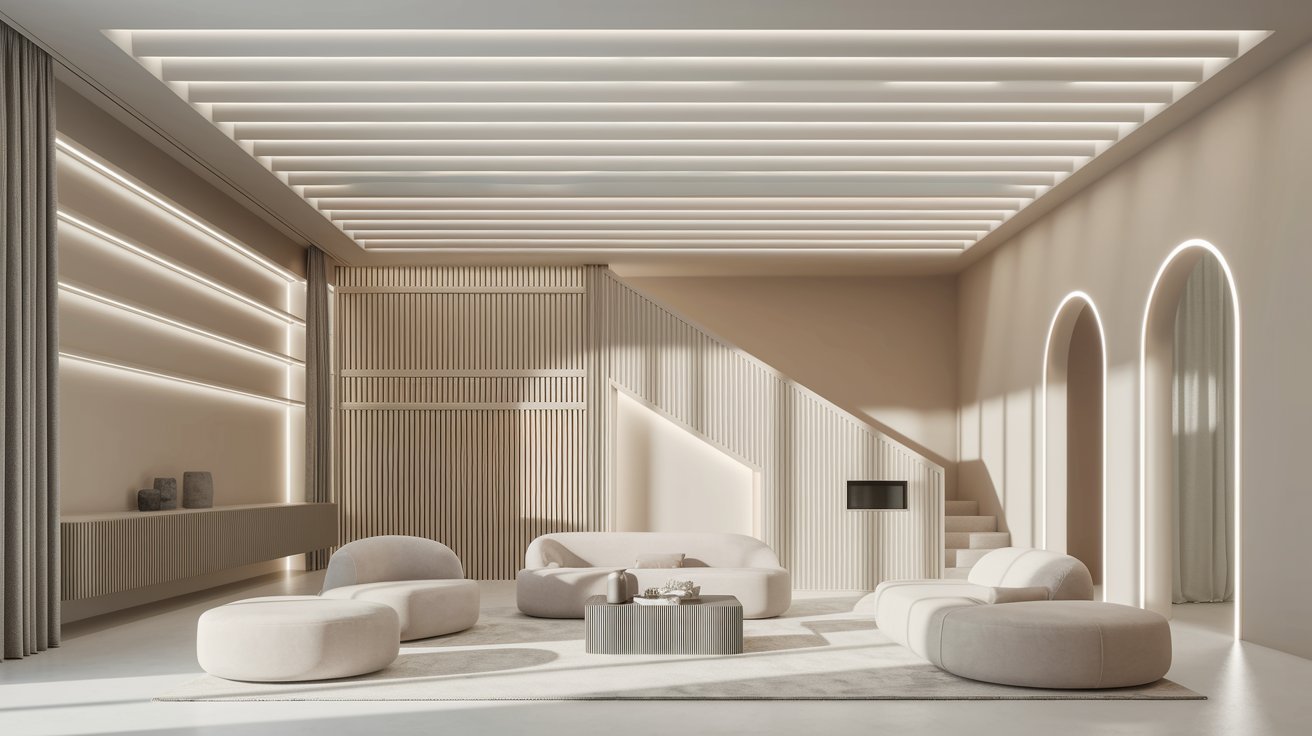
A line in interior design is any linear element that guides your eye through a space – think table edges, window frames, or architectural details. Unlike form (which refers to 3D shapes) or pattern (repeated decorative elements), line is all about direction and visual flow.
Lines can be horizontal, vertical, diagonal, or curved. They’re created by furniture edges, moldings, tile grout, stair railings, or even the way objects are arranged. These elements form the invisible framework that holds your design together.
Why Lines Matter in Modern Interiors
Lines dramatically shape how spaces feel and function. Horizontal lines make rooms appear wider and create calm feelings, while vertical lines draw the eye upward for height and drama.
In contemporary design, clean lines are essential for sleek, organized looks. Open floor plans use linear elements like kitchen islands to define zones without walls. Modern styles often celebrate structural lines – exposed beams or sharp cabinet edges – turning functional elements into striking design features.
Understanding lines gives you control over your space’s mood, whether creating cozy intimacy or dramatic openness.
The Four Primary Line Types in Modern Design
Horizontal Lines: Calm and Balance
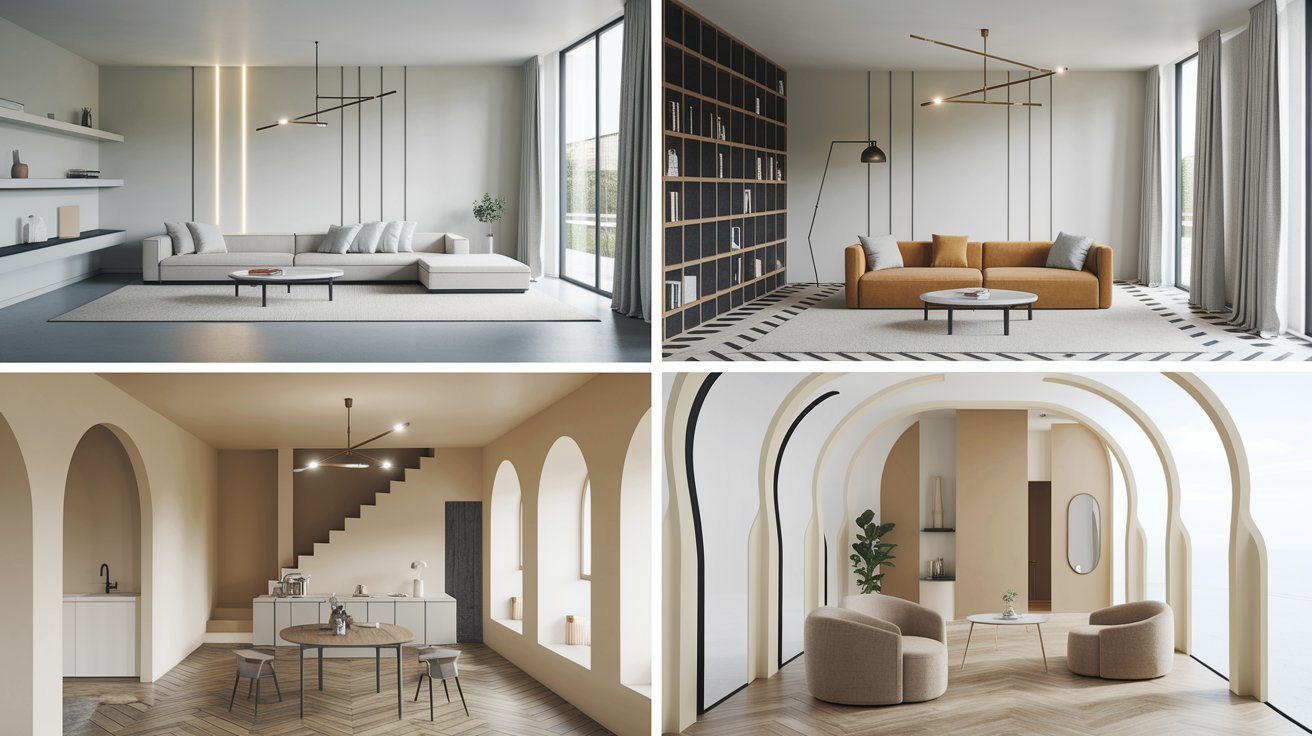
Horizontal lines create stability and make spaces feel wider and more relaxed. Think long sofas, floating shelves, and linear lighting that stretch across your view. These calming elements work best in living rooms and home offices where you want peace and order.
Vertical Lines: Height and Elegance
Vertical lines draw eyes upward, making ceilings appear higher while adding strength and formality. Floor-to-ceiling curtains, tall lamps, and high bookcases all create this upward momentum. They’re perfect for entryways and small rooms that need more perceived height.
Diagonal Lines: Energy and Motion
Diagonal lines inject excitement and movement into static spaces. Herringbone tiles, angled accent walls, and dramatic staircases create visual energy that keeps rooms interesting. Use them in kitchens, kids’ rooms, and creative spaces where you want activity and inspiration.
Curved Lines: Softness and Flow
Curved lines bring natural, organic movement that softens harsh edges. Round mirrors, curved sofas, and architectural arches create gentle flow and comfort. They work beautifully in hallways for natural movement, bathrooms for a spa-like feel, and dining areas for intimate conversation.
Additional Line Types That Influence Design
Zigzag Lines: Movement and Playfulness
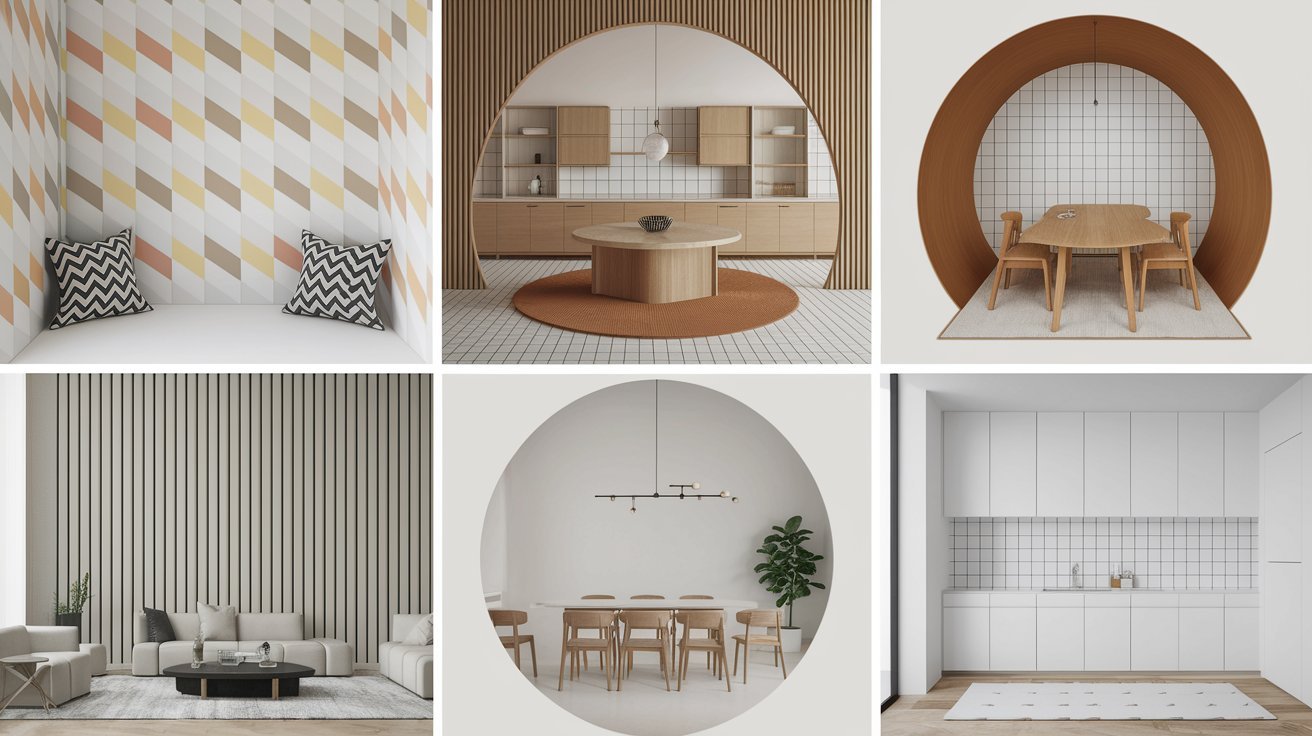
Zigzag lines add instant energy and fun through their sharp, angular patterns. Use them sparingly in chevron pillows, geometric wallpaper, or zigzag tile backsplashes to create visual excitement in powder rooms, reading nooks, or children’s spaces.
Circular Lines: Harmony and Unity
Circular lines create natural balance and flow that connects spaces seamlessly. Round dining tables, circular rugs, and curved archways bring gentle movement that softens rigid furniture and makes rooms feel more welcoming and unified.
Straight Lines: Simplicity and Structure
Straight lines form the backbone of contemporary design, offering clean simplicity and order. Found in cabinet edges, rectangular tables, and grid windows, they’re essential in minimalist interiors where every line serves a purpose and creates intentional, organized spaces.
How Lines Affect Spatial Perception
Using Lines to Manipulate Space
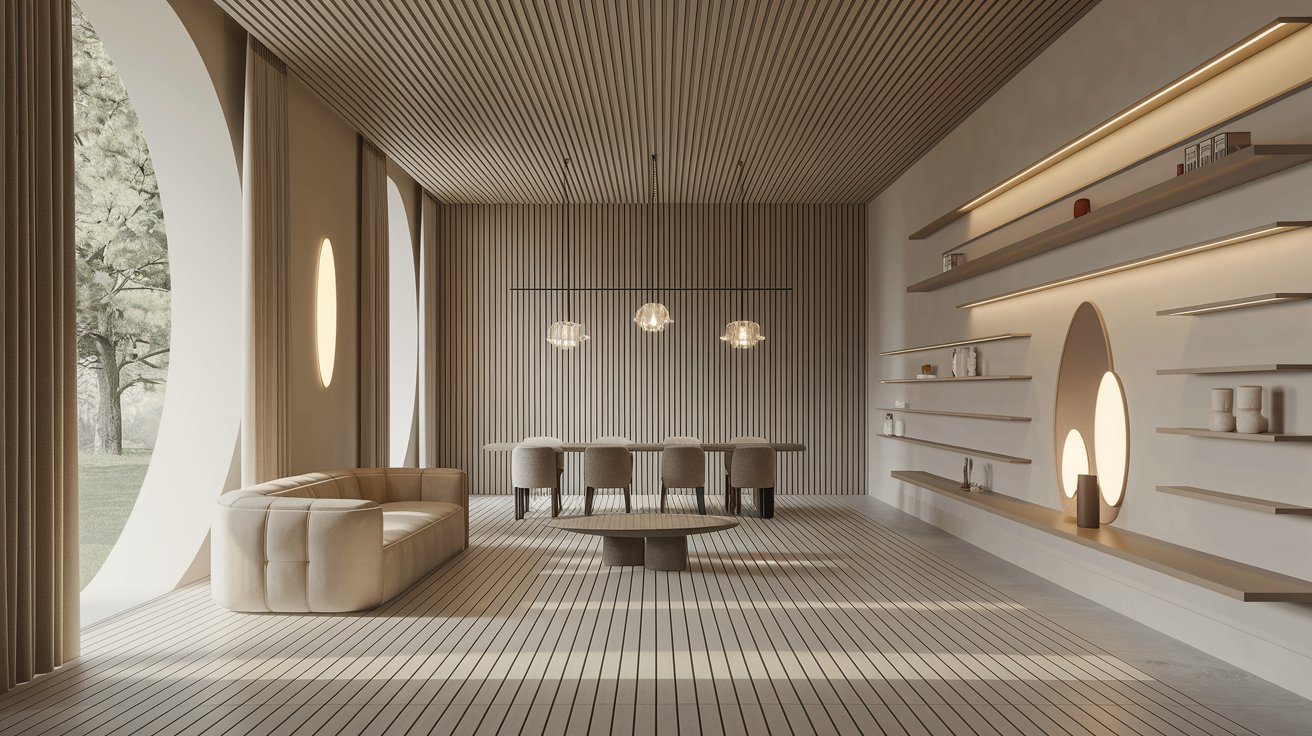
Lines can dramatically change how room dimensions feel. To make ceilings appear higher, use vertical elements like floor-to-ceiling curtains, tall paneling, or striped wallpaper that draws eyes upward.
For wider-feeling rooms, emphasize horizontal lines through long floating shelves, low furniture profiles, or tiles laid lengthwise. Even the direction of your flooring matters – running planks toward the longest wall stretches space visually.
Balancing Hard and Soft Lines
The key to sophisticated yet comfortable spaces is mixing straight and curved lines thoughtfully. Too many straight lines feel cold, while too many curves seem chaotic.
Start with clean, straight lines in major furniture and architecture, then add curved accents for softness. Pair a rectangular dining table with round pendant lights, or complement angular furniture with a curved coffee table.
This creates visual rhythm where hard lines provide structure and soft curves add warmth and interest.
Lighting, Furniture & Accessories: Line in Action
Lighting Fixtures as Line Elements
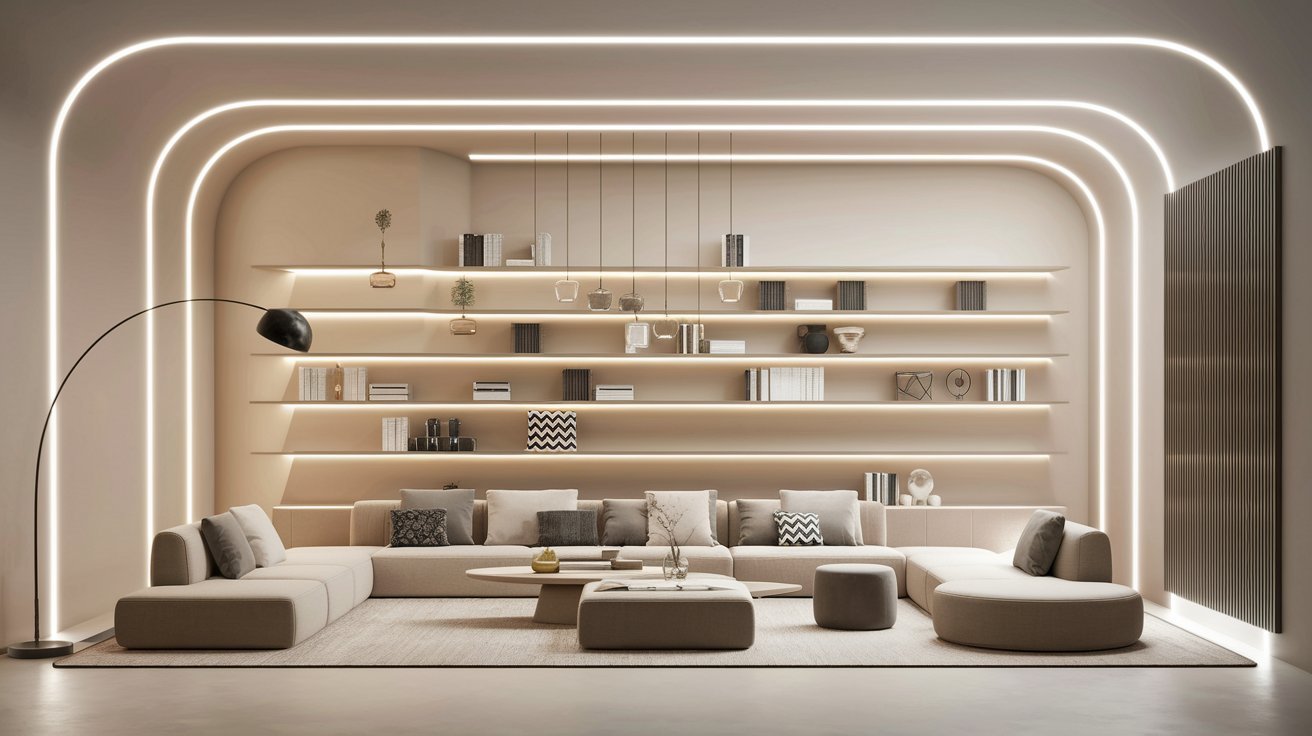
Lighting creates powerful linear statements while illuminating your space. Vertical pendant lights draw attention downward to dining tables or islands, while tall floor lamps add height to corners.
Curved arc lamps introduce graceful lines that soften rigid furniture, and geometric wall lights bring structured elements directly to walls. Linear LED strips create clean horizontal lines that make spaces feel more expansive.
Furniture & Accessories that Shape Space
Your furniture choices are your most powerful line-creating tools. Low-profile seating like platform beds and sleek sectionals emphasize horizontal lines that make rooms feel wider.
Tall shelving units create vertical statements that draw eyes upward and make ceilings appear higher.
Circular dining tables and round ottomans introduce soft lines that balance angular elements, while zigzag shelving or chevron accessories add playful diagonal energy.
Even arranging books or objects in diagonal patterns can introduce dynamic movement to static spaces.
Tips for Using Lines in Modern Interior Design
Match Line Direction to Room Purpose
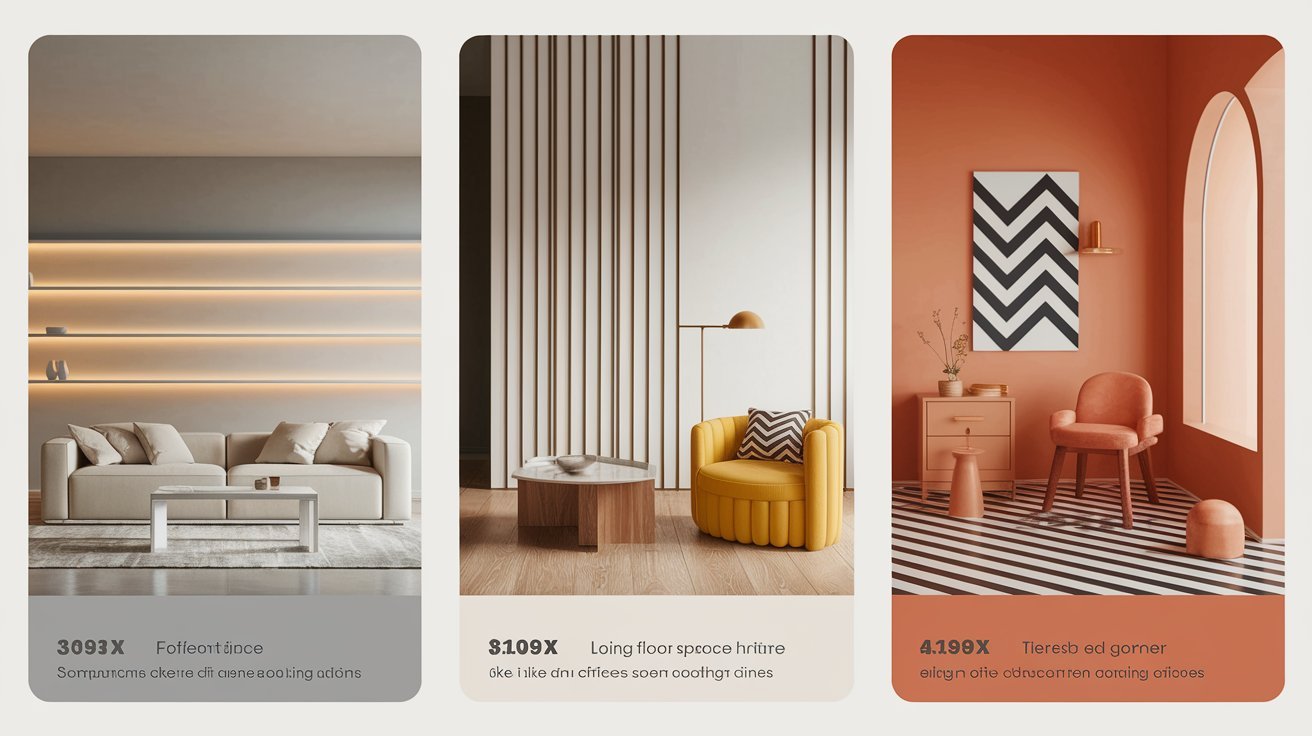
- For relaxation spaces: Use horizontal lines in bedrooms and living rooms through low furniture and linear lighting to create calm feelings
- For energizing spaces: Incorporate vertical lines in offices and entryways with tall lamps and floor-to-ceiling curtains to promote focus
- For creative spaces: Add diagonal lines through chevron patterns or angled artwork to stimulate activity and inspiration
Layer Line Types for Depth
- Combine straight and curved: Pair rectangular tables with round side tables, or linear sofas with curved accent chairs for visual balance
- Add diagonal accents: Introduce herringbone tiles or chevron pillows to break up static horizontal and vertical patterns
- Use curved elements as softeners: Add round mirrors or curved lighting to warm up spaces dominated by straight lines
Avoid Overuse: Keep Balance in Mind
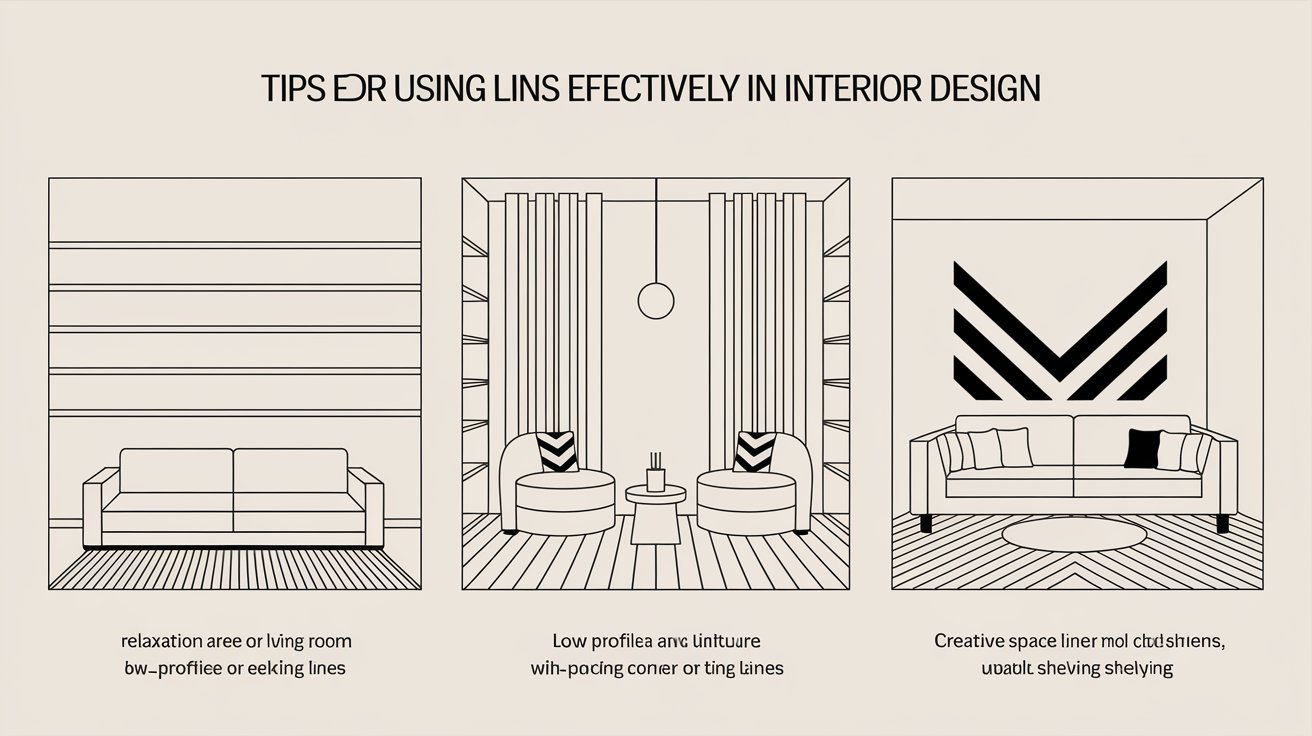
- Create contrast intentionally: In a room full of straight lines, one curved element becomes a powerful focal point
- Consider the 60-30-10 rule: Let one line type dominate (60%), use a secondary type for balance (30%), and add a third for accent (10%)
- Watch for visual fatigue: Too many similar lines create monotony, while too many competing lines create chaos
Final Thoughts: Mastering Line Definition in Modern Design
Understanding line in interior design opens up a world of possibilities for transforming your space.
Whether you’re using horizontal lines to create calm in bedrooms, vertical elements to add height in small rooms, or curved accents to soften angular furniture, each line serves a purpose in your overall design story.
The key to successful modern interiors lies in intentional choices. Rather than randomly placing elements, consider how each line contributes to your room’s mood and function.
Mix line types thoughtfully – let straight edges provide structure while curves add warmth and comfort.
Don’t be afraid to experiment with different combinations. Trust your instincts as you layer horizontal shelving with vertical artwork, or balance geometric lighting with rounded furniture.
The design process is about discovering what feels right for your space and lifestyle.
Frequently Asked Questions (FAQs)
What’s the difference between horizontal and vertical lines in interior design?
Horizontal lines make rooms feel wider and create calm, while vertical lines draw eyes upward and make ceilings appear higher. Each serves different purposes for spatial perception and mood.
How can I use lines to make my small room look bigger?
Use horizontal elements like long shelves and low furniture to create width. Add vertical lines through floor-to-ceiling curtains and tall mirrors for perceived height.
What happens if I use too many of the same line types?
Too many similar lines create visual monotony and unbalanced spaces. Mix different line types using the 60-30-10 rule for visual interest.
Where should I incorporate curved lines in my modern home?
Use curved lines in dining areas with round tables, bathrooms with rounded fixtures, and hallways with arches. They soften spaces dominated by straight, angular elements.
Can diagonal lines work in minimalist interiors?
Yes, but use them sparingly as accents rather than dominant features. Consider subtle diagonal tile patterns or angled artwork to add interest without overwhelming clean aesthetics.
