

Ceiling cracks are a common concern for homeowners, but the good news is that most of these fissures are harmless cosmetic issues rather than signs of serious structural damage.
However, understanding the difference between minor settling cracks and those that indicate potential problems is crucial for maintaining your home’s safety and value.
Various factors can cause ceiling cracks, including natural house settling, temperature fluctuations, moisture changes, and in some cases, structural stress.
While many cracks are simply the result of normal building movement over time, certain types, sizes, and patterns may warrant professional inspection. Knowing what to look for and when to seek expert advice can help you address issues early and avoid costly repairs down the road.
What Causes Ceiling Cracks?
Natural Building Settlement
As homes age, they naturally shift and settle over time. This process is completely normal and typically produces small, hairline cracks that pose no threat to your home’s structural integrity.
These minor fissures are simply your house adjusting to environmental changes and the natural compression of materials.
Structural Movement or Foundation Issues
More concerning cracks can develop when your home experiences uneven settling, where different parts of the foundation move at varying rates.
Watch for cracks that continue from the ceiling down into walls or appear alongside noticeable sagging, as these may indicate foundation problems requiring professional evaluation.
Moisture or Water Damage
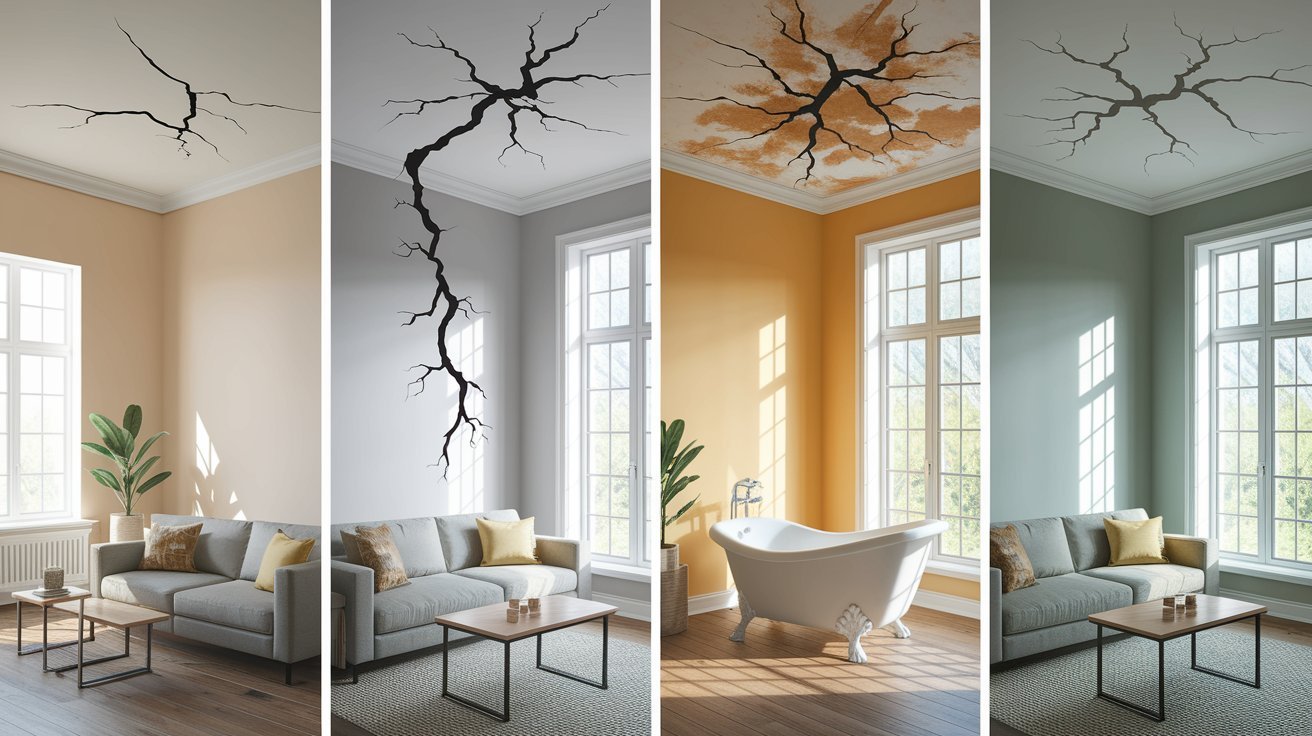
Water infiltration from roof leaks or faulty plumbing creates both immediate and long-term ceiling damage. These moisture-related cracks often appear with telltale brown or yellow staining around the affected area.
Addressing the water source quickly prevents further deterioration and potential mold growth.
Heavy Loads Above Ceilings
Excessive weight from bathtubs, large furniture, or overloaded storage areas can strain the ceiling joists below. This stress manifests as cracks directly beneath these heavy items, particularly in older homes where structural members may not meet modern load requirements.
Poor Construction or Drywall Installation
Sometimes cracks result from substandard workmanship during initial construction or repairs. Inadequate joint compound application or improper taping techniques create visible seams that crack over time.
While these issues are primarily cosmetic, they still detract from your home’s appearance.
Types of Ceiling Cracks and What They Mean

Hairline Cracks
These thin, barely visible lines are the most common type of ceiling crack you’ll encounter. They’re typically surface-level issues that develop as your home settles or experiences minor temperature changes.
While generally harmless, keep an eye on them to ensure they don’t widen or lengthen over time.
Straight Cracks Along Drywall Joints
When you notice straight lines following the seams where drywall panels meet, you’re likely seeing the result of tape failure or joint compound shrinkage.
These cracks are usually cosmetic problems stemming from installation issues rather than structural concerns, making them relatively easy to repair.
Cracks Running Down Walls
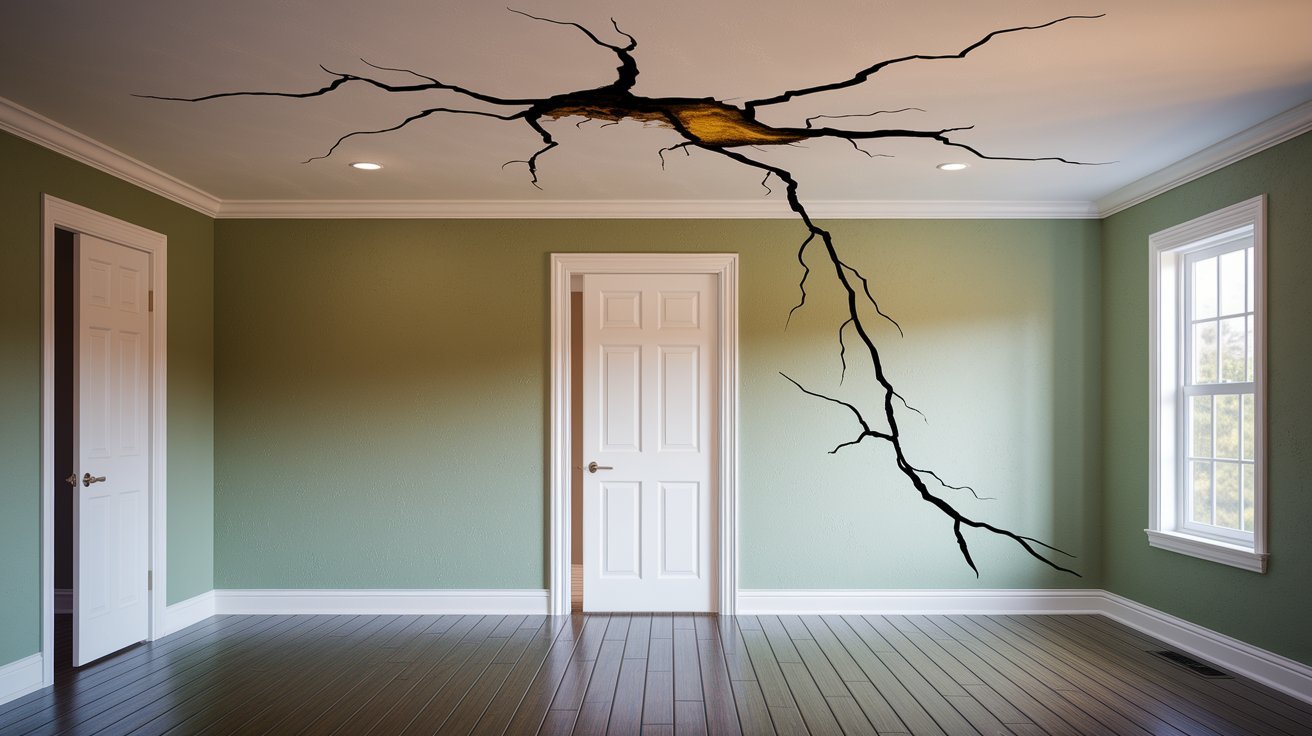
Cracks that start on your ceiling and continue down the wall are red flags that shouldn’t be ignored.
This pattern often points to foundation settlement or movement, requiring immediate professional assessment to prevent potential structural damage.
Ceiling Cracks with Sagging
Any crack accompanied by visible drooping or bowing of the ceiling indicates compromised structural support above. This serious condition demands urgent attention, as it suggests the ceiling may be at risk of partial collapse.
Discolored Cracks (Yellow or Brown)
Brown or yellow staining around cracks signals active or past water infiltration. These moisture-related issues need immediate investigation to locate and fix the leak source, preventing further damage and potential health hazards.
Gaps Between Walls and Ceilings
Visible separation where walls meet the ceiling often results from foundation movement or roof truss shifting. While not always immediately dangerous, these gaps warrant professional evaluation to determine the underlying cause.
Spiderweb Cracks
Small, interconnected cracks resembling a spider’s web are typically cosmetic when they remain shallow and confined to small areas. However, extensive or deep spiderweb patterns may indicate more serious structural stress.
Large or Deep Cracks
Wide cracks or those you can fit a coin into represent potentially serious structural issues. These always require professional inspection, as they may signal significant problems with your home’s support system.
Warning Signs That Accompany Serious Ceiling Cracks

Interior Red Flags
When ceiling cracks occur with other indoor problems, they often indicate structural issues. Watch for floors that feel uneven or slope, and doors or windows that suddenly stick or won’t close properly.
Continuous wall cracks, especially diagonal ones, are concerning signs. Also check for gaps where baseboards and moldings meet walls or ceilings.
Exterior & Basement Red Flags
Outside your home, look for stair-step cracks in brick or stone that follow mortar joints in a zigzag pattern. Check if chimneys, porches, or additions appear to be separating from the main house.
In basements, water stains, moisture, or active leaks can indicate foundation problems.
When ceiling cracks appear alongside these warning signs, contact a structural engineer immediately. Early intervention prevents minor issues from becoming costly major repairs.
When Should You Call a Professional?
Knowing when to seek professional help can save you from costly repairs and safety hazards.
Contact a structural engineer or qualified contractor if you notice cracks that run from your ceiling down into the walls, as this pattern often indicates foundation settlement or structural movement.
Any ceiling sagging or drooping demands immediate attention, regardless of crack size. Even slight sagging suggests compromised structural support that creates a potential safety risk.
Large cracks wide enough to insert a coin, or deep fissures that penetrate beyond surface paint, need professional assessment. Additionally, any cracks with brown or yellow discoloration indicate water damage requiring immediate investigation.
When multiple cracks cluster in the same area, or when ceiling problems occur alongside other issues like sticking doors or uneven floors, don’t delay calling an expert. These combinations typically signal serious structural movement.
Professional inspection costs are minimal compared to major structural repair expenses. When in doubt, it’s always better to have a qualified professional evaluate the situation rather than risk your family’s safety or your home’s value.
Conclusion
Understanding ceiling cracks doesn’t require you to become a structural expert, but knowing the basics can protect your home and family.
While most ceiling cracks are simply cosmetic issues that develop as homes naturally age and settle, some indicate serious problems that need immediate attention.
Trust your instincts when evaluating ceiling damage. If a crack looks concerning, appears alongside other warning signs, or continues to grow, don’t hesitate to contact a qualified professional.
The peace of mind from a thorough inspection far outweighs the cost, especially when you consider that early detection can prevent minor issues from becoming major, expensive repairs.
Remember that addressing ceiling cracks promptly not only maintains your home’s structural integrity but also preserves its value and keeps your family safe.
Frequently Asked Questions (FAQs)
Are small hairline cracks in my ceiling dangerous?
Most small hairline cracks are cosmetic and result from normal house settling or temperature changes. However, monitor them regularly to ensure they don’t grow larger or develop additional concerning features like discoloration.
What does it mean when ceiling cracks extend down the wall?
Cracks that run from ceiling to wall typically indicate foundation movement or structural settling issues. These patterns require immediate professional inspection as they often signal more serious underlying problems.
Should I be concerned about brown or yellow stains around ceiling cracks?
Yes, discolored cracks indicate water damage from roof leaks or plumbing issues that need immediate attention. Ignoring water-related cracks can lead to mold growth, structural damage, and more expensive repairs later.
How can I tell if my ceiling crack is getting worse?
Take photos and measurements of existing cracks to track changes over time. If cracks widen, lengthen, or develop new branches, or if your ceiling begins to sag, contact a professional immediately.
When is it safe to repair ceiling cracks myself versus calling a professional?
Small cosmetic cracks along drywall joints can often be repaired with basic patching techniques. However, any crack accompanied by sagging, water damage, or structural movement requires professional evaluation before attempting repairs.
