

I’ve always been fascinated by how buildings can tell stories. Ancient Persian architecture does exactly that.
The Persian Empire wasn’t just about conquest. It was about creating spaces that spoke of power, beauty, and divine connection. From the towering columns of Persepolis to the massive arches of Ctesiphon, Persian builders created monuments that still inspire awe today.
You’ll learn about the key features that made Persian architecture unique. We’ll examine the deep symbolism behind every carved relief and architectural choice.
Persian builders didn’t just copy existing styles. They took the best ideas from Egypt, Mesopotamia, and Greece, then changed them into something completely original.
Persian architecture wasn’t just construction. It was storytelling in stone and clay. Each palace, temple, and tomb carried messages about empire, faith, and human achievement that echo through the centuries.
Historical Background of Ancient Persian Architecture
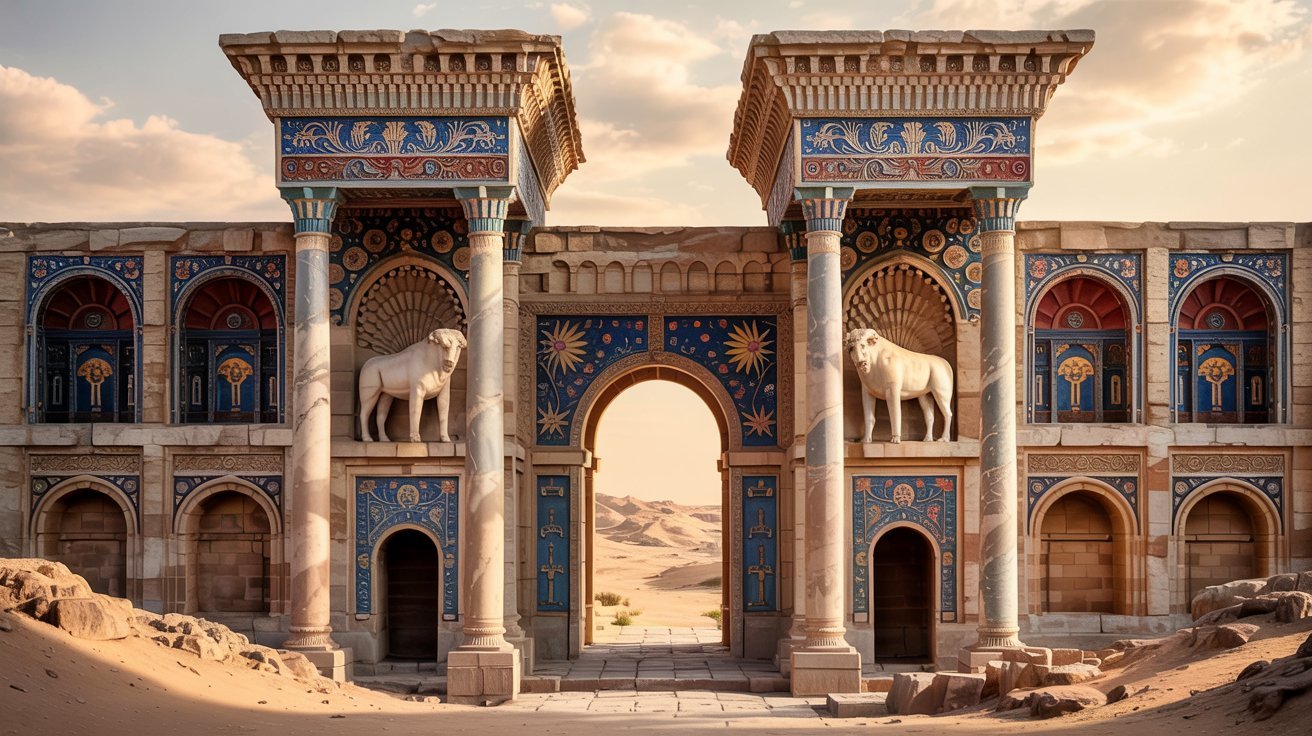
Three great Persian empires shaped architectural history. Each left its mark on how we build and design.
The Achaemenid Empire (550-330 BCE) started it all. Cyrus the Great and his successors created the first truly international architectural style. They borrowed from Mesopotamia, Egypt, and Greece, then made something entirely new.
Architecture served multiple purposes:
- Demonstrated imperial power to subjects and visitors
- Created sacred spaces for Zoroastrian worship
- Established administrative centers across the vast empire
- Showed cultural tolerance by incorporating local styles
The Parthian Empire (247 BCE-224 CE) came next. They focused on defensive architecture and introduced new vault techniques. Their buildings were practical yet impressive.
Finally, the Sassanid Empire (224-651 CE) perfected Persian architectural concepts. They created the largest unsupported arch in the ancient world. Their fire temples became models for religious architecture across Asia.
Each empire was built on the last. They created an architectural language that spoke of permanence, power, and divine favor. This language influenced builders from Spain to India.
Key Architectural Features
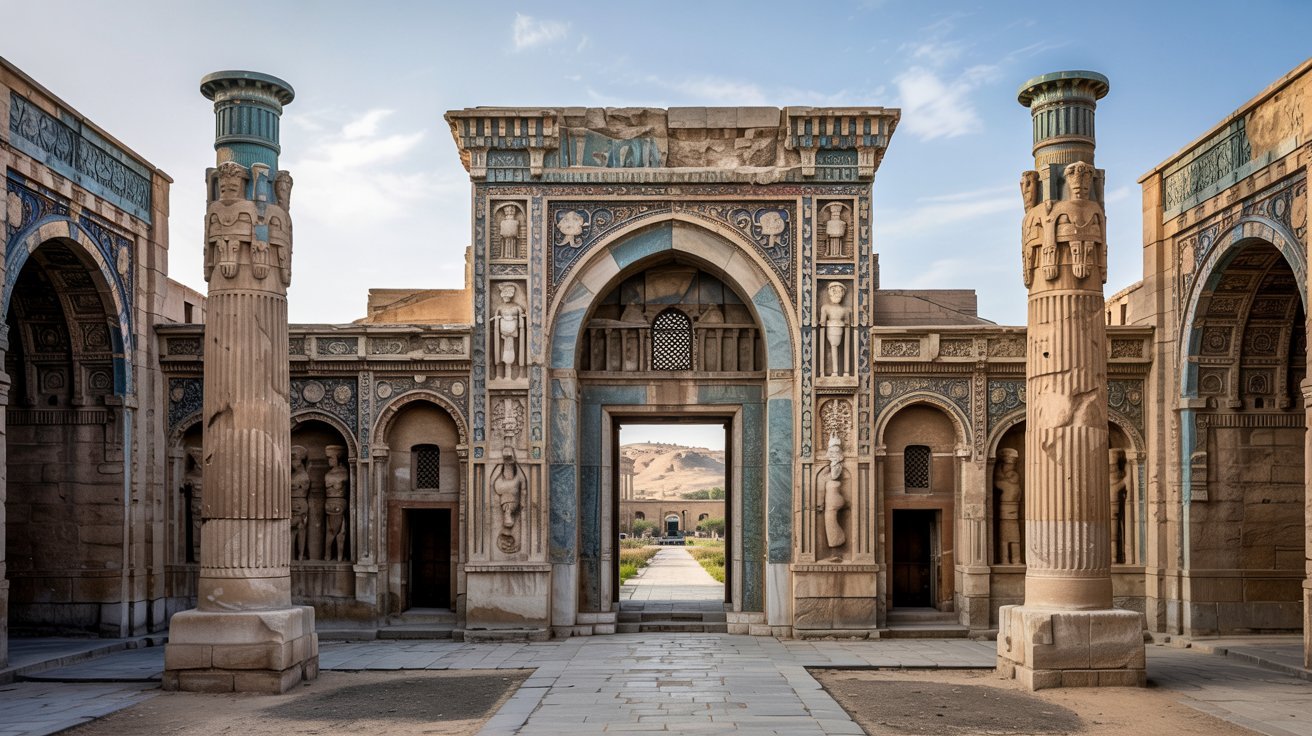
Persian builders thought big.
Grand Scale & Symmetry: They defined every major Persian building. Persepolis covers 32 acres. The audience halls could hold thousands of visitors. Everything was planned with mathematical precision. Symmetry wasn’t just pretty, as it showed divine order.
Columned Halls: Apadana became the Persian signature. These massive reception halls featured dozens of towering columns. Each column was a work of art. Animal capitals crowned the tops. Bulls, lions, and eagles supported the roof beams.
Terraced Platforms: They raised Persian cities above the surrounding landscape. Persepolis sits on a platform 40 feet high. This wasn’t just for defense. It was a statement. Persian kings ruled from above, closer to the heavens.
Vaulted Ceilings & Domes: They reached their peak under the Sassanids. The Taq Kasra arch spans 83 feet without support. It was the largest arch in the world for over 1,000 years.
Materials varied by region and period:
- Limestone and marble for ceremonial buildings
- Mudbrick for everyday construction
- Glazed tiles for decoration
- Stucco for detailed relief work
Persian builders were practical. They used local materials but created universal designs.
Symbolism in Design and Decoration
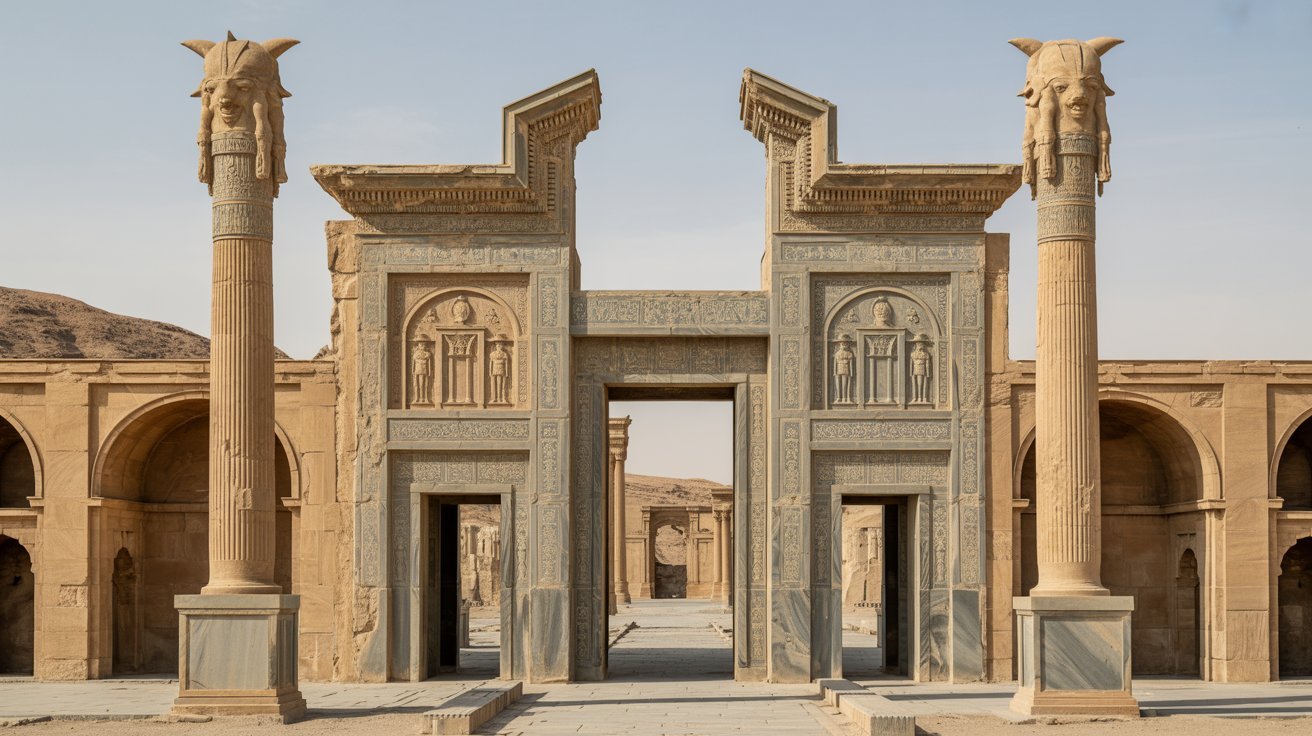
Every carving told a story. Every design choice carried meaning.
Royal Imagery: They dominated Persian architecture. Winged bulls (lamassu) guarded entrances. These weren’t just decorations. They were protection symbols borrowed from Assyria but given Persian meaning.
Lions represented royal power. Eagles showed divine favor. The faravahar symbolized Ahura Mazda, the supreme Zoroastrian deity.
Relief carvings showed tribute bearers from across the empire. Persians, Medes, Babylonians, and Indians all brought gifts to the king. This wasn’t just art. It was political propaganda carved in stone.
Zoroastrian Influence: They shaped sacred architecture. Fire temples featured central altars where eternal flames burned. These buildings were simple outside but rich inside. The contrast was intentional. True divine light came from within.
Fire symbolism appeared everywhere. Altar flames, torch holders, and fire braziers decorated palaces and temples. Fire represented truth, purity, and divine presence.
Cultural Messages: These were built into every structure. Persian builders showed unity through diversity. Different architectural styles appeared in the same building. This showed Persian tolerance and imperial reach.
Light & Space: It created spiritual experiences. Persian builders understood how sunlight moved through buildings. They designed openings to create dramatic lighting effects at specific times of day.
Notable Structures & Sites
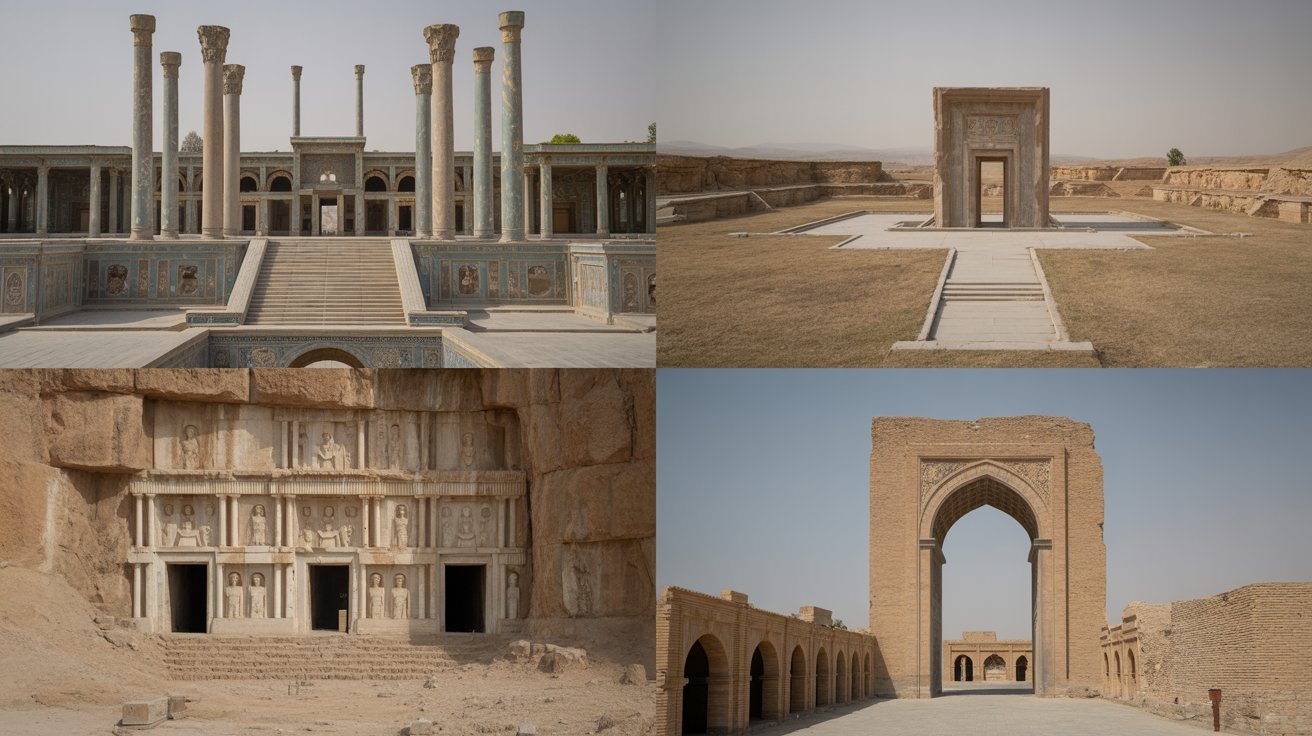
Four sites showcase Persian architectural genius.
Persepolis: It remains the crown jewel. Built by Darius I around 515 BCE, it served as the ceremonial capital. The name means “City of Persians.”
The site includes multiple palaces, audience halls, and treasuries. The Apadana hall held 10,000 people. Reliefs show tribute processions from 23 nations. Each figure is carved with incredible detail.
The double staircase leading to the Apadana is a masterpiece. Smooth enough for horses, wide enough for crowds, it shows Persian engineering skill.
Pasargadae: The houses of Cyrus the Great’s tomb. Built around 530 BCE, it’s remarkably simple. A stone chamber sits on a stepped platform. No decoration. No inscriptions. Just pure, powerful form.
The surrounding gardens were among the world’s first designed landscapes. Persian gardens became a template copied worldwide.
Naqsh-e Rustam: It features four royal tombs cut into a cliff face. Each tomb entrance is shaped like a cross. Relief carvings show the kings receiving divine favor.
Sassanid rulers added their reliefs below. These show victory scenes and royal investitures. The site spans 1,200 years of Persian history.
Ctesiphon’s Arch: It demonstrates Sassanid engineering mastery. Built around 540 CE, it’s all that remains of a vast palace complex.
The arch is 118 feet high and 83 feet wide. It was built without mortar, using perfectly fitted bricks. The technique was so advanced that medieval builders couldn’t match it.
Legacy and Global Influence
Persian architectural innovations spread far beyond Iran’s borders.
Islamic architecture adopted Persian features wholesale. The pointed arch, the dome, the four-garden paradise – all Persian innovations. The Taj Mahal’s basic design comes from Persian tomb architecture.
Persian influence reached:
- Central Asia: Samarkand’s monuments use Persian principles
- India: Mughal architecture is essentially Persian
- Turkey: Ottoman domes and arches follow Persian models
- Spain: Moorish architecture shows Persian influence
The Persian garden became a global template. From Spain’s Generalife to India’s Mughal gardens, the four-part design persists.
Modern Iranian architecture still references ancient Persian forms. The Azadi Tower in Tehran echoes Sassanid arches. Contemporary mosques use Persian proportional systems.
Preservation efforts continue worldwide:
- UNESCO protects Persepolis and Pasargadae
- Digital reconstruction helps study destroyed sites
- International teams work on conservation
- Educational programs spread awareness
Persian architectural principles influence modern sustainable design. The use of courtyards, wind towers, and thermal mass appears in contemporary green buildings.
Conclusion
Persian architecture created a language of power, beauty, and meaning that still speaks to us today.
These ancient builders solved problems we still face. How do you create inspiring public spaces? How do you balance function with beauty? How do you make buildings that last centuries?
The Persians found answers in grand scale, careful symbolism, and engineering excellence. They showed that architecture could unite diverse peoples under common ideals. Their buildings weren’t just structures. They were statements about human potential and divine connection.
You can still visit these sites today. Persepolis, despite Alexander’s destruction, remains awe-inspiring. The broken columns and weathered reliefs still convey imperial majesty. These ruins remind us that great architecture outlasts the empires that built it.
Persian architecture proves that beauty and meaning can survive any conquest.
Frequently Asked Questions
What makes Persian architecture different from other ancient styles?
Persian architecture combined elements from many cultures into something new. The use of massive columned halls, terraced platforms, and symbolic animal carvings created a unique imperial style that showed both power and cultural tolerance.
Why did Persian buildings use so many columns?
Columns solved an engineering problem. Persian builders wanted huge open spaces for ceremonies and audiences. Columns supported the roof without walls, creating the grand halls that became Persian architecture’s signature feature.
What happened to most Persian buildings?
Many were destroyed by conquest, earthquakes, or time. Alexander burned Persepolis in 330 BCE. Islamic conquests replaced fire temples with mosques. Only the strongest stone structures, like Persepolis and Naqsh-e Rustam, survived largely intact.
How did Persian gardens influence world architecture?
The Persian four-part garden design spread globally. Islamic paradise gardens, Mughal gardens in India, and even some European formal gardens use the Persian template of four sections divided by water channels representing the four rivers of paradise.
Can you still see Persian architectural influence today?
Absolutely. Islamic architecture worldwide uses Persian innovations like pointed arches and domes. Modern Iranian buildings reference ancient Persian forms. Even contemporary sustainable architecture borrows Persian ideas like courtyards and natural cooling systems.
