

After decades in construction, I’ve seen countless foundation types, but slab-on-grade remains one of the most practical solutions I recommend to clients.
This foundation method involves pouring concrete directly onto prepared ground, creating a single, solid base for your structure.
As a builder who’s worked on everything from residential homes to commercial projects, I can tell you that understanding slab-on-grade construction is crucial for making informed decisions about your building project.
This foundation type shines in areas with stable soil conditions and minimal frost concerns.
I’ve personally overseen hundreds of these installations across warm climates, where they offer cost-effective, durable solutions.
From my experience working with both homeowners and fellow contractors, knowing when and why to choose this method can save you significant time, money, and future headaches.
What Is a Slab-on-Grade Foundation?
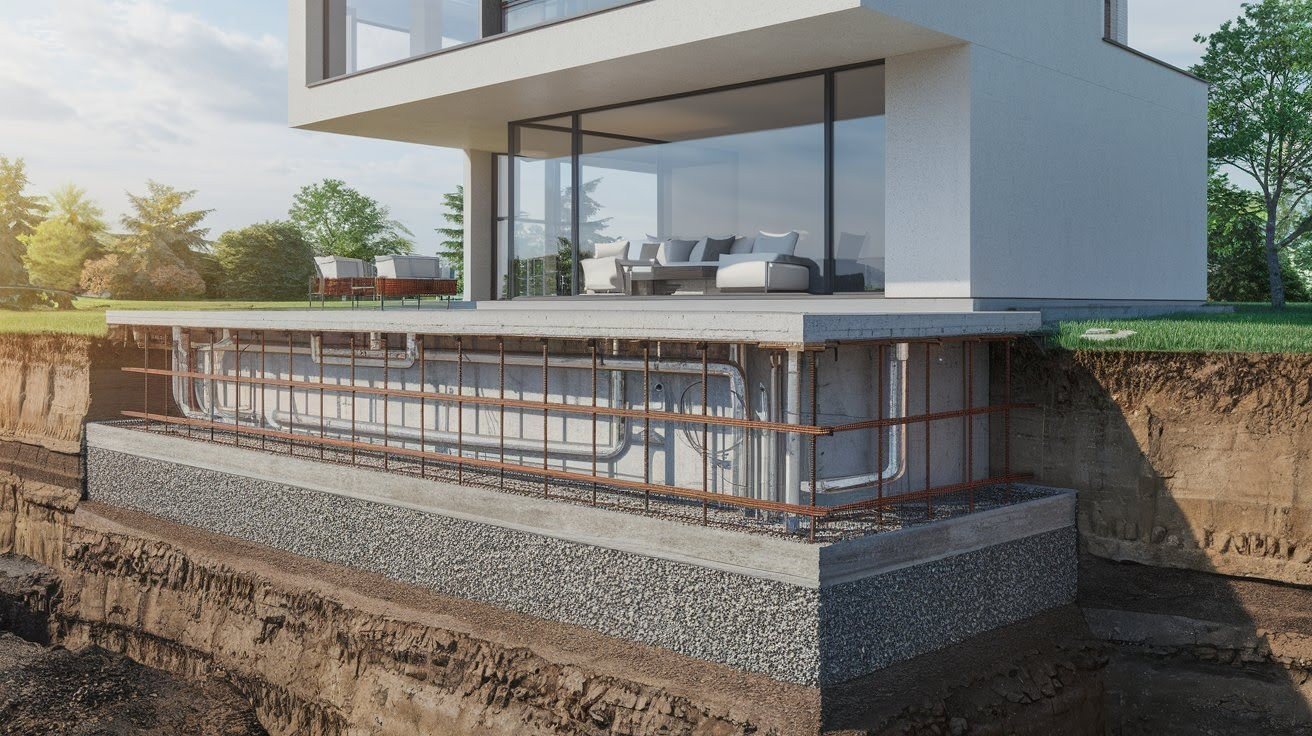
This foundation type involves pouring concrete directly onto prepared ground, creating a solid base without basements or crawl spaces.
A slab-on-grade foundation is a concrete slab poured directly onto a prepared ground surface, forming the structural base of a building.
This foundation system features thickened edges or integrated footings beneath load-bearing walls to provide additional support where the structure requires it most.
The concrete typically ranges from 4 to 6 inches thick for residential applications, with reinforced perimeter areas handling the building’s primary structural loads.
Unlike traditional foundation systems, this method eliminates the need for separate footing excavation and forms, streamlining the construction process significantly.
Key Characteristics
- No crawl space or basement: Creates a direct connection between the building and ground level
- Vapor barrier installation: 6-mil polyethylene sheeting prevents ground moisture from penetrating the concrete slab
- Gravel base layer: Properly graded gravel provides drainage and stable support beneath the concrete
- Steel reinforcement: Mesh or rebar prevents cracking from settling, temperature changes, and improper load distribution
- Thickened edges: Reinforced perimeter areas handle primary structural loads from walls and columns
- Integrated utilities: Plumbing and electrical systems are often embedded within or beneath the slab during construction
When Slab-on-Grade Is Commonly Used

Slab-on-grade foundations work best in warm climates and buildings that don’t require basements or underground utility access.
Suitable Climates
Warm regions with low frost lines: Slab-on-grade foundations perform best in areas where the ground doesn’t freeze deeply.
In climates with minimal frost penetration, typically found in southern states and warmer coastal regions, the concrete slab can be placed closer to the surface without risk of frost heaving.
These conditions allow the foundation to remain stable year-round, as ground movement from freeze-thaw cycles poses minimal threat to structural integrity.
Areas with consistent temperatures above freezing for most of the year provide ideal conditions for this foundation type, eliminating concerns about seasonal ground expansion and contraction.
Building Scenarios
No need for heat ducting or basement space: This foundation type works perfectly for structures that don’t require underground utility access or additional storage areas.
Modern heating and cooling systems, particularly radiant floor heating and ductless mini-split systems, make traditional basement or crawl space installations unnecessary.
Single-story residential homes, retail buildings, warehouses, and garages benefit significantly from slab-on-grade construction.
The absence of basement requirements reduces construction costs and complexity while providing immediate access to the building’s main level.
This approach suits homeowners who prefer main-floor living and don’t need underground storage or mechanical room space.
Types of Slab-on-Grade Foundations
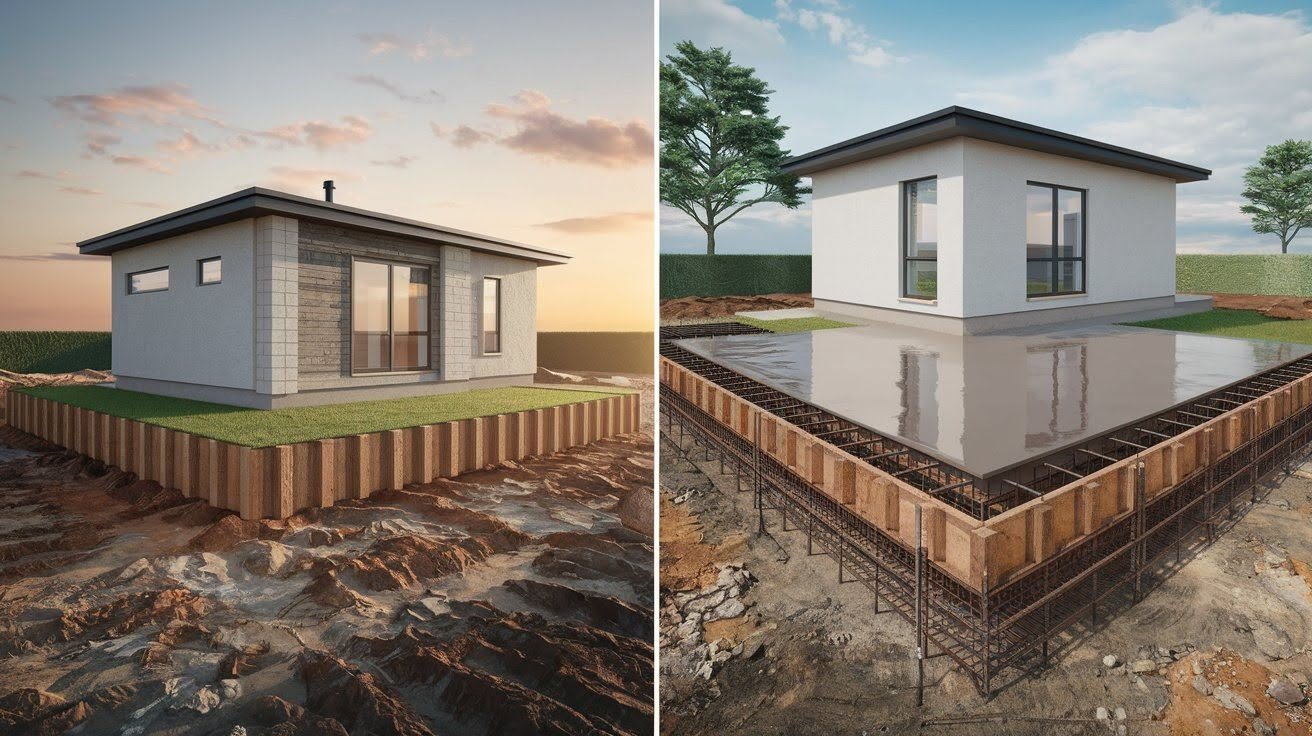
Two main slab-on-grade designs serve different construction needs, climates, and budget requirements for residential and commercial projects.
Monolithic Slab
Single pour for slab and footings: This design combines the foundation slab and perimeter footings into one continuous concrete pour, creating a seamless foundation where thickened edges serve as footings.
Faster and more affordable build process: Construction teams complete the entire foundation in one day, reducing labor costs and project timelines. This method eliminates multiple concrete deliveries and separate forming systems, making it ideal for residential projects prioritizing speed and cost control.
Floating Slab
Separate pours for footings and slab: Footings are poured first and allowed to cure before the main slab placement. This provides precise control over each component and allows adjustments between construction phases.
Optional insulation for frost protection: Rigid foam insulation can be installed around the perimeter and beneath the slab to prevent heat loss and frost penetration, making this design suitable for cooler climates requiring thermal protection.
Advantages of Slab-on-Grade Foundations

Slab-on-grade foundations reduce construction costs through simplified excavation and minimal material requirements.
Construction completes in days rather than weeks with streamlined processes requiring fewer contractors.
The solid concrete barrier prevents pests like termites and rodents, while vapor barriers block moisture and mold issues.
This method uses fewer materials, generates less waste, and preserves natural soil patterns.
Ground contact provides thermal mass that naturally regulates indoor temperatures, improving energy efficiency and reducing heating and cooling costs for long-term savings.
Design and Planning Considerations
Proper planning ensures slab-on-grade foundations meet long-term structural and functional requirements while avoiding costly modifications after construction completion.
Future-Proofing Plumbing Layout:
- Map all water supply lines and drainage systems during the design phase
- Install oversized sleeves for future plumbing modifications
- Pressure test systems before concrete placement
- Plan access points for potential additions
Mechanical and Storage Space Planning:
- Design utility rooms or exterior enclosures for HVAC equipment
- Plan attic access for ductwork and electrical systems
- Account for electrical panels and storage needs
- Allocate interior space for mechanical systems
Site Grading and Drainage Solutions:
- Grade site with 6-inch slopes over 10 feet away from the foundation
- Install perimeter drainage systems
- Plan gutters and surface water management
- Consider soil conditions and seasonal drainage patterns
Conclusion
After years of working with various foundation systems, I can confidently say that slab-on-grade foundations offer exceptional value when applied correctly.
This method involves pouring concrete directly onto prepared ground, creating cost-effective solutions for warm climates and single-story structures.
The benefits include reduced construction time, lower costs, and excellent pest resistance, though it’s not suitable for areas with deep frost lines or buildings requiring basement space.
From my professional experience, success depends entirely on proper design and skilled installation.
I’ve seen poorly planned projects result in plumbing nightmares and drainage issues that could have been avoided.
Working with experienced contractors who understand soil conditions, drainage requirements, and local building codes makes the difference between a foundation that lasts decades and one that causes ongoing problems. Choose wisely, and this foundation type will serve you well.
Frequently Asked Questions
What does slab on grade mean in construction?
Slab on grade refers to a concrete foundation poured directly onto a prepared ground surface without basements or crawl spaces. This method creates a single, solid base that serves as both the foundation and floor system for the building.
How thick should a slab-on-grade foundation be?
Most residential slab-on-grade foundations are 4 to 6 inches thick with reinforced edges up to 12 inches deep. The exact thickness depends on soil conditions, building loads, and local building codes in your area.
Can you build a slab-on-grade foundation in cold climates?
Slab on grade works best in warm regions where frost penetration is minimal or nonexistent. In colder areas, special insulation and frost protection measures are required, making other foundation types more practical.
What are the main disadvantages of slab-on-grade foundations?
The primary drawbacks include limited access to utilities after construction and no basement storage space. Plumbing repairs can be costly since pipes are embedded in concrete, and mechanical systems need alternative housing locations.
How long does it take to install a slab-on-grade foundation?
Installation typically takes 3 to 7 days, depending on size and complexity, including site preparation and curing time. This makes it significantly faster than basement or crawl space foundations, which can take several weeks to complete.
