


Have you ever stepped inside a courtyard and instantly felt transported to another era, surrounded by thick adobe walls?
Old Spanish Colonial architecture is capturing hearts and imaginations. It does have a certain kind of magical quality, even centuries after its creation.
Countless missions, haciendas, and colonial homes I’ve walked through, along each time I’m struck by how these structures seem to whisper stories of the past.
This is about an appreciation of old buildings. Spanish Colonial architecture made a blueprint for living, prioritizing environmental harmony, community, and comfort.
Are you ready for yourself to see exactly how today’s builders, this timeless architectural style, inspire and influence modern design now?
The Historical Roots of Spanish Colonial Architecture
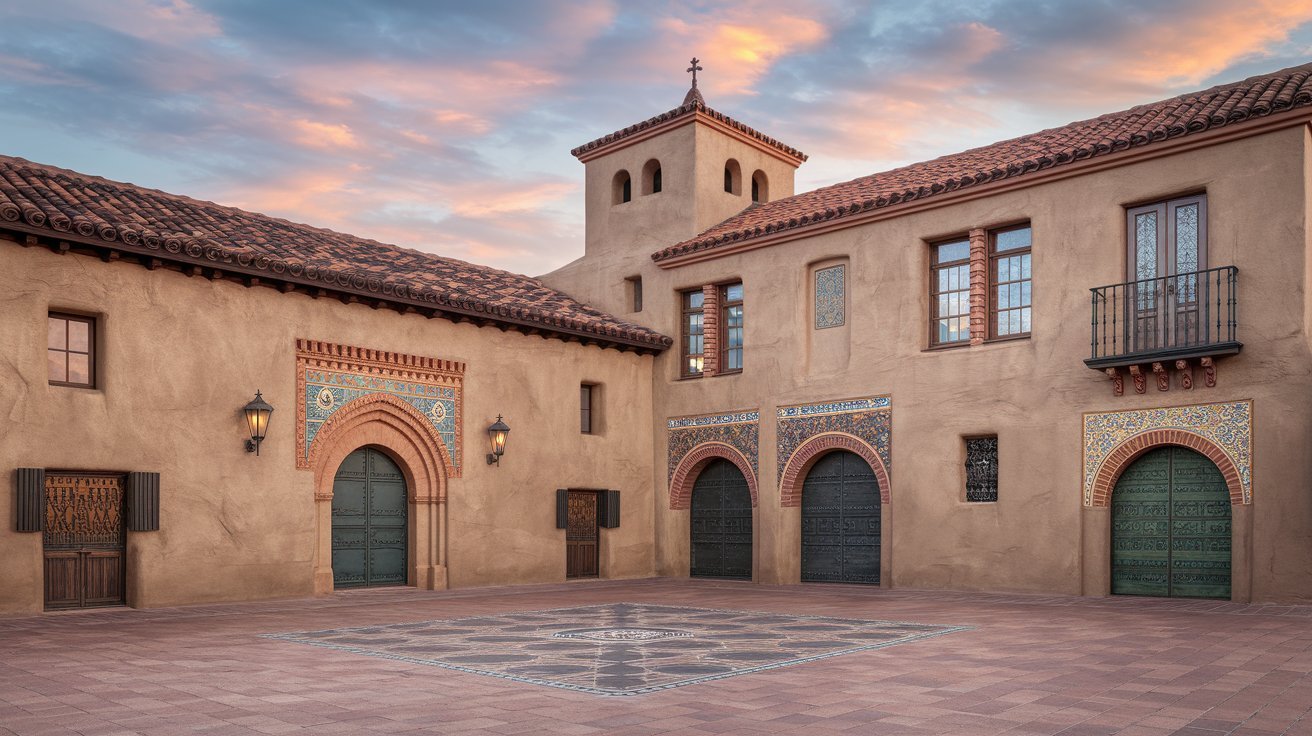
A Look Back to the 16th–19th Century
Spanish Colonial architecture emerged when Spain expanded across the Americas from the 1500s through the 1800s. Spanish settlers and missionaries brought their building traditions to new territories, but had to adapt using local materials and climate conditions.
The thick adobe walls characteristic of this style provided essential insulation in hot climates while creating the distinctive look we recognize today.
Cultural Fusion and Global Influence
Spanish architecture was already a rich blend before reaching the Americas. Centuries of Islamic rule in Spain contributed intricate tile work, horseshoe arches, and geometric patterns.
When Spanish architects arrived in the New World, they incorporated indigenous techniques and local materials. Mexico added vibrant colors and decorative elements, while California adapted single-story designs for earthquake safety.
Each region developed its own interpretation while maintaining core Spanish Colonial characteristics.
Signature Features That Define the Style
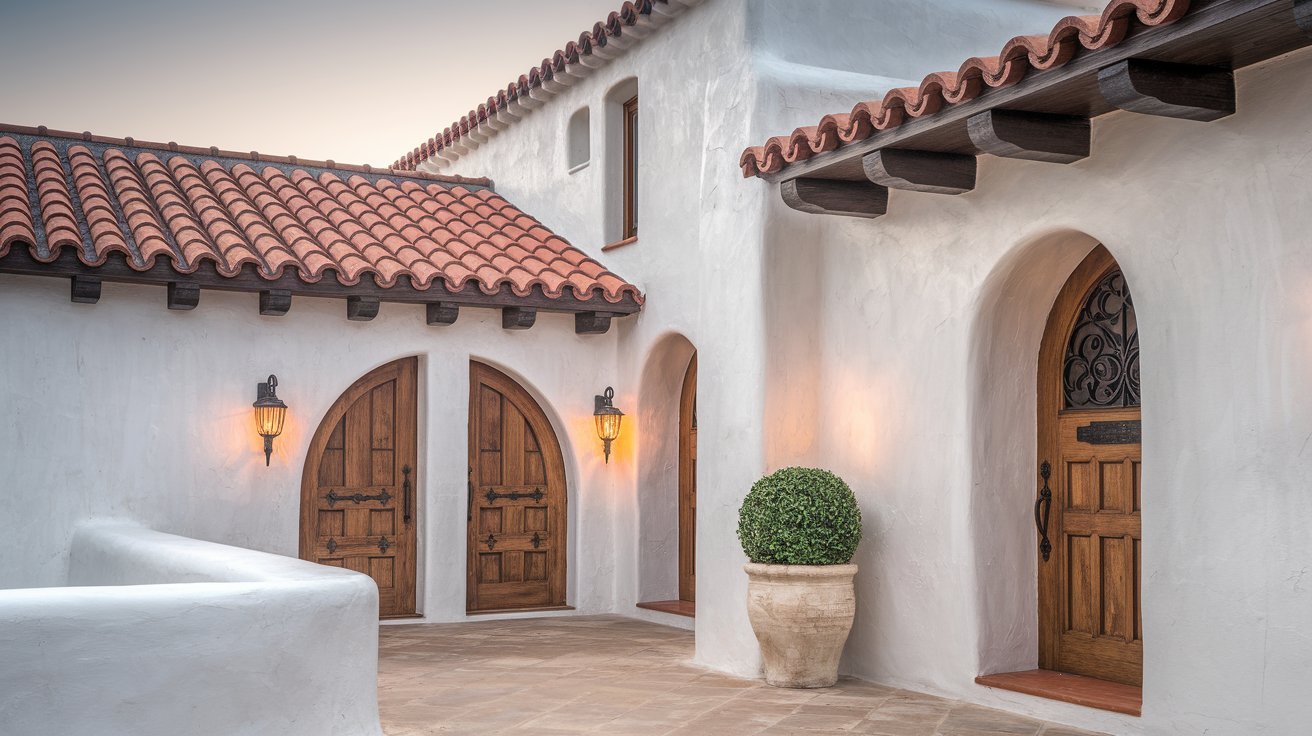
Stucco Walls: Beauty with Purpose
The thick, whitewashed stucco walls are the most recognizable feature of Spanish Colonial architecture. These substantial walls provide natural insulation, keeping interiors cool in summer and warm in winter.
The smooth, painted surfaces create a clean backdrop while requiring minimal maintenance, developing a gentle patina over time that adds character.
Red Clay Roof Tiles
Those distinctive curved terracotta tiles serve both form and function. Originally hand-crafted, these tiles shed water effectively while withstanding harsh weather. The rich, earthy tones complement neutral stucco walls, creating a warm color palette.
The overlapping pattern allows for thermal expansion and provides excellent ventilation.
Soft Arches and Curved Openings
Spanish Colonial buildings feature gracefully curved doorways and windows that blend Roman engineering with Moorish design.
These arched openings distribute structural weight more effectively than rectangular frames while creating visual flow. The gentle curves improve air circulation and natural light distribution throughout the building.
Hand-Carved Wooden Details
Skilled craftsmen created intricate wooden elements using local hardwoods, from exposed ceiling beams to ornately carved doors. These details often incorporate symbolic motifs reflecting Spanish and indigenous cultures.
The natural wood tones provide a warm contrast against cool stucco surfaces, ensuring each building has a distinct character.
Living Spaces That Reflect Tradition
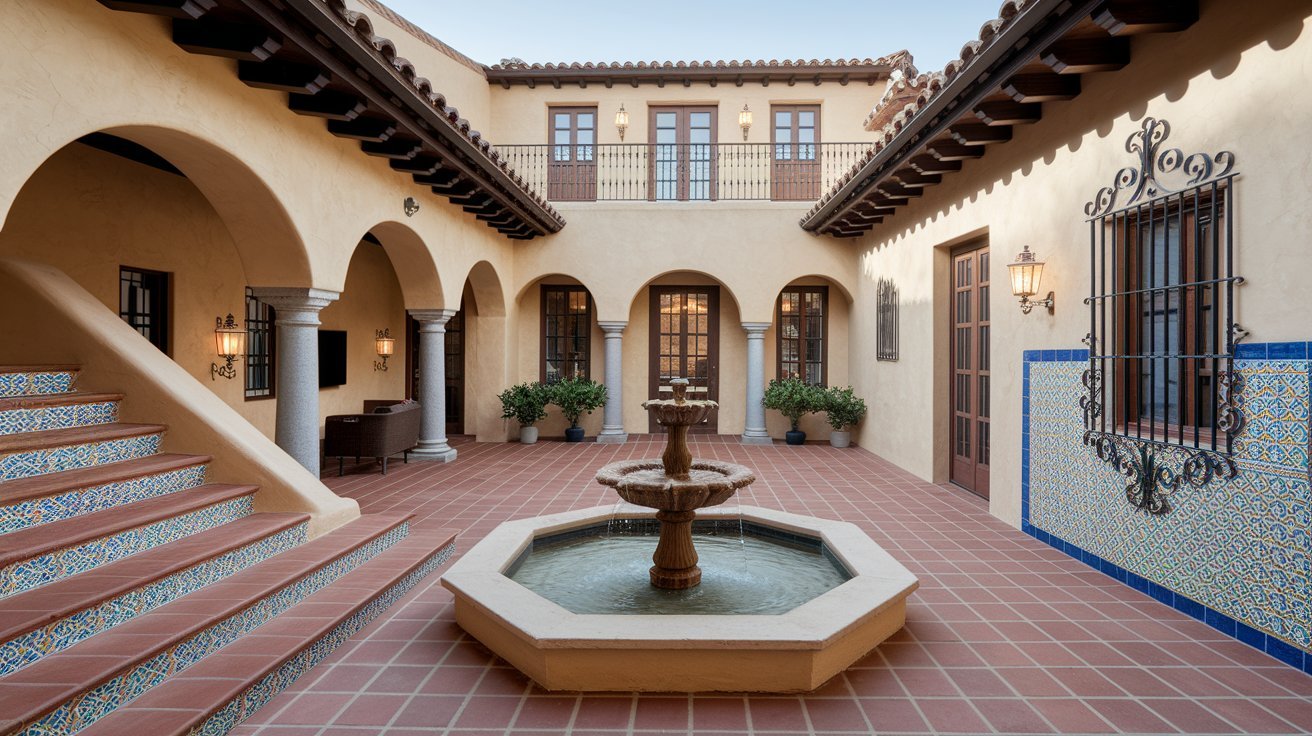
Courtyards: The Heart of the Home
Spanish Colonial homes center around open courtyards inspired by Roman atriums and Andalusian patios. These spaces serve as social hubs where families gather for meals and celebrations.
Many feature fountains that provide natural cooling while creating cross-ventilation throughout the home. Surrounded by covered walkways, these outdoor rooms blur interior and exterior living.
Decorative Ceramic Tiles (Azulejos)
Hand-painted ceramic tiles bring vibrant color through intricate patterns and floral motifs. These azulejos brighten kitchen backsplashes, stair risers, and patio surfaces. Each tile creates surfaces that are both practical and visually striking.
The glazed finish ensures easy maintenance while preserving brilliance for decades.
Wrought Iron Accents
Skilled blacksmiths created decorative ironwork combining security with artistry. Window grilles protect openings while allowing air circulation and casting shadow patterns. Ornate balcony railings provide safety without blocking views.
These handforged elements add texture and visual interest to stucco surfaces.
Global Footprint and Regional Adaptations
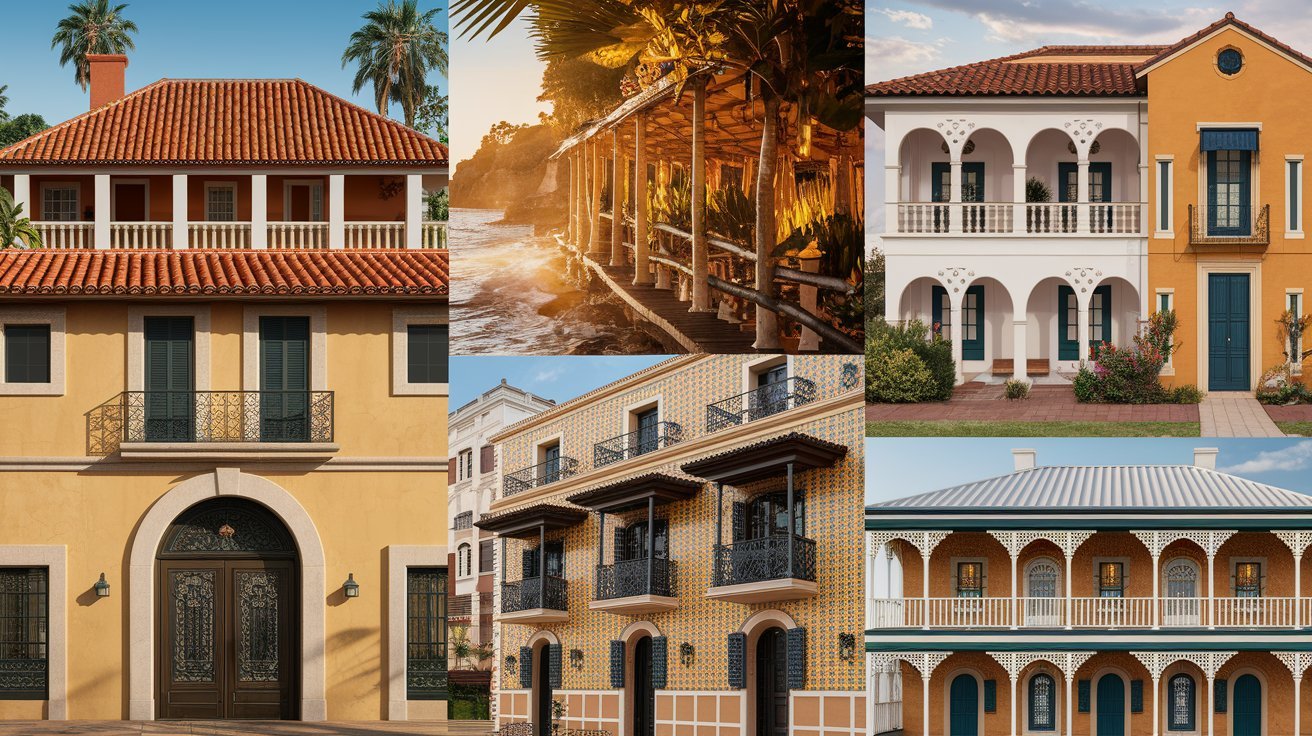
California and Florida
The warm, dry climates of California and Florida provide ideal conditions for Spanish Colonial architecture. California cities like Santa Barbara and San Diego feature entire districts with cohesive red tile roofs and stucco walls.
Florida’s buildings in St. Augustine and Miami demonstrate how the style adapts to humid coastal conditions while maintaining distinctive character.
Mexico, Australia, and Beyond
Spanish Colonial architecture has spread worldwide, adapting to local conditions and building traditions. In Mexico, the style incorporates vibrant indigenous colors for a uniquely Mexican interpretation.
Australia embraced Spanish Colonialism during the early 20th century, modifying it for different climate zones. From South America to the Mediterranean, builders continue drawing inspiration from Spanish Colonial principles.
Why Spanish Colonial Still Captivates Today

Timeless Visual Appeal
Spanish Colonial architecture possesses rich visual quality that remains relevant across changing design trends. The style’s natural, earthy materials create buildings that feel grounded and authentic in any era.
The human scale and comfortable proportions make structures feel welcoming rather than imposing. The warm color palette of terracotta tiles, cream stucco, and natural wood creates harmony that appeals to contemporary sensibilities.
Sustainable and Climate-Friendly
Modern builders increasingly appreciate Spanish Colonial architecture for its naturally energy-efficient features. The thick stucco walls provide excellent thermal mass, reducing heating and cooling costs throughout the year.
Covered walkways and deep overhangs create shaded spaces while protecting interiors from direct sunlight. The emphasis on passive cooling through courtyards and cross-ventilation reduces dependence on mechanical systems, aligning with today’s environmental responsibility.
Incorporating Spanish Colonial Charm into Modern Design
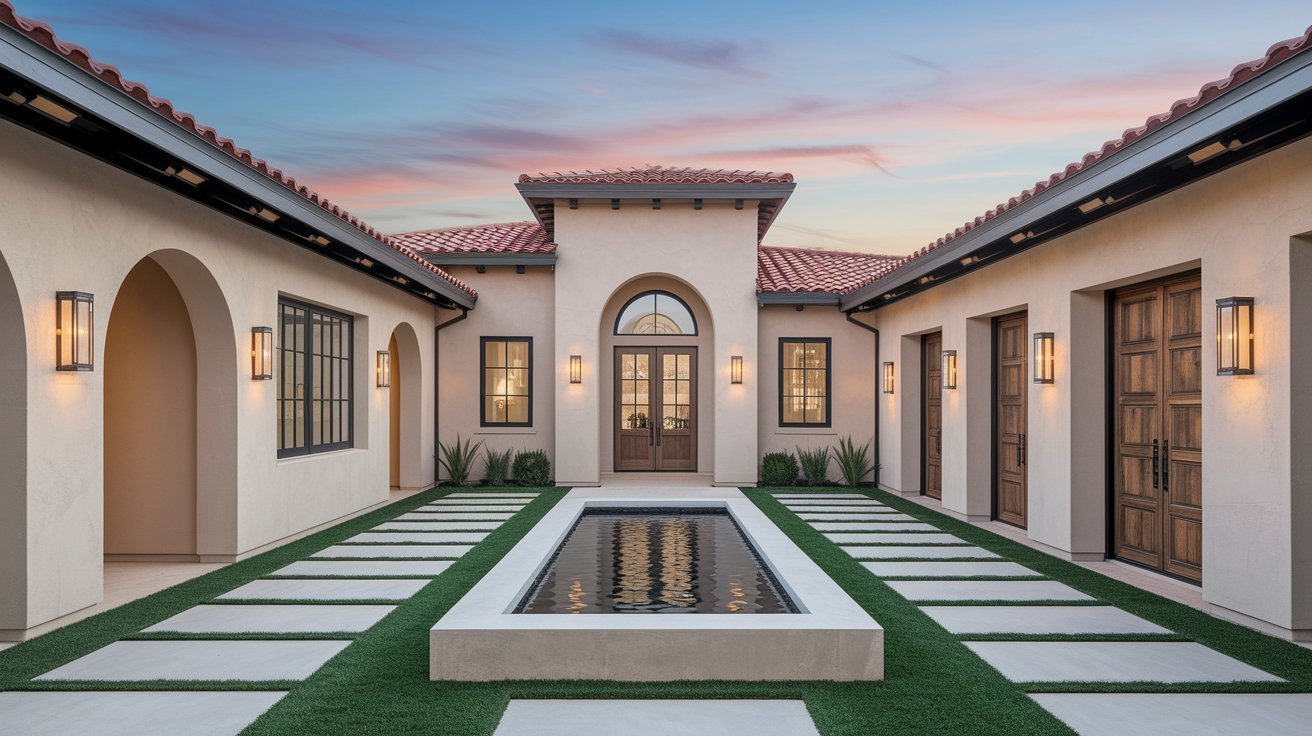
Blending Old with New
Modern architects successfully preserve Spanish Colonial heritage while adding contemporary functionality to meet today’s living needs.
They incorporate traditional forms like arched openings and courtyards but use updated materials such as energy-efficient windows and modern insulation systems.
The key lies in maintaining the style’s essential character while integrating smart home technology, updated electrical systems, and modern plumbing.
This approach creates homes that honor historical authenticity while providing all the conveniences expected in contemporary living.
Expert Guidance Makes a Difference
Working with professionals who understand Spanish Colonial architecture ensures authentic results that respect the style’s heritage.
Experienced architects and craftspeople know which elements are essential to preserve and where modern adaptations can be seamlessly integrated.
They understand the importance of proportions, material choices, and traditional construction techniques that give these buildings their distinctive character.
Quality craftsmanship remains crucial, as hand-finished details and careful attention to traditional methods create the difference between genuine Spanish Colonial charm and superficial imitation.
Conclusion
After years of studying and visiting Spanish Colonial architecture throughout the Americas, I can confidently say this style offers something truly special that modern constructors often lack.
Environments can feel grand, and environments can feel intimately welcoming due to mindful integration. These settings arise from proper sizes plus aging natural building components.
Next time you do encounter one of these most outstanding buildings, be sure to notice it. The design’s emotional effect will then become obvious.
The original builders intended to achieve that sense of timeless beauty as well as peace.
Are you prepared to incorporate these enduring design principles? Find design concepts and other building understanding now.
Frequently Asked Questions
What are the main characteristics of Spanish Colonial architecture?
Spanish Colonial architecture features thick stucco walls, red clay tile roofs, arched doorways, and central courtyards. The style includes wrought iron details, hand-carved wooden elements, and decorative ceramic tiles.
Where can I find the best examples of Spanish Colonial buildings?
The finest examples are in California, Florida, and Latin America, particularly Santa Barbara, St. Augustine, and Mexico City. Historic missions, government buildings, and residential neighborhoods showcase authentic Spanish Colonial design.
Is Spanish Colonial architecture suitable for modern living?
Yes, it adapts well with naturally energy-efficient features like thick walls and passive cooling systems. Modern architects blend traditional elements with updated materials while preserving authentic character.
What makes Spanish Colonial architecture environmentally friendly?
Thick stucco walls provide thermal mass, reducing heating and cooling costs year-round. Courtyards, covered walkways, and cross-ventilation create natural climate control without heavy mechanical system dependence.
How can I incorporate Spanish Colonial elements into my home?
Start with arched openings, terracotta roof tiles, stucco walls, and wrought iron accents. Working with professionals ensures authentic results that respect traditional proportions and craftsmanship techniques.
