


You’ve probably seen those striking buildings with brass gears, exposed copper pipes, and vintage industrial fixtures. That’s steampunk architecture, and it’s gaining serious momentum in today’s design world.
This style blends Victorian-era charm with industrial elements. Think ornate ironwork mixed with functional machinery. It creates spaces that feel both historical and futuristic.
Why is this happening now? People crave authenticity in our digital age. They want spaces with character and story. Steampunk architecture delivers both.
In this article, we’ll explore what makes steampunk architecture unique. You’ll learn why architects and homeowners are choosing this bold style. We’ll show you real examples and practical applications.
By the end, you’ll understand this fascinating style and how it might work for your next project.
Understanding the Roots of Steampunk Architecture
Lets get to the basics first:
The Victorian Influence

Victorian architecture shaped the foundation of what we now call steampunk design. This era gave us several key styles that still influence builders today.
Gothic Revival brought pointed arches and ornate stonework. Buildings reached skyward with dramatic spires and intricate details. Churches and universities adopted this grand approach.
Queen Anne style introduced asymmetrical designs. Bay windows, wrap-around porches, and decorative trim became popular. These homes showed wealth and status through elaborate features.
Birth of the Steampunk Movement
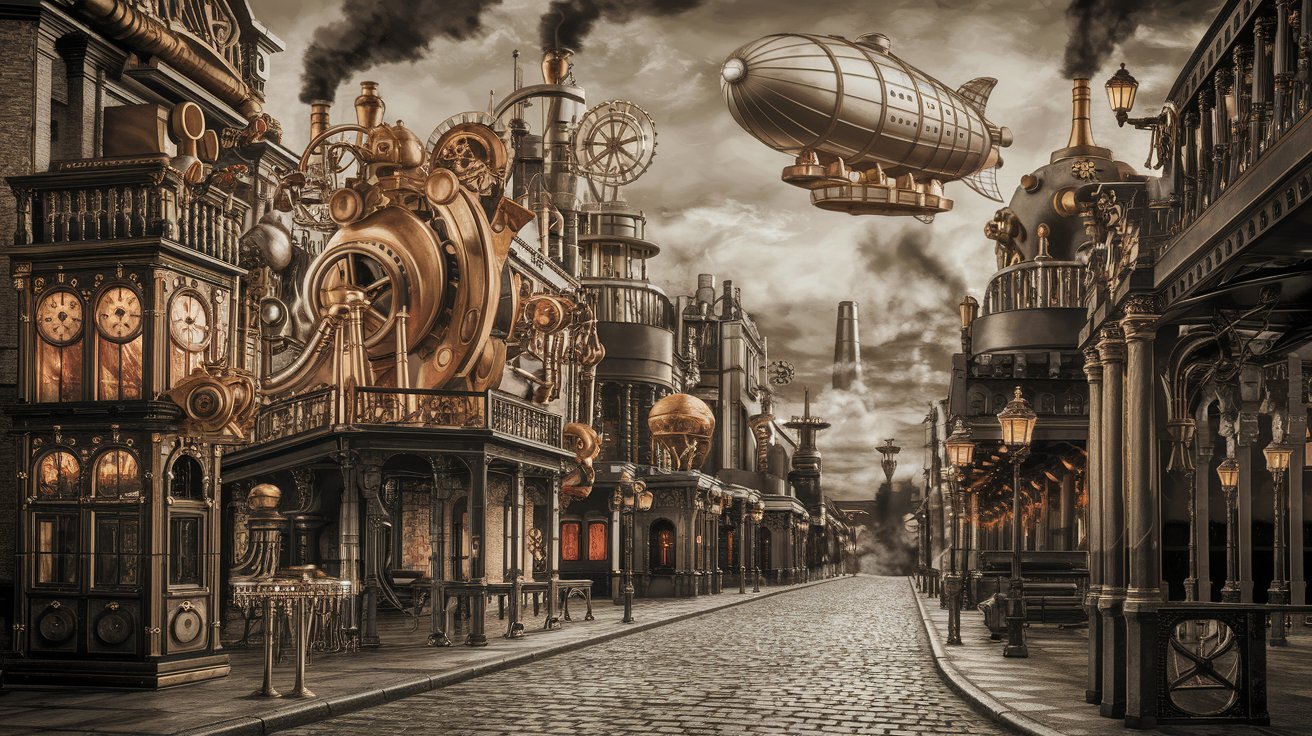
Steampunk imagines a “Victorian Era that never was.” This concept asks: What if steam technology had advanced differently? What if Victorian society had developed along another path?
The movement began in science fiction and fantasy literature after 1980. Writers created worlds where steam-powered machines achieved impossible things. Airships filled the skies. Mechanical computers processed information. Clockwork automatons performed complex tasks.
These stories captured people’s imagination. They offered an alternative to our current technology-driven world. The visual style soon moved from books into real architecture and design.
Key Characteristics of Steampunk Architecture
These factors makes the Steampunk Architecture different from others:
Exterior Design Elements

Steampunk buildings stand out with their bold rooflines. Steep, multi-angled roofs create dramatic silhouettes. Domes add classical touches to modern structures.
Windows tell the story. Tall arched openings let in maximum light. Grand doorways welcome visitors with Victorian flair. These features create impressive first impressions.
Vertical elements add character. Turrets rise from corners like castle towers. Balconies extend living spaces outdoors. These details break up flat surfaces.
Decorative work shows attention to detail. Ornate trim frames windows and doors. Hand-carved elements add texture. Wrought iron creates intricate patterns.
Industrial materials define the look. Brass fixtures gleam against dark backgrounds. Copper develops natural patina over time. These metals age beautifully.
Color schemes stay consistent. Dark browns and blacks form the base. Metallic tones add shine and interest. Red and green accents provide contrast without overwhelming.
Interior Design Features
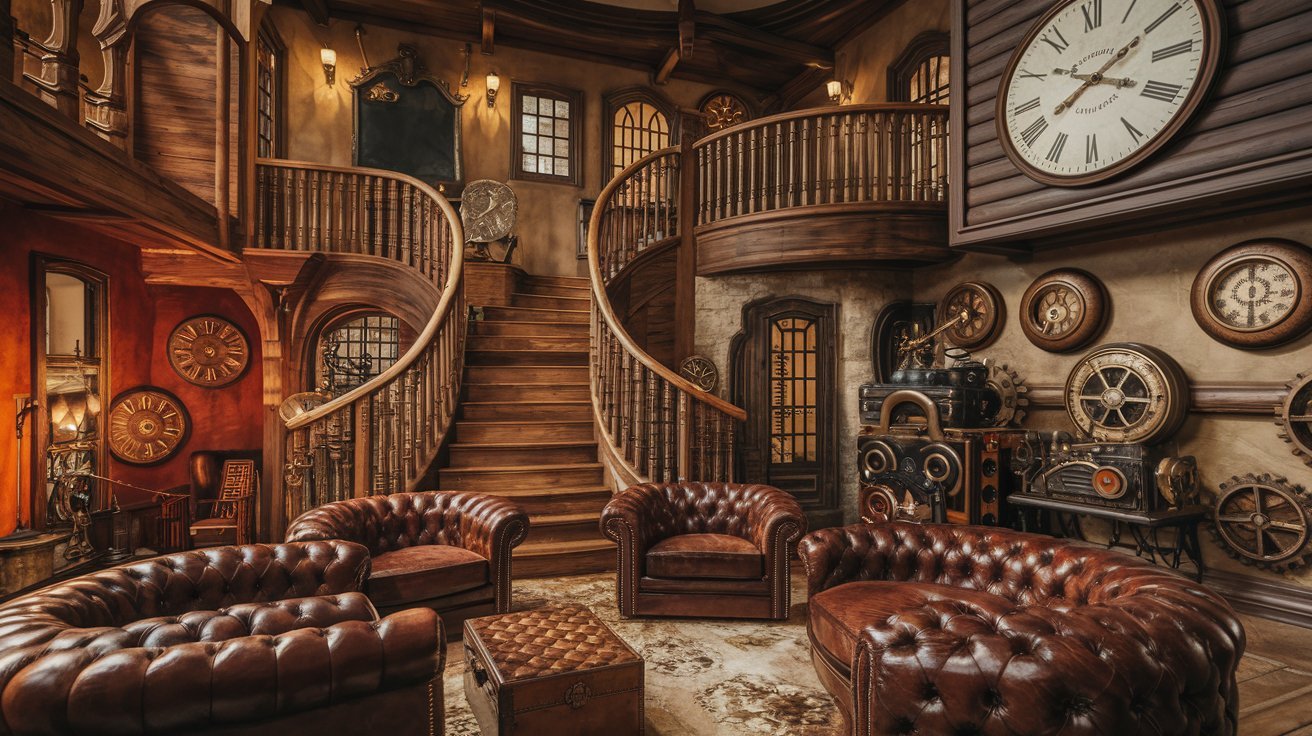
Inside, wood craftsmanship takes center stage. Staircases become sculptural focal points. Custom furniture shows the maker’s skill. Every piece has purpose and beauty.
Textures matter greatly. Leather seating offers comfort and durability. Velvet adds luxury to sitting areas. These materials improve with age and use.
Time pieces serve as art. Large clocks anchor rooms. Gear-based wall pieces show mechanical beauty. These items spark conversation.
Functional art fills spaces. Mechanical sculptures move and fascinate. Working gadgets blend form with function. Each piece tells a story.
Quality shows everywhere. Hand-finished surfaces reveal the maker’s touch. Custom details reflect the owner’s personality. Nothing feels mass-produced or generic.
Design Inspirations from Real-World Steampunk Projects
Crystal Palace – The Glass and Iron Marvel
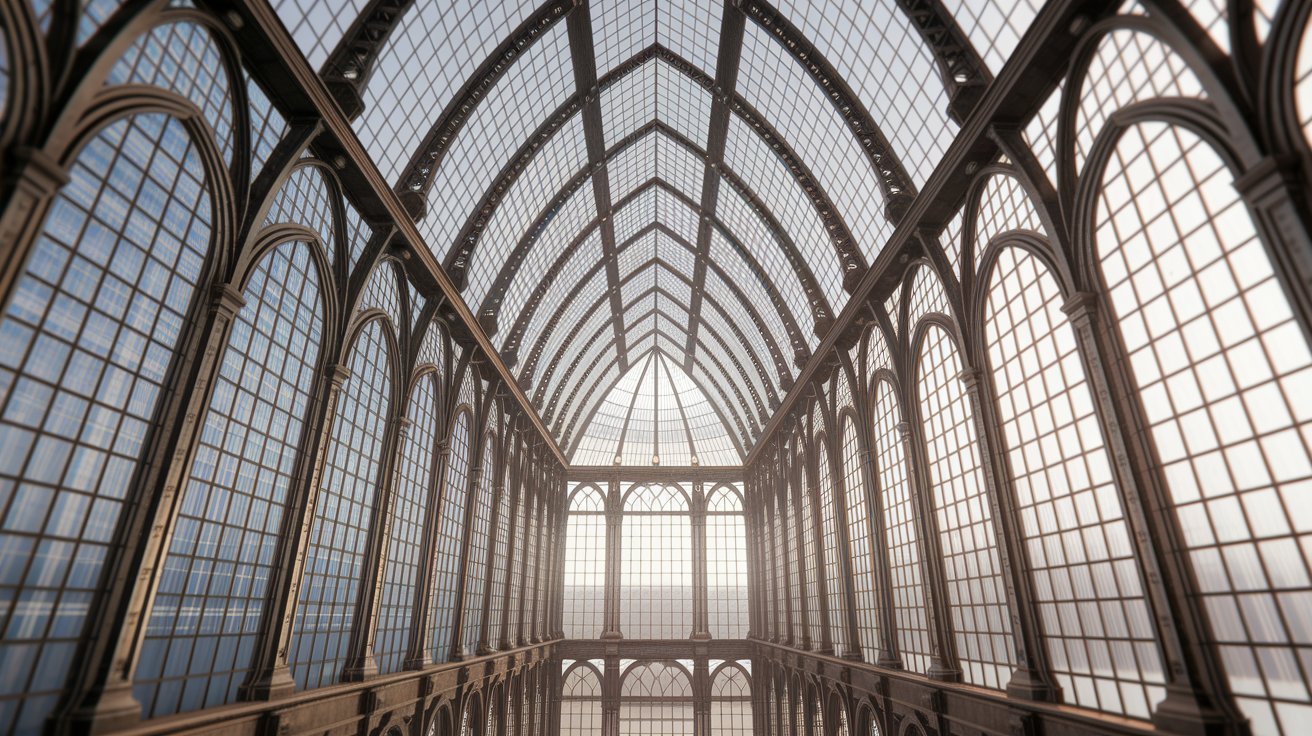
The original Crystal Palace showed how iron and glass could create magic. Built in 1851, this massive structure housed the Great Exhibition. Its framework of cast iron supported walls of pure glass. Natural light flooded the interior space.
This building proved that industrial materials could be beautiful. The repeated arches created rhythm and flow. Visitors felt like they were inside a cathedral made of light and air.
Crossness Pumping Station – Industrial Utility Meets Ornament

London’s Crossness Pumping Station turns sewage treatment into art. Built in the 1860s, this facility features ornate ironwork throughout. Decorative columns support the machinery. Colorful paint highlights intricate details.
The builders refused to hide the industrial function. Instead, they celebrated it. Every pipe, valve, and beam received artistic treatment. Form and function work together perfectly.
Neverwas Haul – A Victorian House on Wheels
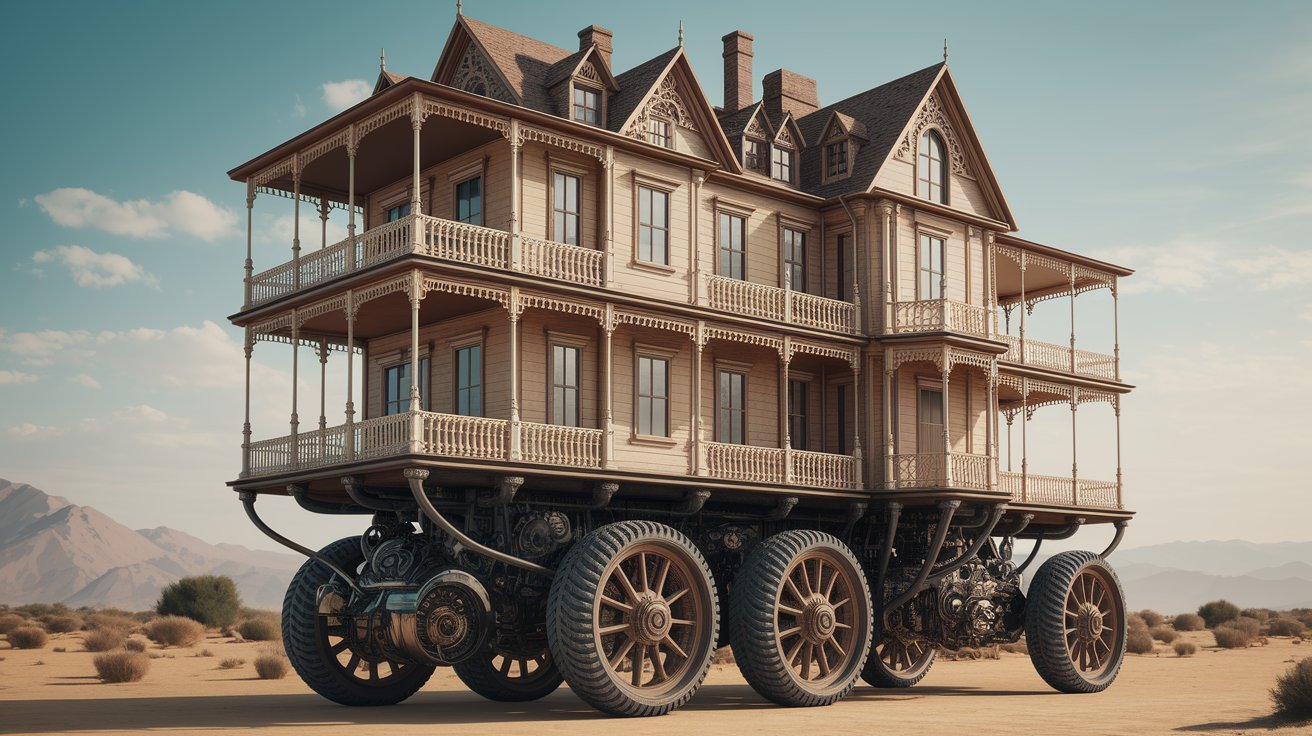
This mobile mansion proves steampunk can move. Built for Burning Man, Neverwas Haul looks like a three-story Victorian home. But it rolls on massive wheels powered by a diesel engine.
Balconies, bay windows, and ornate trim cover the exterior. Inside, Victorian furniture creates cozy living spaces. The project shows how historical styles can adapt to modern needs.
The Steampunk Treehouse – Fantasy Architecture in Nature
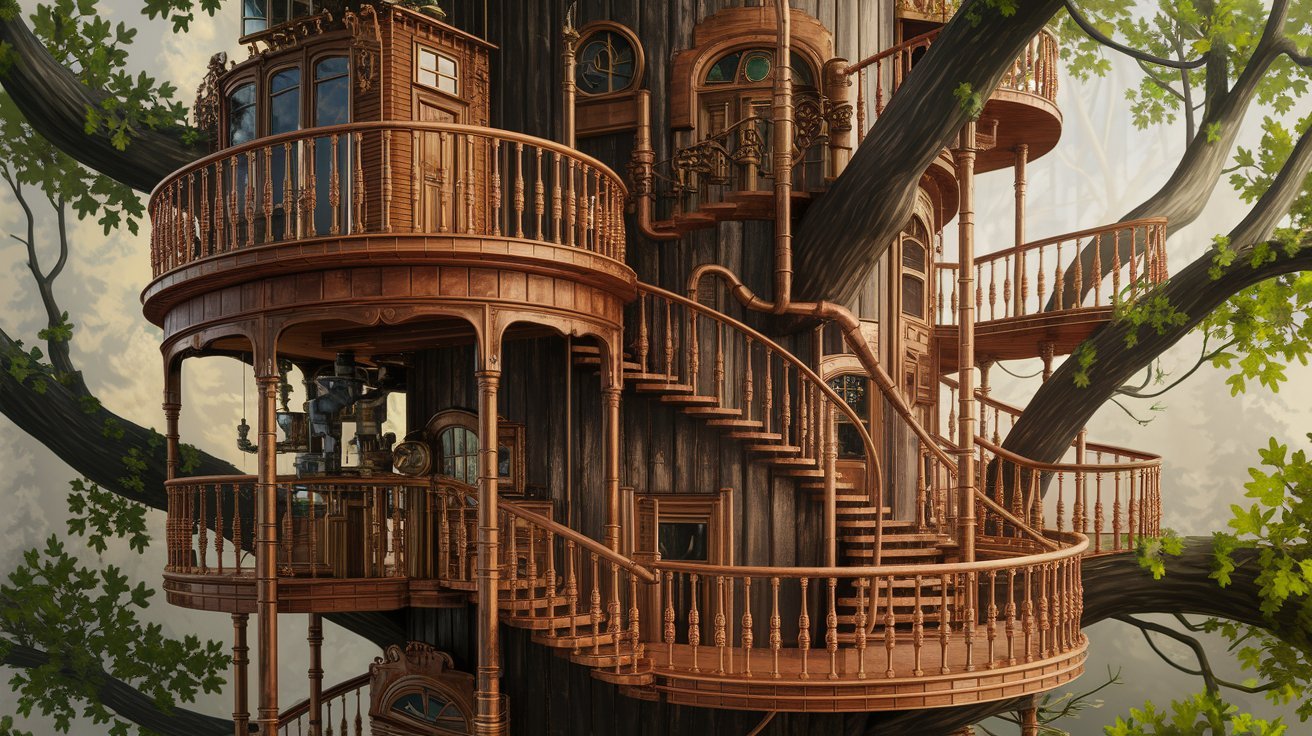
High in the forest canopy, this treehouse brings Victorian style to the wilderness. Copper pipes wind around tree trunks. Brass fittings gleam against natural wood. Multiple levels connect through spiral staircases.
The builders worked with the trees, not against them. Living branches become structural elements. The result feels both magical and practical.
The Steampunk Pavilion – Crafting Steam with Wood and Metal
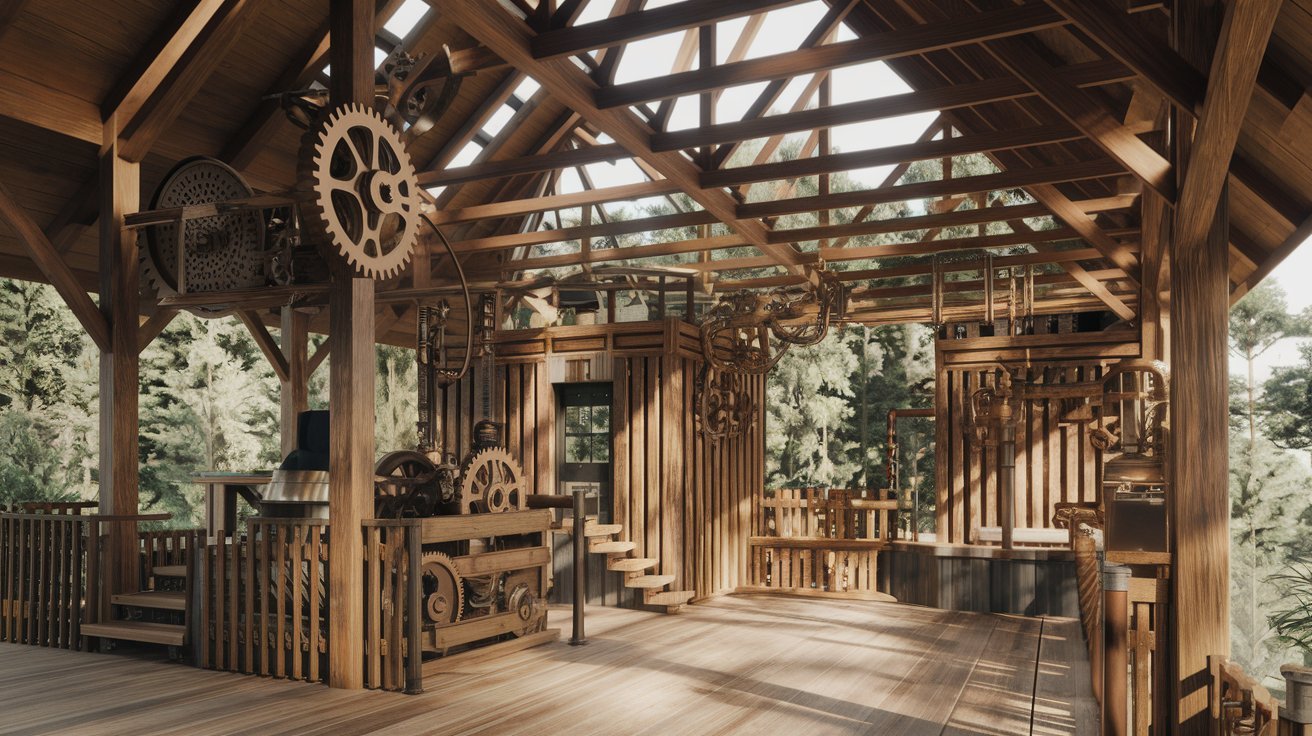
This outdoor pavilion combines traditional carpentry with industrial accents. Heavy timber frames support the structure. Exposed gears and pulleys add mechanical interest. Steam-powered elements actually function.
Visitors can operate the machinery themselves. This hands-on approach makes the space interactive and educational. Old technologies come alive for new generations.
How to Design Your Own Steampunk-Inspired Building
Lets get to the actual work:
Step 1: Choose a Victorian Base Style
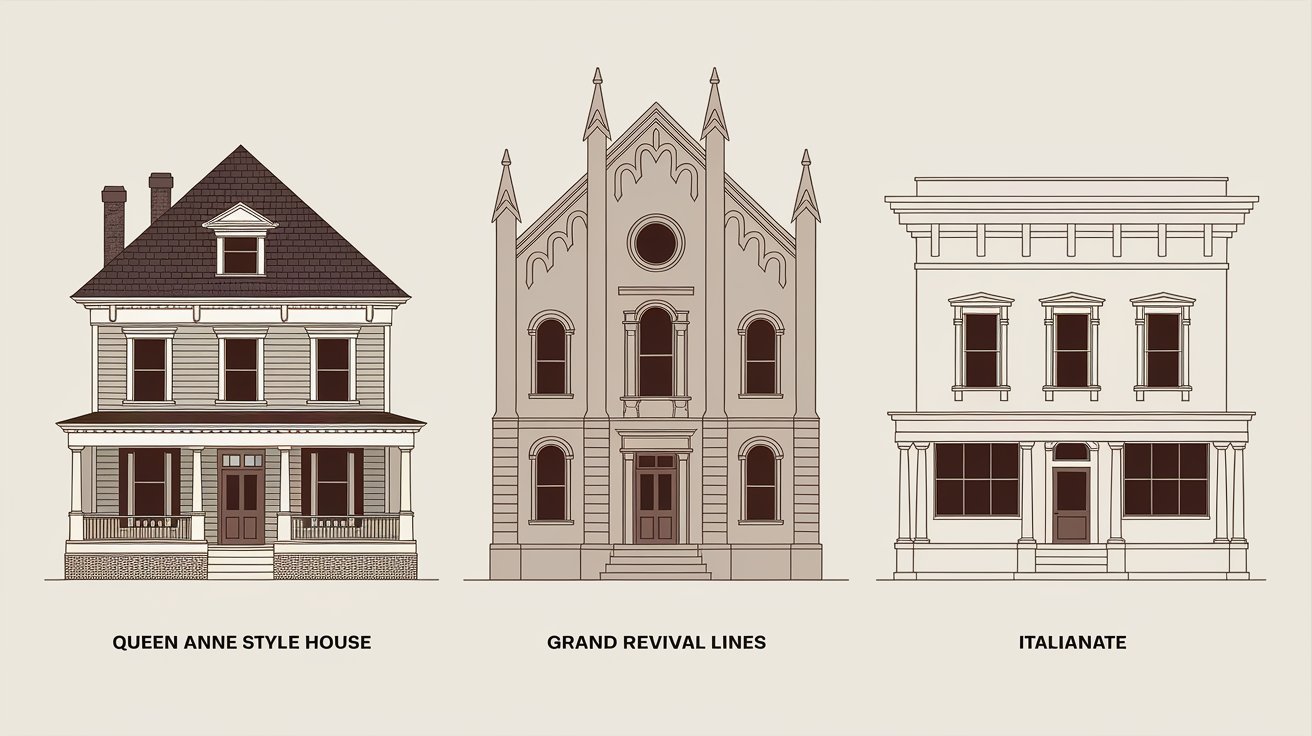
Start with a solid foundation from the Victorian era. Queen Anne style offers asymmetrical layouts and bay windows. Gothic Revival provides pointed arches and vertical lines. Italianate brings flat roofs and bracketed eaves.
Pick the style that fits your site and budget. Each option creates a different mood. Queen Anne feels homey and welcoming. Gothic Revival appears grand and formal. Italianate looks sophisticated and urban.
Step 2: Integrate Industrial Materials and Forms
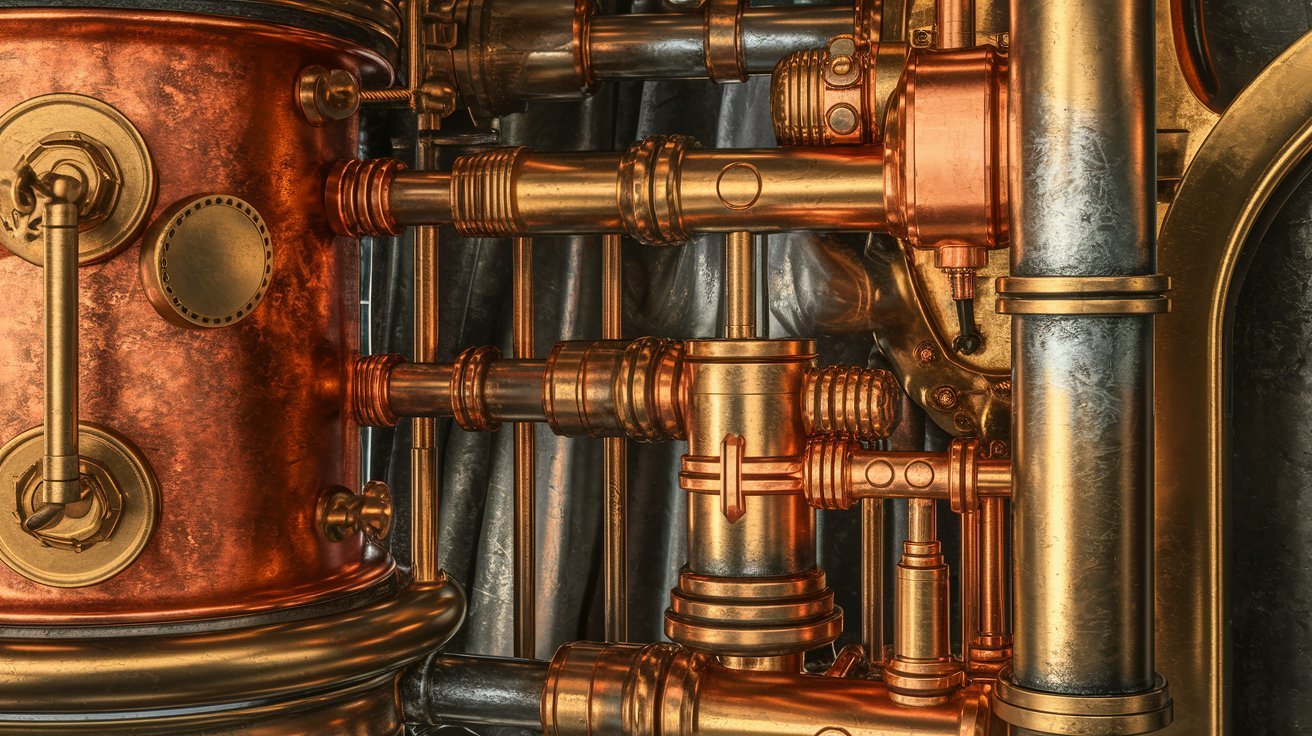
Now add the mechanical heart of steampunk design. Brass fixtures catch light beautifully. Copper develops a rich patina over time. Cast iron creates strong structural elements.
Install visible mechanical features throughout. Exposed gears can be purely decorative. Faux-steam devices add movement and interest. These elements should look functional, even if they’re not.
Step 3: Focus on Quality Craftsmanship
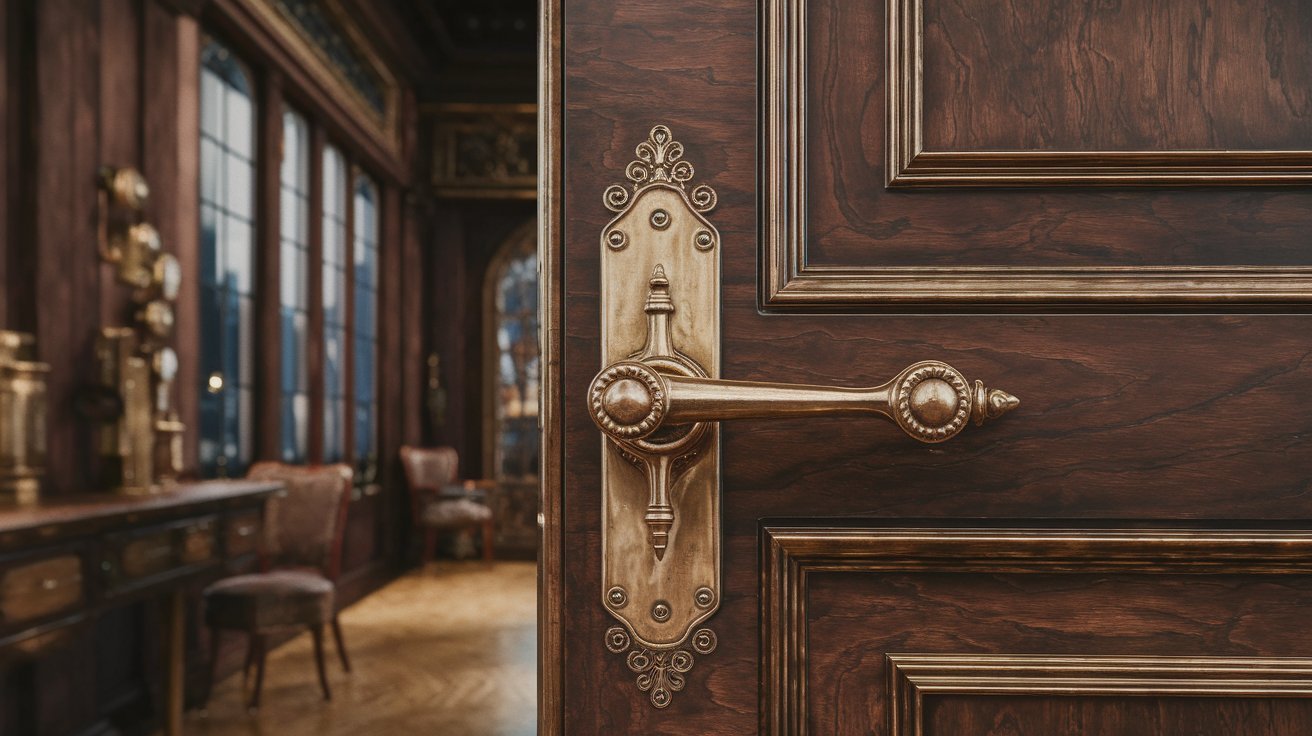
Every surface should show human touch. Hand-carved wood details make spaces feel special. Custom finishes reflect your personal style. Repurposed parts tell interesting stories.
Combine beauty with practical use. A hand-forged door handle works better than a cheap alternative. Custom millwork lasts for generations. Quality materials improve with age.
Step 4: Use the Right Color Palette
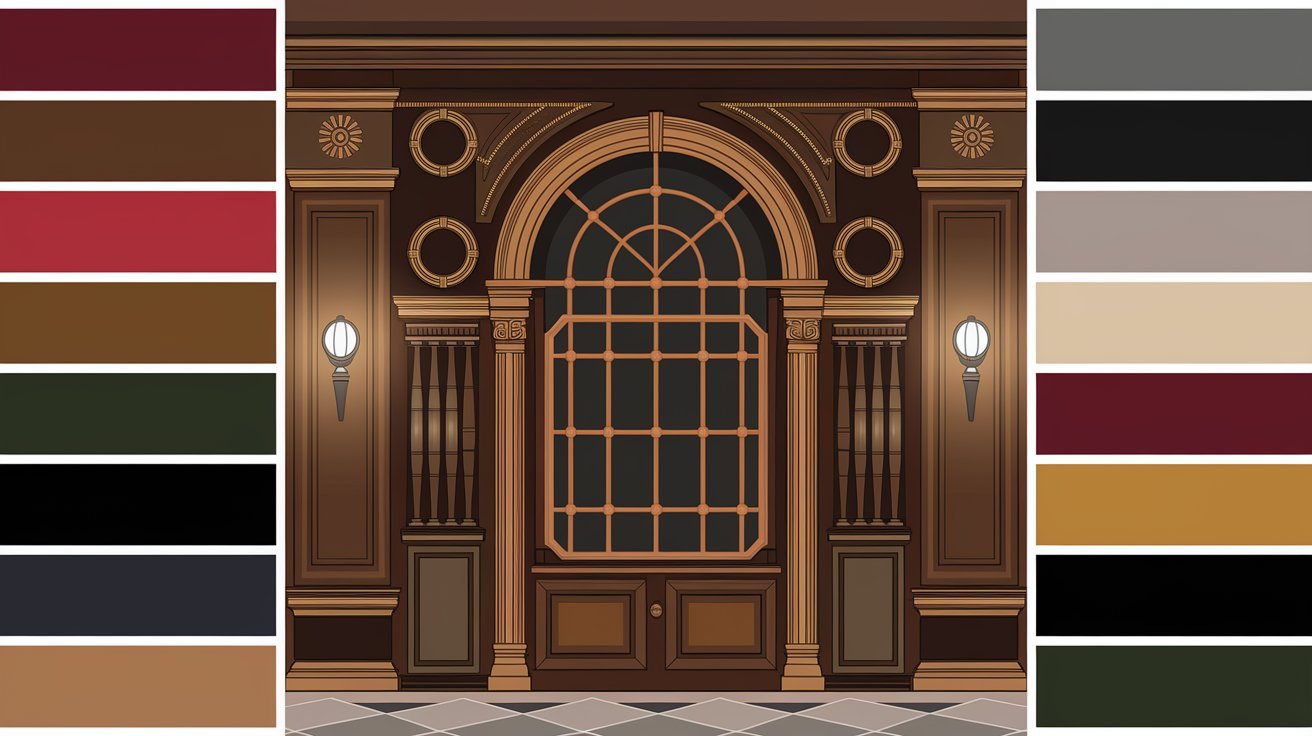
Build your scheme around earth tones. Rich browns create warmth and depth. Deep blacks add sophistication. Various grays provide neutral balance.
Add color through carefully chosen accents. Deep red energizes without overwhelming. Forest green connects to nature. Bronze and gold highlights catch the eye.
Step 5: Add Statement Features

Create focal points that demand attention. Large windows flood spaces with light. Visible gears suggest hidden machinery. Working clocks mark the passage of time. Turret elements add vertical interest.
Install dramatic lighting systems. Edison bulbs provide warm, amber light. Steam-effect elements add mystery and movement. These features should enhance daily life while creating visual impact.
Remember: steampunk works best when every element serves a purpose. Form follows function, but both should inspire wonder.
Where to See Steampunk Architecture Today
Burning Man

The Nevada desert becomes a temporary city each year. Artists build incredible structures that push steampunk boundaries. Massive installations combine Victorian details with industrial machinery. Many pieces actually move and function.
Visitors can walk through these creations. The scale amazes everyone who sees it. After the festival, most structures burn in spectacular displays. This temporary nature makes each year unique.
Clockwork Alchemy
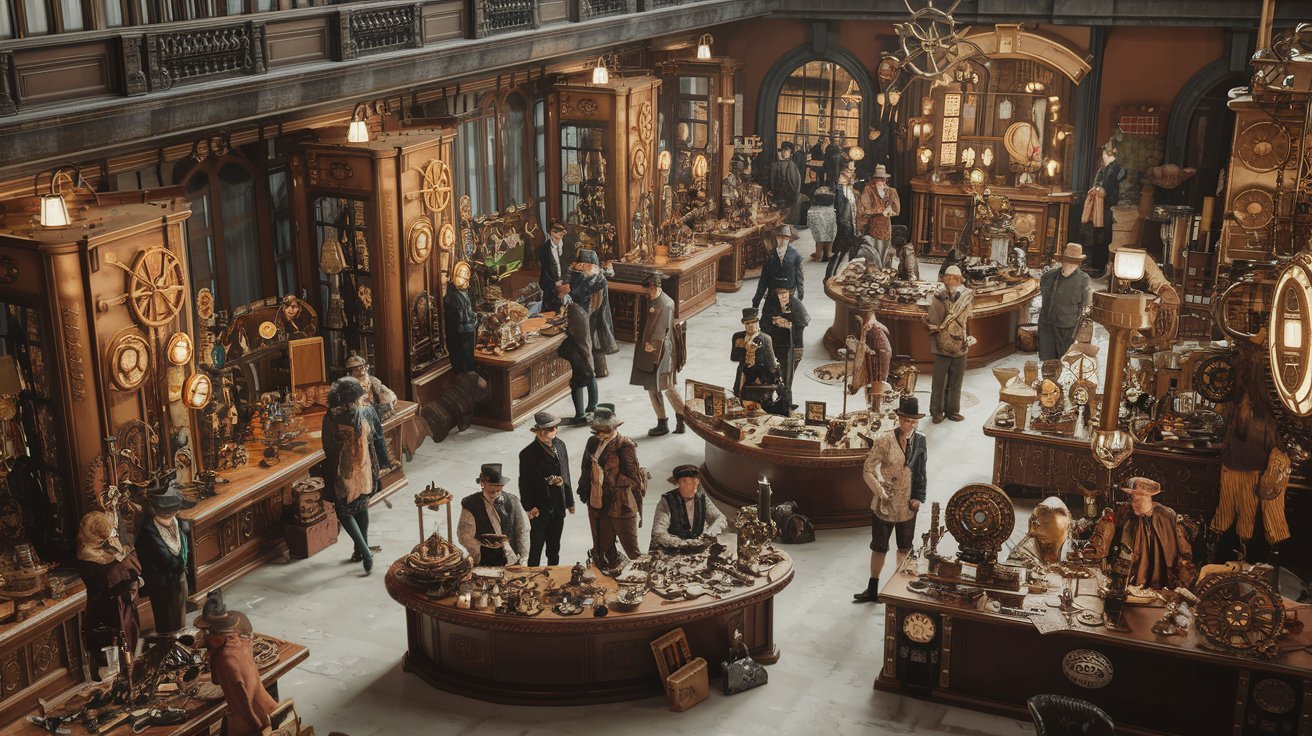
This California convention celebrates all things steampunk. Attendees build elaborate room displays in hotels. Local businesses create themed spaces for the weekend. The entire event feels like stepping into another time.
Workshops teach building techniques. Vendors sell authentic materials and parts. You can learn from experienced builders and see their latest projects.
Notable Locations
Obtainium Works, California
This art collective transforms salvaged materials into functional buildings. Their workshop spaces feature exposed machinery and vintage fixtures. Everything serves a practical purpose while looking incredible.
They offer tours and classes regularly. Visitors can see active projects in progress. The team shares techniques for working with reclaimed materials.
Dogfish Head Craft Brewery, Delaware
This brewery brings steampunk style to commercial spaces. Copper brewing tanks become art pieces. Vintage gauges and pipes cover the walls. The tasting room feels like a Victorian laboratory.
The functional equipment drives the design choices. Real brewing machinery influences the decorative elements. Form truly follows function here.
Tallinn, Estonia
This medieval city provides perfect inspiration for steampunk builders. Gothic architecture fills the old town. Modern additions blend industrial elements with historical structures. The contrast creates striking visual effects.
Local artists have embraced steampunk themes. Cafes and shops feature mechanical decorations. The city shows how old and new can work together successfully.
Design Tips for Steampunk Architecture
- Start with a Victorian foundation style that fits your space and budget
- Choose brass, copper, or cast iron for visible metal elements throughout your design
- Install exposed gears and mechanical features, even if they’re purely decorative
- Focus on hand-carved wood details and custom finishes that show craftsmanship
- Use repurposed materials and vintage parts to add authentic character
- Build your color scheme around browns, blacks, and grays as base tones
Conclusion
Steampunk architecture offers a compelling alternative to conventional modern design.
By combining Victorian elegance with industrial functionality, this style creates spaces that tell stories and spark imagination. The movement continues to grow as more people seek authentic character in their built environments.
Starting your own steampunk project doesn’t require massive budgets or complete renovations.
Simple additions like brass fixtures, exposed gears, or vintage mechanical elements can transform ordinary spaces. Focus on quality craftsmanship and meaningful details that serve both form and function.
This architectural style proves that buildings can be both practical and inspiring.
As you consider your next design project, remember that steampunk architecture celebrates the beauty found in functional mechanics while honoring our industrial heritage.
Frequently Asked Questions
What exactly is steampunk architecture?
Steampunk architecture combines Victorian-era design elements with industrial materials and mechanical features. It creates buildings that look like they belong in an alternate history where steam technology advanced in different ways.
How much does it cost to build in steampunk style?
Costs vary widely depending on your approach and materials chosen. You can achieve the look affordably by adding brass fixtures and exposed gears to existing structures, or invest more in custom metalwork and hand-carved details.
Can I add steampunk elements to my existing home?
Yes, steampunk works well as an accent style in modern homes. Start with lighting fixtures, hardware, and decorative elements before considering larger structural changes like windows or exterior trim.
What materials are essential for authentic steampunk design?
Brass, copper, and wrought iron form the foundation of steampunk materials. Combine these metals with rich wood tones, leather, and vintage mechanical parts for the most authentic results.
Where can I find steampunk building supplies and parts?
Salvage yards, antique shops, and specialty online retailers offer authentic vintage parts. Many steampunk enthusiasts also create custom pieces or modify modern items to achieve the right look and feel.
