

The Aztec Empire built some of history’s most impressive structures. From massive pyramids to complex city layouts, their buildings tell stories of power, religion, and daily life. These monuments shaped how we understand ancient Mesoamerican cultures.
In this article, you’ll learn about the key features of Aztec construction. We’ll explore famous temples, housing systems, and urban planning methods. You’ll understand how these structures influenced later civilizations.
Many people struggle to grasp how advanced Aztec society really was. Popular media often shows incomplete or wrong details. This guide fixes those misconceptions.
Let’s examine these remarkable achievements together.
The Historical Foundations of Aztec Architecture

The Rise of the Aztec Empire
The Aztec story begins in 1325 when they founded Tenochtitlan on an island in Lake Texcoco. What started as a small settlement grew into one of the world’s largest cities. By 1500, over 200,000 people called it home.
The Aztecs didn’t build from scratch. They learned from cultures that came before them. The Olmecs taught them about massive stone carving. The Maya showed them pyramid construction. The Teotihuacans demonstrated urban planning on a grand scale.
These earlier groups left behind temples, ball courts, and city layouts. The Aztecs studied these remains. They took the best ideas and made them their own. They combined old techniques with new innovations.
Impact of the Spanish Conquest
Everything changed in 1519 when Spanish conquistadors arrived. Hernán Cortés and his men saw Tenochtitlan’s temples as symbols of “false religion.” They systematically tore down sacred buildings. Many structures were destroyed to build Catholic churches.
The Spanish used Aztec stones for their own construction projects. Palaces became government buildings. Temple foundations supported new cathedrals. This recycling erased much of the original city.
Today, we study what remains. Archaeologists dig beneath Mexico City streets. They find buried walls, ceremonial platforms, and household items. These ruins help us rebuild the story of Aztec achievement.
Key Characteristics of Aztec Architecture
Religious and Ritualistic Purpose
Aztec buildings served the gods first, people second. Every major structure had a spiritual function. Temples stood at the heart of every city and neighborhood.
These weren’t just places for prayer. They hosted dramatic ceremonies that could last for days. Priests performed sacrifices on temple steps while crowds watched below. The buildings themselves became stages for connecting with divine forces.
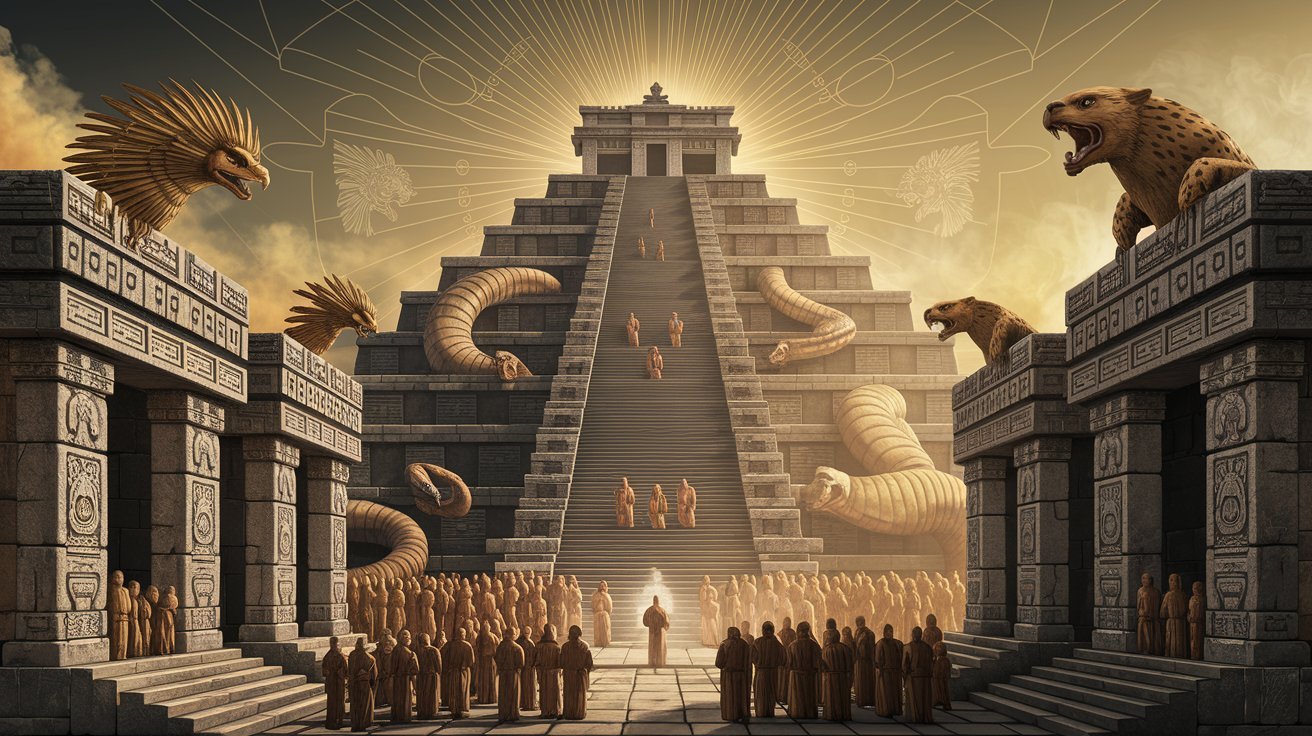
Aztec builders believed their structures mirrored the universe. Pyramids represented sacred mountains where gods lived. Temple heights matched the layers of heaven. Even room layouts followed cosmic patterns.
Symbolism in Design
Every carved stone told a story. Aztec craftsmen filled their buildings with meaningful images. Feathered serpents wound around columns. Eagle warriors stood guard at entrances. Jaguars prowled across walls.
These weren’t random decorations. Each symbol carried deep meaning. The feathered serpent Quetzalcoatl represented wisdom and wind. Eagles symbolized the sun’s power. Jaguars are connected to the night and the underworld.
The Aztec calendar appeared everywhere in their construction. Stone wheels showed the 260-day ritual year. Wall carvings marked important dates. Building dedications matched festival schedules.
Structural Innovation and Engineering
Building Techniques in a Swampy Environment
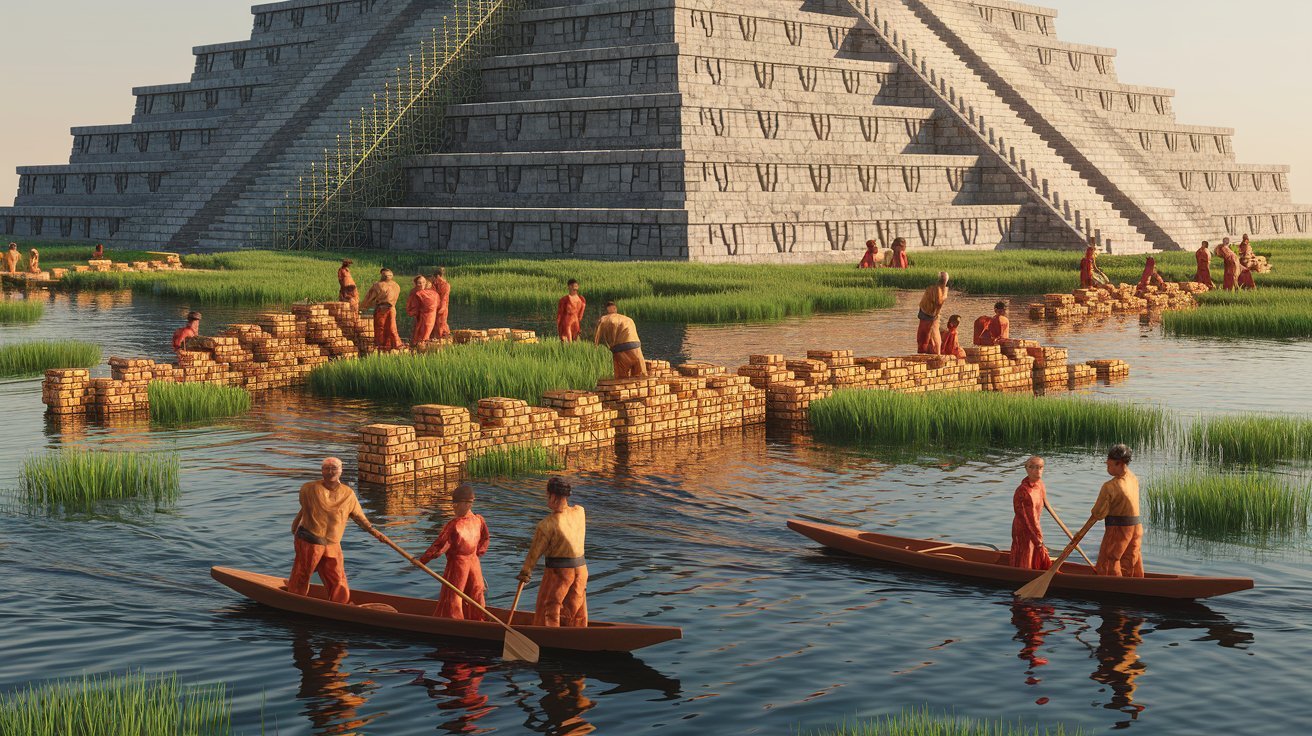
The Aztecs faced a major challenge. How do you build massive structures on an island surrounded by muddy water? They solved this problem with clever engineering and local materials.
Tezontle became their secret weapon. This volcanic rock was light but strong. It came from nearby mountains and didn’t sink into soft ground. Workers could carry it easily across water in canoes.
Adobe bricks filled the gaps between stone blocks. Made from lake clay mixed with grass, these bricks dried hard in the sun. They cost nothing to make and worked perfectly with heavier stones.
Layered Construction
Aztec builders rarely tore down old structures. Instead, they built new ones on top. This created pyramid-like layers that grew taller over time.
Each new layer marked important events. A military victory might trigger construction. Religious festivals called for bigger ceremonial spaces. Growing populations needed expanded temples.
The Templo Mayor shows this perfectly. Archaeologists found seven different construction phases. Each ruler added his own level. The final version stood 200 feet tall.
Architectural Styles and Influences
Toltec Influence
The Aztecs deeply respected the Toltecs who came before them. These earlier builders left behind impressive ruins at Tula, about 40 miles north of Tenochtitlan. Aztec rulers often visited these sites for inspiration.
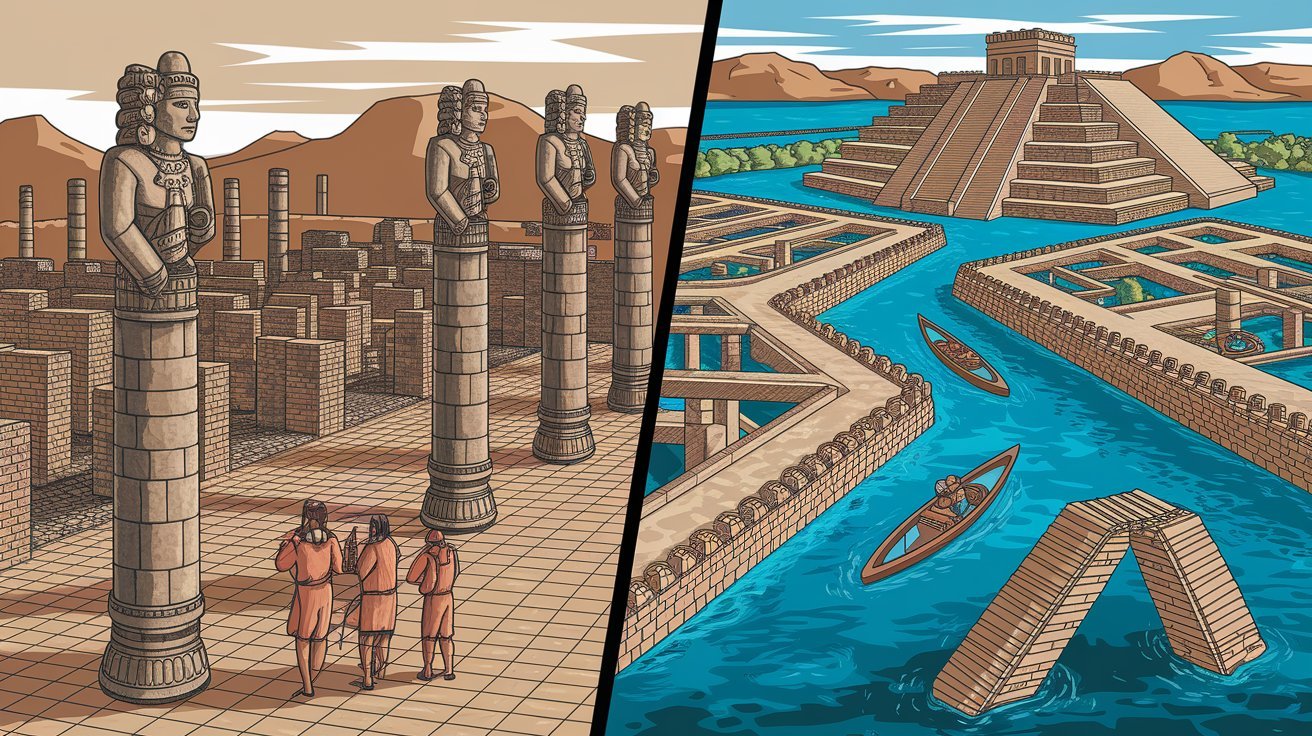
Toltec cities followed grid patterns with straight streets crossing at right angles. The Aztecs adopted this system for their own settlements. It made transportation easier and helped organize different districts.
The famous Toltec warriors carved in stone became models for Aztec sculpture. These tall columns showed fierce fighters holding weapons. Aztec craftsmen copied this style for their own temple decorations.
Tenochtitlan: The Venice of Mesoamerica
Water shaped everything about Aztec city planning. Built on Lake Texcoco, Tenochtitlan used canals instead of streets for many areas. Canoes replaced horses and carts for transportation.
The main canal system divided the city into four quarters. Each section had its own character and purpose. The center held the great temple complex. Residential areas spread out toward the edges.
Three major causeways connected the island to the mainland. These raised roads included bridges that could be removed during attacks. Spanish conquistadors learned this the hard way during their retreat.
Key Architectural Elements

Temples and Pyramids
Aztec pyramids didn’t come to sharp points like Egyptian ones. Instead, they featured flat tops with temples on them. These stepped structures rose in distinct levels, each one smaller than the one below.
The steps themselves held meaning. Each level represented a different world in Aztec beliefs. Gods lived at the top. Humans occupied the middle levels. The underworld lay beneath the base.
Templo Mayor dominated Tenochtitlan’s skyline. This massive pyramid stood 200 feet tall with twin temples on top. One honored Tlaloc, the rain god. The other served Huitzilopochtli, god of war and the sun.
Residential Architecture
Social class determined housing quality in Aztec society. The gap between rich and poor showed clearly in their homes. Location, size, and materials all reflected a family’s status.
Noble families lived in sprawling palace complexes. These compounds could cover entire city blocks. Multiple buildings surrounded central courtyards where families gathered. Gardens and fountains added beauty and coolness.
Wealthy homes used cut stone for walls and foundations. Skilled craftsmen carved decorative elements around doorways. Painted murals covered interior walls with bright colors and religious scenes.
Common people built simpler structures. Adobe bricks made from lake mud formed the walls. Wooden frames supported flat roofs covered with thatch or dried mud. These homes stayed cool in summer and warm in winter.
Materials and Aesthetics
Natural Materials
The Aztecs built with what nature provided. Local materials shaped their construction style and gave buildings a connection to the land around them.
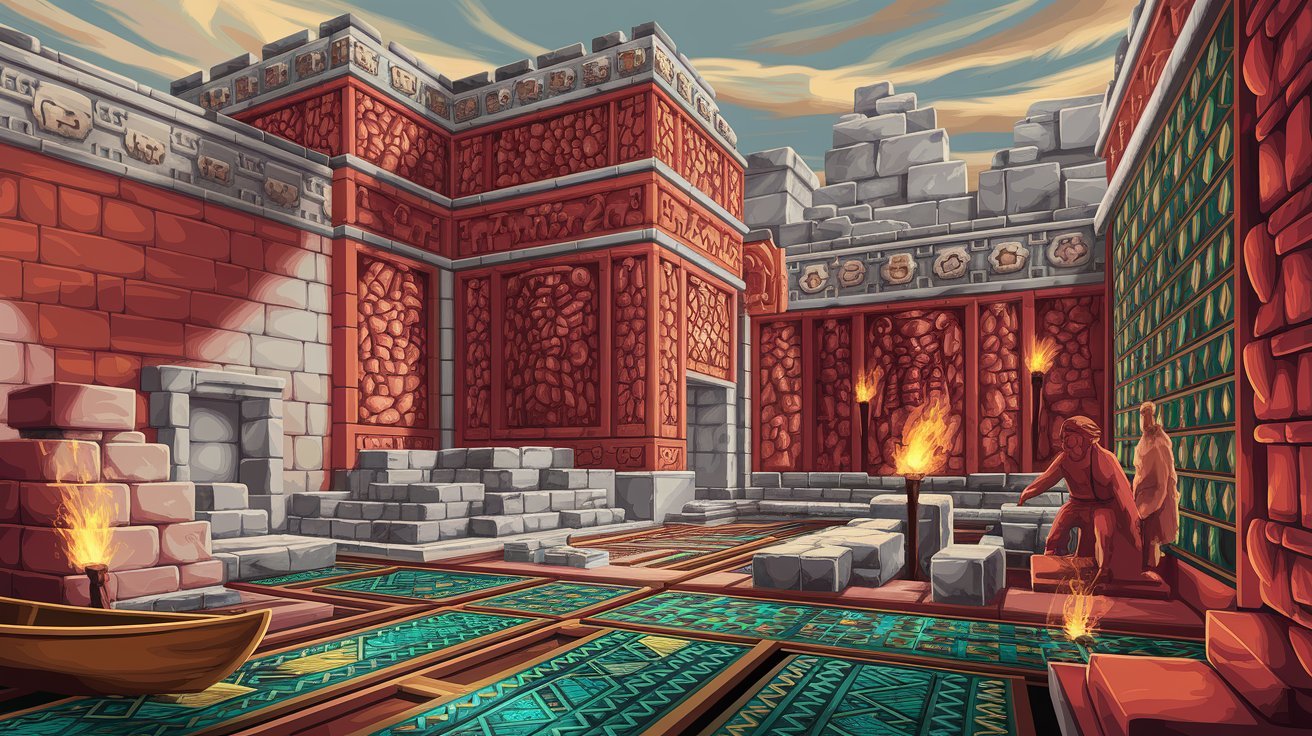
Volcanic stone formed the backbone of major structures. Tezontle, a red porous rock, came from nearby mountains. This material was light enough to transport by canoe but strong enough to support massive temples. Its natural color gave buildings a warm, reddish appearance.
Limestone provided another building option. Workers quarried it from lakeside cliffs and shaped it into precise blocks. White limestone created striking contrasts against darker volcanic stone.
Integration of Art and Architecture
Aztec buildings were giant art galleries. Every surface told stories through images and symbols. Art and construction worked together to create meaningful spaces.
Temple walls featured massive stone sculptures. Gods stared down from building corners. Warriors marched across wall surfaces in eternal processions. These weren’t added decorations, they were built into the structure itself.
Mosaic work covered floors and walls in important buildings. Craftsmen fitted tiny colored stones into complex patterns. Turquoise, obsidian, and jade created shimmering surfaces that caught torchlight during night ceremonies.
Surviving Examples of Aztec Architecture

Templo Mayor
The heart of the Aztec world still beats beneath Mexico City. Templo Mayor was the most important building in Tenochtitlan. Today, visitors can walk through its ruins and see where ancient ceremonies took place.
This massive pyramid went through seven construction phases. Each Aztec ruler added his own layer, making it taller and more impressive. The final version reached 200 feet high with twin temples on top.
Archaeological work began here in 1978. Workers found the site by accident while digging for electrical cables. Since then, over 13,000 objects have been recovered from the ruins.
Teotihuacan (Pyramids of the Sun and Moon)
The Aztecs didn’t build Teotihuacan, but they claimed it as their own. This ancient city was already 1,000 years old when the Aztecs arrived. They saw it as the birthplace of the gods.
The Pyramid of the Sun dominates the landscape. At 213 feet tall, it’s one of Mexico’s largest ancient structures. The Aztecs climbed its 248 steps during religious pilgrimages.
Aztec rulers made regular trips to Teotihuacan. They performed ceremonies at the old temples. Some even built small shrines among the ruins. This showed respect for the earlier civilization.
Other Sites
Several Aztec sites survived outside the main capital. These smaller locations show how building styles spread throughout the empire.
Tenayuca features a well-preserved pyramid with dual staircases. This structure influenced the later design of Templo Mayor. Stone serpent sculptures still guard the base.
Santa Cecilia Acatitlan offers one of the few complete Aztec temples. The wooden roof structure remains intact. Visitors can see how these buildings originally looked.
Legacy of Aztec Architecture
Influence on Modern Mexico City
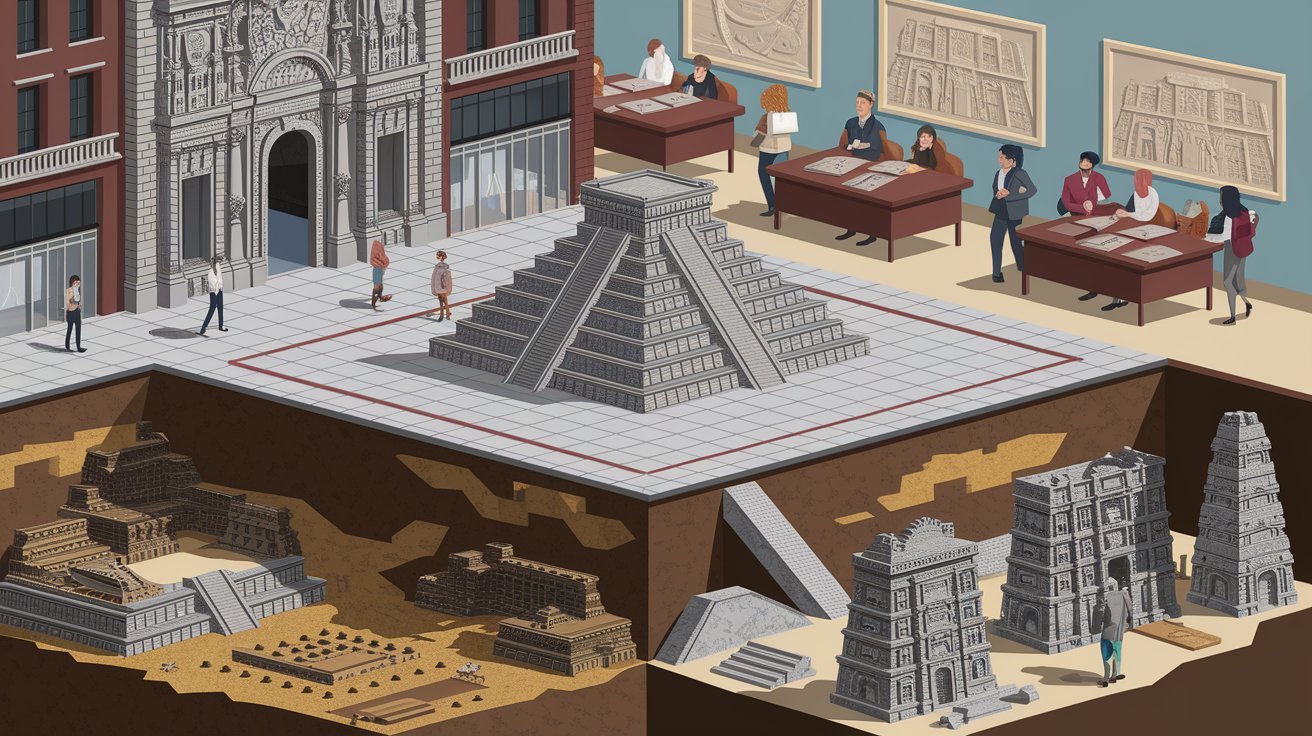
Mexico City literally sits on top of Aztec history. Every street and building rests on the ruins of Tenochtitlan. Construction workers regularly find ancient artifacts while digging foundations for new projects.
The Zócalo, Mexico City’s main square, covers the exact spot where Templo Mayor once stood. Millions of people walk across this space each year without realizing they’re treading on sacred ground. The original temple’s outline is marked in the pavement nearby.
Subway construction revealed extensive Aztec remains throughout the city. Workers found temples, canals, and residential areas buried under modern streets. Many of these discoveries became small museums inside subway stations.
Global Appreciation
Aztec buildings now attract visitors from around the world. Tourism to archaeological sites brings millions of dollars to Mexico’s economy each year. People travel thousands of miles to see these ancient structures.
Major museums worldwide display Aztec architectural artifacts. The British Museum, Metropolitan Museum, and National Museum of Anthropology showcase stone carvings, building models, and ceremonial objects. These exhibits teach global audiences about Mesoamerican achievements.
University programs study Aztec construction techniques. Engineering students learn how ancient builders solved complex problems without modern tools. Architecture schools examine the relationship between form and function in temple design.
Conclusion
Aztec architecture stands as proof of human creativity and determination. These builders created magnificent temples, complex cities, and innovative water systems on a swampy island. They mastered volcanic stone, developed layered construction, and filled every surface with meaningful art.
Their structures weren’t just buildings – they were cosmic maps, religious theaters, and community centers rolled into one.
Today, these ruins teach us valuable lessons about sustainability, urban planning, and artistic vision. Every archaeological find adds to our understanding of this remarkable civilization.
Preserving Aztec architectural sites protects more than old stones. It safeguards the memory of brilliant minds who solved complex problems with limited tools. Their legacy continues to inspire architects, engineers, and artists worldwide.
These monuments remind us that greatness comes in many forms across all cultures.
Frequently Asked Questions
What materials did the Aztecs use to build their structures?
Tezontle (lightweight volcanic rock), adobe bricks, limestone, cedar wood, and lime mortar for durable Lake Texcoco construction.
How did the Aztecs build on water without modern technology?
Wooden stakes driven into the lakebed with rock fill created foundations. Lightweight volcanic stone and floating chinampas supported structures.
What happened to most Aztec buildings after the Spanish conquest?
Spanish conquistadors destroyed temples and palaces, recycling stones to build Catholic churches and colonial buildings over ruins.
Why did Aztec pyramids have flat tops instead of pointed ones?
Flat tops served as platforms for wooden temples and ceremonies, allowing crowds to witness rituals from below.
Can visitors still see original Aztec architecture today?
Yes, at Templo Mayor, Tenayuca, and Santa Cecilia Acatitlan. Archaeological work continues to reveal buried Mexico City structures.
