

Is your foundation sinking or shifting? You’re not alone.
Foundation problems affect thousands of homeowners every year. The good news? Foundation leveling can fix most settling issues before they destroy your home.
In this guide, I’ll solve your foundation concerns step by step. You’ll learn what causes foundation problems and how leveling works. I’ll explain the warning signs you need to watch for. You’ll also learn about costs, choosing contractors, and long-term maintenance.
I’ve helped homeowners understand foundation issues for years. My goal is giving you honest, practical advice you can trust. No sales pitches or scare tactics.
This article covers everything you need to make smart decisions about your foundation. If you’re dealing with minor settling or major structural issues, you’ll find clear answers here.
What Causes Foundation Problems?
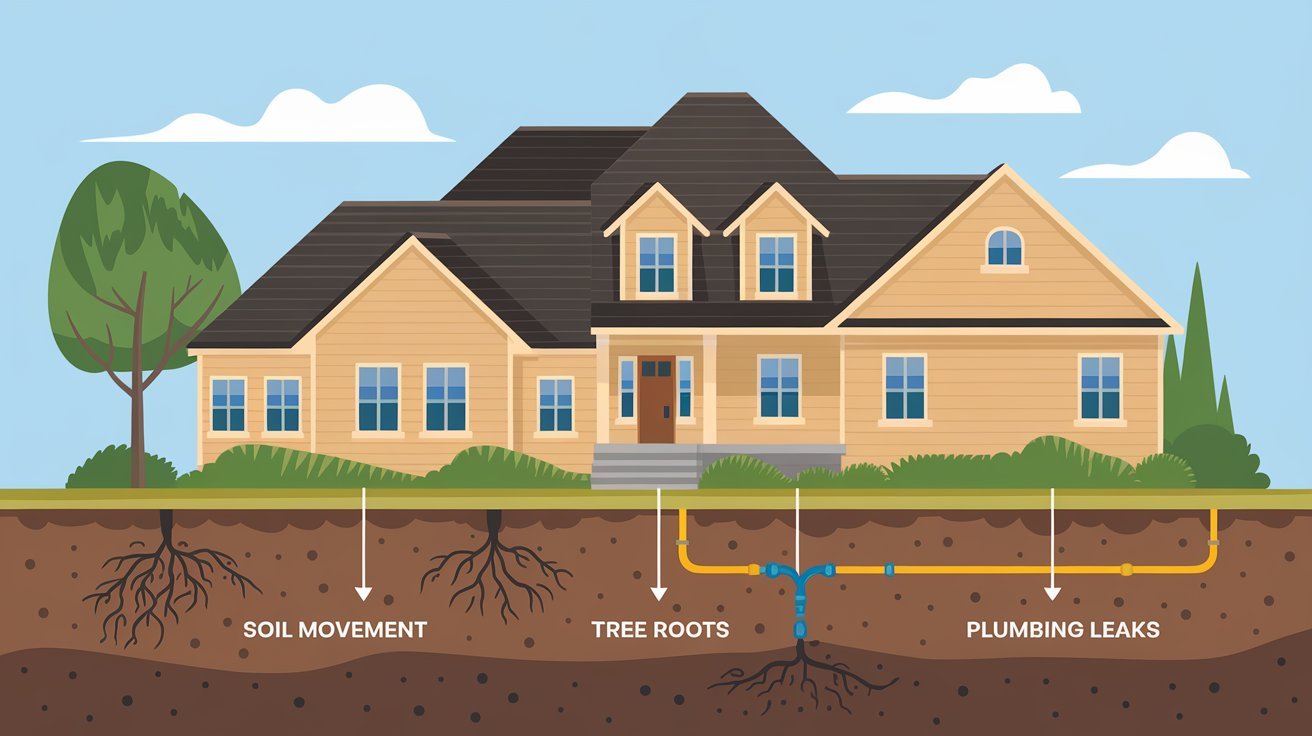
Foundation issues don’t happen overnight. Several factors work together to create problems:
Soil Movement
Clay soil expands when wet and shrinks when dry. This constant movement puts stress on your foundation. Sandy soil can wash away, leaving gaps under your home. Different soil types react differently to moisture changes. Some soils expand up to 10% of their original size when wet.
Poor Drainage
Water pooling around your foundation spells trouble. It softens the soil and creates uneven support. Gutters that don’t work properly make this worse. Improper grading that slopes toward your house compounds the problem. French drains and proper landscaping can prevent most water issues.
Tree Roots
Large trees near your home can cause problems. Their roots absorb moisture from the soil. This creates dry spots that make the ground sink. Oak and willow trees are particularly problematic because of their extensive root systems. The roots can also physically push against foundation walls as they grow.
Plumbing Leaks
Hidden water leaks under your home saturate the soil. This makes the ground unstable and causes settling. Slab leaks are especially dangerous because they’re hard to detect early. Even small leaks can cause major foundation damage over months or years.
Construction Issues
Sometimes the problem starts during building. Poor soil preparation or inadequate foundation depth can lead to future settling. Builders who skip proper soil testing often create future problems. Insufficient concrete curing time can also weaken your foundation from day one.
Natural Disasters
Earthquakes, floods, and severe weather can shift your foundation. Even minor ground movement adds up over time. Drought conditions cause soil to shrink and pull away from foundations. Heavy rains after dry periods create the most dangerous soil movement.
How Foundation Leveling Works
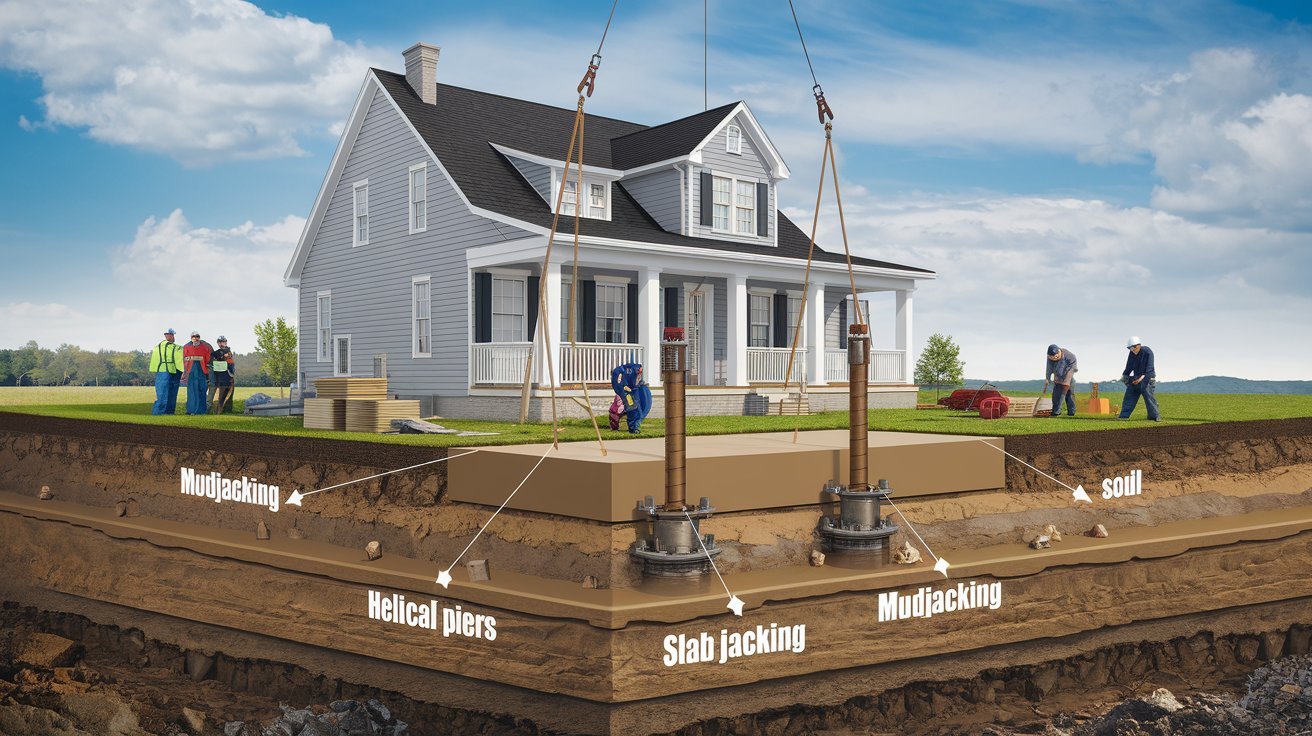
Foundation leveling uses different methods to raise and stabilize your home. Here’s how the most common techniques work:
Pier and Beam Systems
Contractors install steel or concrete piers deep into stable soil. These piers transfer your home’s weight to solid ground below problem areas. The process starts with digging holes around your foundation. Workers then drive piers into the ground until they hit bedrock or stable soil. Hydraulic jacks slowly lift your home back to level. This method works well for homes with crawl spaces and provides long-lasting results.
Slab Jacking
This method works for concrete slab foundations. Contractors pump a mixture under your slab through small holes. The mixture fills voids and raises low areas. The holes are typically only 1-2 inches wide and are sealed after the work is complete. Modern slab jacking uses lightweight foam that won’t add excessive weight to your foundation.
Mudjacking
Similar to slab jacking, but uses a cement-based mixture. It’s less expensive but may not last as long as other methods. The cement mixture is heavier than foam alternatives but provides solid support. This traditional method has been used successfully for decades in many soil conditions.
Helical Piers
These screw-shaped piers work well in different soil types. These piers provide excellent support. They’re installed by screwing them into the ground like large screws until they reach stable soil. Helical piers can support tremendous weight and work in both compression and tension situations.
The whole process usually takes 1-3 days. Your contractor will explain which method works best for your situation.
Foundation Leveling vs Foundation Repair
Many people confuse these two services. They’re related but serve different purposes:
|
Aspect |
Foundation Leveling |
Foundation Repair |
|
Primary Purpose |
Raises sunken areas back to proper height |
Fixes cracks, gaps, and structural damage |
|
Main Focus |
Addresses settling issues |
Addresses water intrusion problems |
|
Goal |
Making the foundation level again |
May include waterproofing |
|
Invasiveness |
Usually less invasive |
Often involves more extensive work |
|
Common Methods |
Piers, slab jacking, mudjacking |
Crack injection, waterproofing, wall reinforcement |
|
Timeline |
1-3 days typically |
Can take several weeks depending on damage |
|
Cost Range |
$3,000-$30,000 |
$2,000-$15,000 for repairs |
Sometimes you need both services. A thorough inspection will determine what your home requires. Think of leveling as adjusting your foundation’s height. Repair fixes damage that’s already occurred.
Warning Signs You Need Foundation Leveling
Your home will show you when something’s wrong. Watch for these signs:
- Doors stick or won’t close. Windows become hard to open. Cracks appear in walls near doors and windows.
- Floors feel bouncy or sag. Gaps show between walls and ceiling. Floors buckle and pop up.
- Foundation walls bow or lean. Gaps appear around windows and doors.
- The chimney tilts away from the house. Porches pull away from the main structure.
- Water pools after rain. Musty odors fill the air. Foundation cracks are visible. Beams sag or show stress.
Don’t ignore these signs. Early action costs less than waiting for major damage.
Costs and Pricing Factors
Foundation leveling costs vary widely based on several factors. Here’s what affects your final price:
Size of the Problem Small settling issues cost $3,000-$7,000. Major leveling projects can reach $15,000-$30,000 or more.
Foundation Type
- Pier and beam: $1,000-$3,000 per pier
- Slab jacking: $500-$1,500 per area
- Helical piers: $1,200-$1,500 per pier
Access to Work Area Easy access keeps costs down. Tight spaces or landscaping obstacles increase labor time and expense. Soil Conditions Rocky or clay soil requires more work. Your contractor may need special equipment or deeper piers.
Local Labor Rates Costs vary by location. Urban areas typically charge more than rural locations. Permits and Inspections Some areas require permits for foundation work. Factor in $100-$500 for paperwork and inspections.
Get quotes from at least three contractors. This helps you understand fair pricing for your area.
DIY vs Professional Foundation Leveling
I’ll be direct, foundation leveling isn’t a DIY project. Here’s why:
Why You Need Professionals Foundation work requires specialized equipment. Hydraulic jacks, pier driving equipment, and laser levels aren’t tools most homeowners own. Professional contractors understand soil conditions and local building codes. They know which methods work best in your area. Mistakes can be catastrophic. Improper leveling can cause more damage than the original problem.
What You Can Do Yourself You can handle some maintenance tasks:
- Keep gutters clean and working
- Grade soil away from your foundation
- Fix minor drainage issues
- Monitor for new cracks or settling
Insurance and Warranties Professional contractors carry insurance and offer warranties. This protects you if something goes wrong. DIY foundation work often voids your home insurance. It can also create problems when you sell your house.
Save DIY projects for smaller home improvements. Leave foundation work to the experts.
Choosing the Right Contractor
The right contractor makes all the difference. Here’s how to find a good one:
Look for proper licenses and insurance. Ask about certifications from manufacturers. Choose contractors who specialize in foundation work. Ask how long they’ve been doing foundation leveling.
Contact at least three contractors for estimates. Compare their approaches, not just prices. Good contractors inspect thoroughly before quoting. Ask for recent customer references and contact them. Look up online reviews but remember angry customers post more often.
Quality contractors offer 5-25 year warranties. Ask about follow-up inspections after completion. Avoid door-to-door salespeople, pressure to sign immediately, quotes much higher or lower than others, no local address, and requests for full payment upfront.
Trust your instincts. If something feels wrong, keep looking.
Long-Term Maintenance Tips After Leveling
Foundation leveling isn’t a one-time fix. Proper maintenance keeps your foundation stable for years:
- Keep gutters clean and direct water 6 feet from your house
- Maintain consistent soil moisture around your foundation
- Walk around your house monthly to check for new cracks
- Keep large trees at least 20 feet from your foundation
- Have your foundation inspected every 3-5 years
- Address small issues immediately before they become major problems
- Keep all warranty paperwork and contact your contractor if issues arise
Conclusion
Foundation leveling can save your home from serious damage. The key is acting fast when you spot warning signs.
Don’t let small cracks become big problems. Every month you wait costs more money later.
Remember these important points: Get multiple contractor quotes, check references carefully, and maintain proper drainage around your home. Professional leveling isn’t cheap, but it’s much less expensive than rebuilding your foundation.
Your home is likely your biggest investment. Protect it with regular inspections and quick action on problems.
Foundation issues won’t fix themselves. They only get worse with time. But with the right contractor and proper maintenance, your leveled foundation can last for decades.
Take action today. Your future self will thank you for protecting your home’s stability and value.
Frequently Asked Questions
How long does foundation leveling last?
Professional foundation leveling typically lasts 20-30 years with proper maintenance. The longevity depends on soil conditions, drainage quality, and the leveling method used.
Can I sell my house after foundation leveling?
Yes, foundation leveling actually increases your home’s value and marketability. You’ll need to provide documentation of the work and any warranties to potential buyers.
Will foundation leveling stop all future settling?
Foundation leveling stops current settling but can’t prevent all future movement. Proper drainage and soil moisture control help minimize future foundation problems.
How do I know if my foundation needs leveling or complete replacement?
Most foundations need leveling, not replacement, when they have settling issues. Complete replacement is only necessary when there’s severe structural damage or foundation failure.
Does homeowner’s insurance cover foundation leveling costs?
Standard homeowner’s insurance typically doesn’t cover foundation leveling for settling issues. However, coverage may apply if the damage resulted from a covered event like a burst pipe
