


Confused by art nouveau architecture? You’re not alone. This flowing, nature-inspired style can seem mysterious. But I’ll make it clear for you. I’ve spent over a decade studying these buildings across Europe and beyond.
I’ve walked through Gaudí’s masterpieces in Barcelona. I’ve explored Horta’s designs in Brussels.
Here’s what you’ll find: You’ll learn what makes art nouveau unique, from its curved lines to nature motifs.
I’ll show you the world’s most famous buildings with detailed histories. You’ll understand how it differs from art deco. Most importantly, I’ll give you practical tips for visiting these buildings yourself.
My promise to you: By the end, you’ll spot art nouveau buildings instantly. You’ll understand their cultural significance. You’ll know exactly where to find the best examples. Ready to learn about this beautiful style? Let’s begin.
What Is Art Nouveau Architecture?

Art nouveau architecture is a design style that bloomed from 1890 to 1910. The name means “new art” in French.
Here’s what makes it special:
- Curved lines instead of straight ones
- Nature motifs like flowers, vines, and insects
- Handcrafted details over mass production
- Organic shapes that flow naturally
Think of it as architecture that breathes. No sharp corners. No boring boxes. Instead, buildings curve like tree branches. Windows bloom like flowers. Every surface tells a story. The style rejected the cold industrial look of the 19th century. Architects wanted beauty back in everyday life.
The Roots: Cultural & Artistic Context of the 19th Century
The Industrial Revolution changed everything. Factories pumped out identical products. Cities grew fast and ugly. People felt disconnected from nature.
Artists rebelled. They looked to medieval craftsmanship for inspiration. The Arts and Crafts movement in England started it. William Morris led the charge with handmade furniture and textiles. But something else was happening too.
New materials arrived:
- Steel for stronger structures
- Glass for bigger windows
- Concrete for bold shapes
Japanese art also influenced European designers. Its simple, nature-based designs opened new possibilities. The Paris Exposition of 1900 showcased these ideas worldwide. Art nouveau became the first truly international style.
Signature Features of Art Nouveau Architecture
You can spot art nouveau buildings from a mile away.
Flowing Lines

Forget straight edges. These buildings curve and twist like living things. Walls ripple. Rooflines undulate. Even the smallest details follow organic patterns.
Nature-Inspired Decoration
Every surface celebrates the natural world:
- Floral patterns carved in stone
- Tree-like columns supporting roofs
- Vine motifs wrapping around windows
- Animal forms hidden in details
Integration of Arts
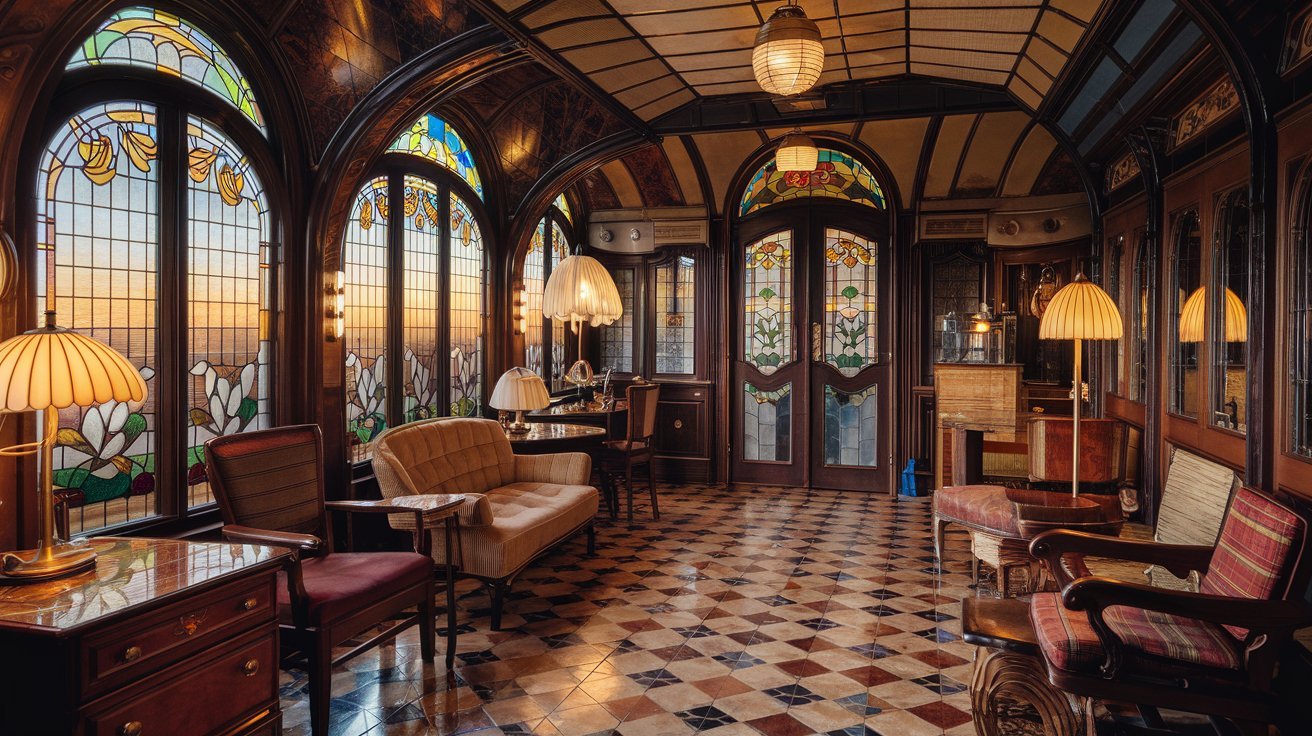
Art nouveau architects didn’t just design buildings. They created total works of art.
They designed:
- Custom furniture
- Stained glass windows
- Door handles
- Light fixtures
- Floor tiles
Everything worked together in harmony.
New Materials and Techniques

Architects pushed boundaries with:
- Exposed iron frameworks
- Large glass surfaces
- Colorful ceramics
- New concrete shapes
Asymmetrical Compositions

Balance came from rhythm, not symmetry. Buildings felt alive and dynamic. Windows might cluster on one side. Towers could lean slightly. The whole composition flowed naturally.
Global Icons: Famous Art Nouveau Buildings Around the World
Let me take you on a tour of the world’s most beautiful art nouveau buildings.
a. Casa Batlló: Barcelona, Spain (Antoni Gaudí)

The Story: Built in 1877, then transformed by Gaudí from 1904-1906 for textile manufacturer Josep Batlló.
What Makes It Special:
- The facade looks like dragon scales
- Balconies resemble carnival masks
- No straight lines anywhere
- Colorful mosaic tiles catch sunlight differently all day
Gaudí’s Touch: He turned renovation into pure art. The building breathes with organic curves and colors.
The rooftop looks like a dragon’s back. Local legend says it represents Saint George slaying the dragon.
b. Hotel Tassel: Brussels, Belgium (Victor Horta)
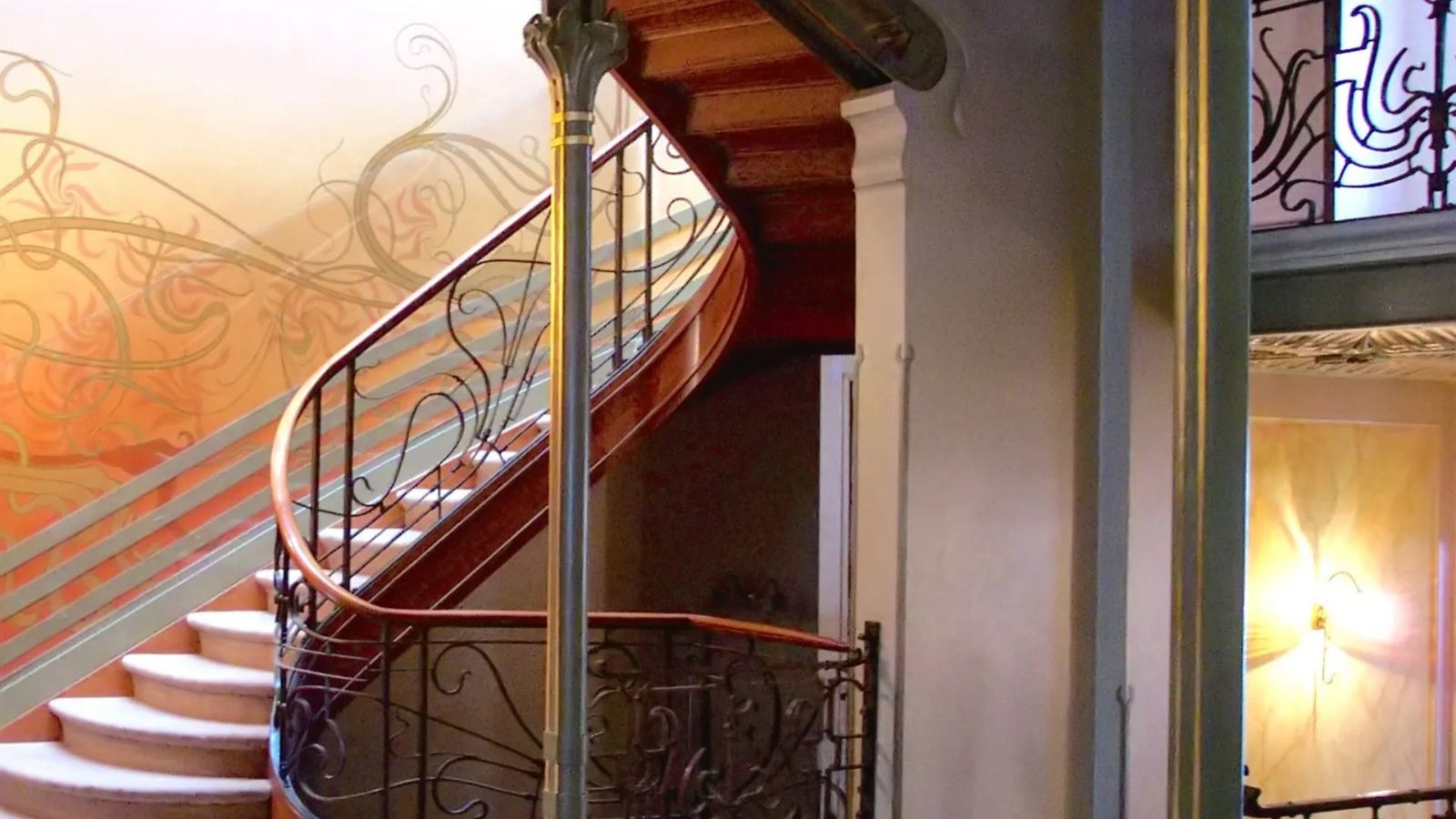
The First: Built in 1893-1894, this was the first true art nouveau building.
Horta’s Innovation:
- Exposed iron structure (shocking at the time)
- Whiplash curves throughout
- Every detail custom-designed
- Light floods through new skylights
Why It Matters: This single building launched an entire movement. Horta proved that industrial materials could be beautiful.
The staircase spirals like a plant stem. Iron columns branch like trees. Pure poetry in metal and stone.
c. Secession Building: Vienna, Austria (Joseph Maria Olbrich)
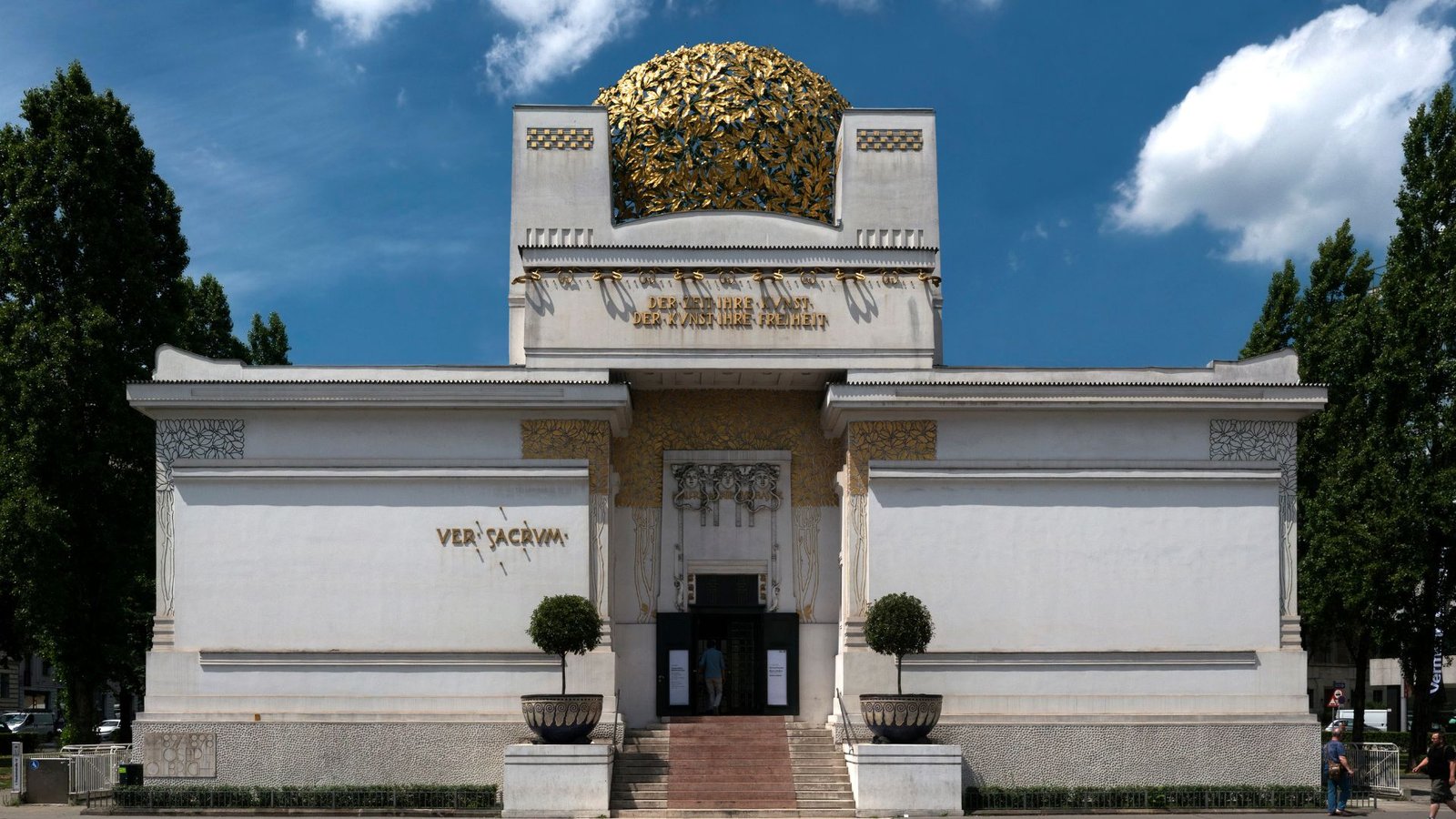
The Rebel: Completed in 1898 as headquarters for Vienna’s artistic rebels.
Statement Piece:
- Geometric art nouveau style
- Famous golden dome of laurel leaves
- Inscription: “To every age its art, to art its freedom”
- Stark white walls with minimal decoration
The Twist: This represents art nouveau’s geometric branch. Clean lines meet organic details.
The building shocked conservative Vienna. Today it’s a beloved landmark.
d. Museum of Applied Arts: Budapest, Hungary
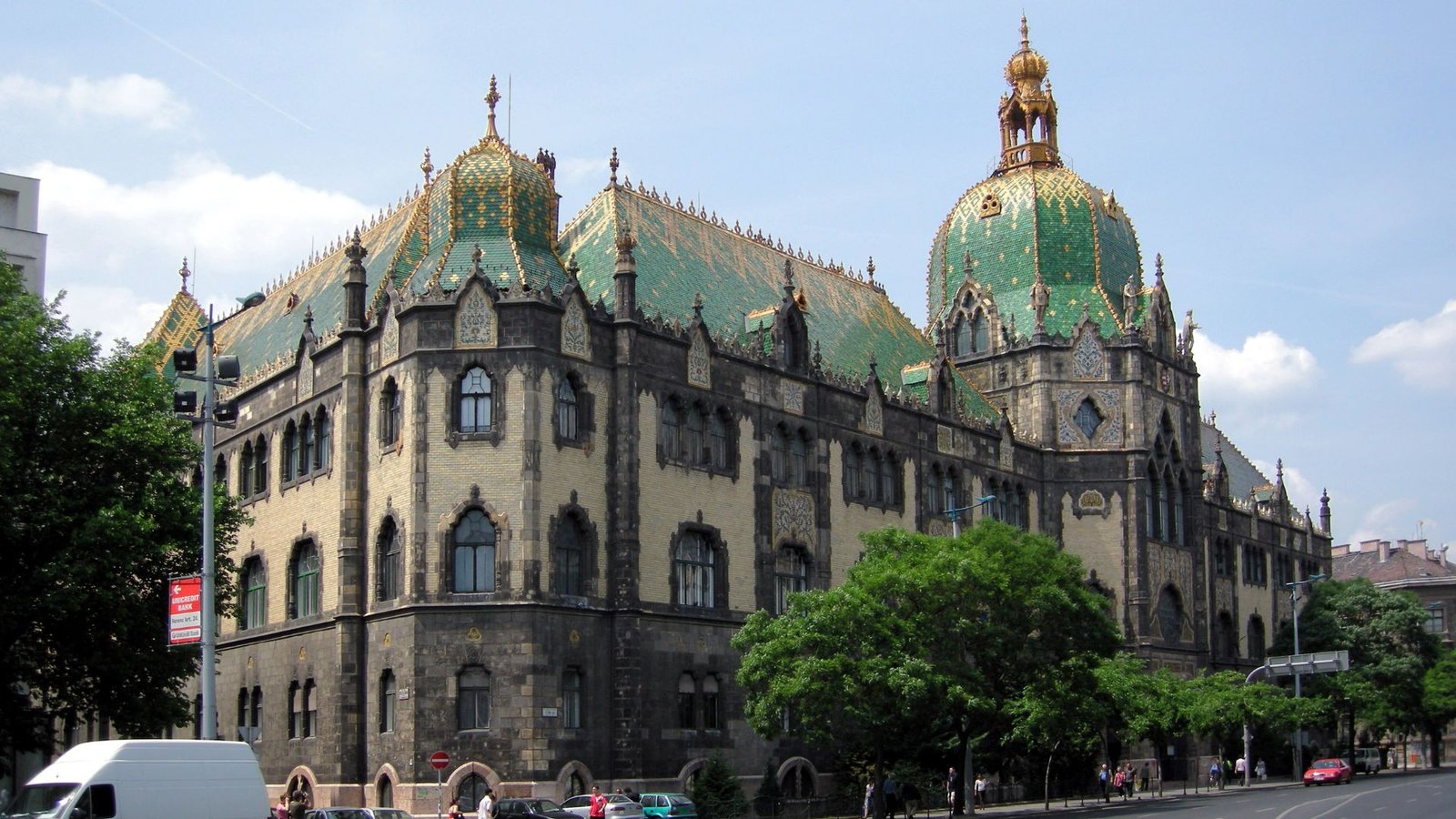
The Local Flavor: Opened in 1896, designed by Ödön Lechner and Gyula Pártos.
Hungarian Touch:
- Colorful Zsolnay ceramic tiles
- Folk art patterns mixed with art nouveau
- Green and gold roof that shimmers
- Traditional Hungarian motifs in modern style
Cultural Bridge: This building connects art nouveau with Hungarian national identity.
The roof looks like flowing fabric. Every tile tells a story of Hungarian craftsmanship.
e. Majolikahaus: Vienna, Austria

The Colorful One: Built in 1898-1899 by Otto Wagner.
Eye-Catching Features:
- Bright pink majolica tiles
- Floral patterns across entire facade
- Geometric precision meets organic beauty
- Practical apartment building with artistic soul
Wagner’s Philosophy: Even ordinary housing deserves extraordinary beauty.
The building proves that art nouveau could work for everyday living, not just monuments.
Art Nouveau vs. Art Deco: A Stylish Showdown
People often confuse these two styles. Here’s how to tell them apart:
| Feature | Art Nouveau (1890-1910) | Art Deco (1920-1940) |
| Inspiration | Nature and organic forms | Industry and geometric patterns |
| Lines | Flowing and curved | Sharp and angular |
| Decoration | Handcrafted details | Machine-made precision |
| Colors | Earth tones and pastels | Bold contrasts, gold accents |
| Mood | Dreamy and romantic | Glamorous and modern |
| Materials | Natural stone, wrought iron | Steel, chrome, glass |
| Patterns | Flowers, vines, insects | Zigzags, sunbursts, chevrons |
Quick Test: If it curves like a flower, it’s art nouveau. If it’s sharp like a skyscraper, it’s art deco.
The Legacy: How Art Nouveau Shaped Modern Architecture
Art Nouveau died young but left a powerful legacy.
The movement directly influenced many famous architects. Frank Lloyd Wright borrowed organic principles for his prairie houses. Modernist architects kept the idea of integrating all arts into one design. Contemporary architects still use flowing forms in their buildings.
Art nouveau taught us lasting lessons about design. Buildings can be art, not just shelter. Nature provides the best design inspiration. Every detail matters in creating harmony. New materials open new possibilities.
Today’s parametric architecture echoes art nouveau’s organic forms. Computer-aided design lets architects create the flowing shapes that art nouveau pioneers could only dream of.
You can see this influence in modern buildings. Zaha Hadid’s flowing structures remind us of Gaudí’s curves. Santiago Calatrava’s organic buildings echo Horta’s natural forms. The biomimetic architecture movement directly follows art nouveau principles.
The spirit lives on in sustainable design that works with nature instead of against it. Green buildings often use curved forms and natural materials. They integrate art and function just like art nouveau did over a century ago.
Hidden Gems: Lesser-Known Art Nouveau Cities and Buildings

Barcelona and Brussels get all the attention. But art nouveau treasures hide everywhere.
Nancy, France
The French Center: École de Nancy created French art nouveau.
Must-See:
- Villa Majorelle by Henri Sauvage
- Brasserie Excelsior with stunning interior
- Musée de l’École de Nancy
Riga, Latvia
The Surprise: Over 300 art nouveau buildings pack this Baltic city.
Highlights:
- Alberta Street’s building parade
- Mikhail Eisenstein’s theatrical facades
- UNESCO World Heritage recognition
Glasgow, Scotland
Mackintosh Country: Charles Rennie Mackintosh created Scottish art nouveau.
Key Buildings:
- Glasgow School of Art (partially restored after fires)
- Willow Tea Rooms
- House for an Art Lover
Helsinki, Finland
National Romantic: Finnish architects mixed art nouveau with local traditions.
Gems:
- Helsinki Central Railway Station
- National Museum of Finland
- Hvitträsk studio homes
Darmstadt, Germany
Artists’ Colony: The Mathildenhöhe artists’ colony showcased German Jugendstil.
Features:
- Wedding Tower by Joseph Maria Olbrich
- Artists’ houses with workshops
- Exhibition halls for new design
Visiting Tips: How to Explore Art Nouveau Architecture Today
Ready to see these masterpieces yourself? I’ve got you covered.
Best Cities for Art Nouveau Tours
Barcelona offers the famous Gaudí trail plus many other gems. Brussels has the Horta Museum and buildings scattered throughout the city. Vienna showcases the Secession building and Wagner’s designs. Prague features the Municipal House and beautiful Art Nouveau cafes. Riga contains the most concentrated historic district with over 300 buildings.
Planning Your Visit
Check opening hours before you go. Many buildings are private residences with limited access. Book tours in advance for popular sites like Casa Batlló. Download architectural walking tour apps for self-guided exploration.
Pack good walking shoes for cobblestone streets. Bring a camera with zoom lens for detailed shots. Carry a small notebook for sketches and notes. Get a guidebook with specific building details and histories.
Visit early morning for fewer crowds and better photos. Late afternoon golden hour light enhances architectural details beautifully. Weekdays offer quieter streets for peaceful photography sessions.
Helpful Tips
- Look up constantly. The most beautiful details hide on upper floors and rooflines. Many people miss the intricate carvings and decorative elements above eye level.
- Go inside whenever possible. Many buildings have stunning interiors accessible through cafes, hotels, and museums. The interiors often showcase the complete artistic vision.
- Take your time at each building. Art nouveau rewards slow observation. Each viewing reveals new details you missed before.
- Join local walking tours when available. Expert guides share stories and historical context you won’t find in books. They know the best viewing angles and hidden details.
- Visit dedicated art nouveau museums. Many cities have museums with original furniture, decorative objects, and artifacts from the period.
Photography Tips
- Take wide shots to capture the overall building composition. Get detail shots to showcase intricate craftsmanship and decorative elements.
- Try different angles to reveal hidden patterns and design elements. Use various lighting throughout the day as it changes the building’s mood completely.
Supporting Preservation
- Visit these buildings respectfully. Don’t touch decorative elements as oils from hands can damage delicate surfaces.
- Support museums by buying tickets and memberships when possible. Share your photos and experiences to spread awareness about these architectural treasures.
- Consider donating to preservation groups that maintain these historic buildings.
Conclusion
Art nouveau architecture remains one of history’s most beautiful movements. You now understand its flowing curves and nature-inspired details. You know the difference between art nouveau and art deco.
These buildings tell stories. They show us how architects rebelled against cold industrial design. They prove that everyday structures can be pure art.
From Gaudí’s dragon-scaled Casa Batlló to Horta’s groundbreaking Hotel Tassel, each building deserves your attention. The hidden gems in Riga and Nancy wait for curious travelers like you.
Start your journey today. Pick one city from this guide. Book your trip. Experience these architectural wonders firsthand.
You’ll never look at buildings the same way again. Art nouveau will open your eyes to beauty hiding in plain sight.
The curves are calling. Answer them.
Frequently Asked Questions
What is the difference between Art Nouveau and Victorian architecture?
Victorian architecture features heavy, ornate decorations with Gothic Revival elements and dark colors. Art nouveau uses flowing, organic lines inspired by nature with lighter, more integrated artistic elements throughout the entire structure.
How long did the Art Nouveau movement last?
The Art Nouveau movement peaked from 1890 to 1910, lasting roughly 20 years. It ended as World War I shifted focus toward more practical, less decorative architectural styles like modernism.
Can you visit the inside of famous Art Nouveau buildings?
Many Art Nouveau buildings offer interior tours, especially those converted to museums, hotels, or restaurants. Casa Batlló, Horta Museum, and various cafés in Prague provide excellent interior access for visitors.
Why did Art Nouveau architecture decline so quickly?
The style was expensive to create due to its handcrafted details and custom elements. World War I also changed priorities toward functionality and mass production rather than artistic decoration.
Which city has the most Art Nouveau buildings?
Riga, Latvia holds the record with over 300 Art Nouveau buildings in its historic center. Barcelona and Brussels are also major centers, but Riga has the highest concentration per square mile.
