


Your basement represents one of the most overlooked spaces in your home, yet it holds incredible potential for expansion and functionality.
The flooring you choose for this below-grade area can make or break the entire space, influencing everything from comfort levels to long-term maintenance costs.
Many homeowners focus heavily on upper-level renovations while treating basement floors as an afterthought. This approach often leads to problems down the road, moisture issues, cold surfaces, and flooring that simply can’t handle the challenges basements present.
The right flooring choice, however, changes a dark, unwelcoming area into a warm, inviting extension of your living space.
Understanding the Challenges of Basement Flooring
Moisture and Humidity Concerns
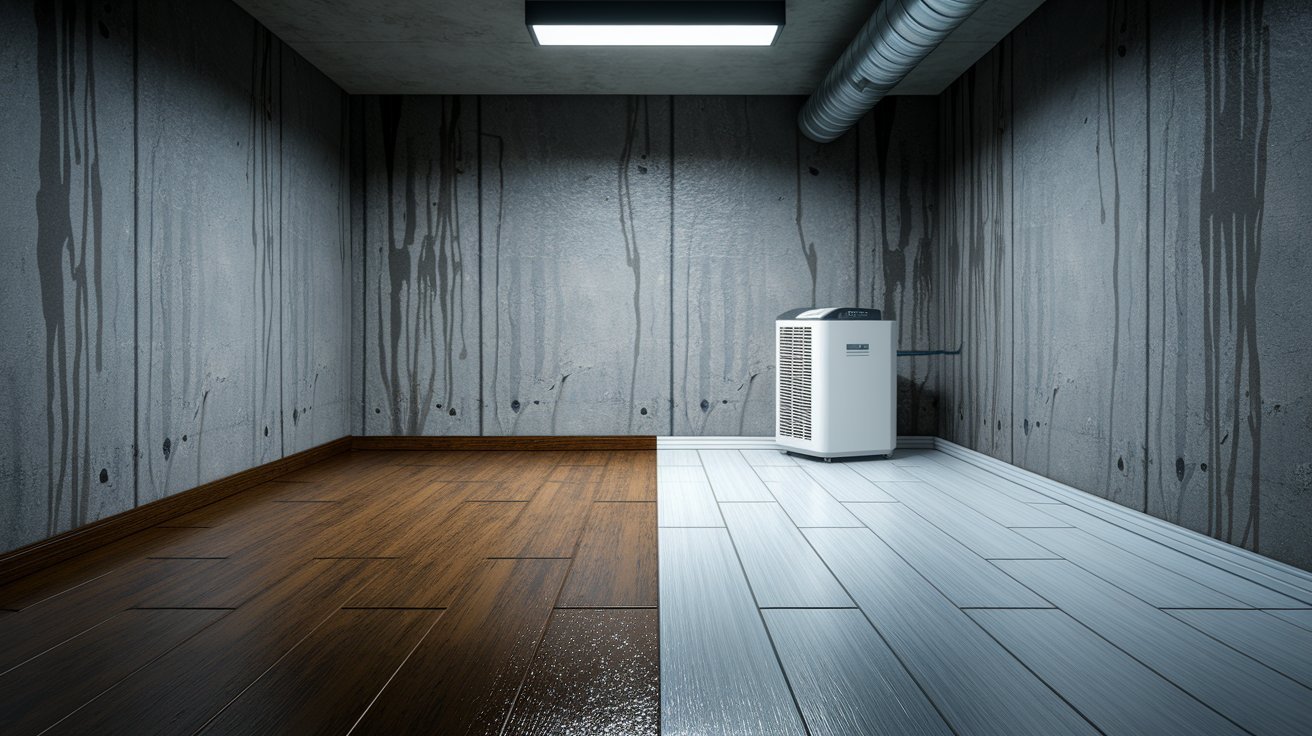
Basements face a constant battle against water intrusion that upper floors simply don’t experience. Being positioned below ground level means they’re surrounded by soil that naturally holds moisture, especially after rainfall or during seasonal changes.
Concrete foundation walls can develop small cracks over time, allowing groundwater to seep through. Even without visible leaks, concrete acts like a sponge, slowly absorbing moisture from the surrounding earth and releasing it into your basement air.
This creates a humid environment that standard flooring materials often can’t handle. Traditional hardwood warps and buckles, while certain carpets develop mold and mildew that creates health hazards for your family.
Choosing water-resistant or completely waterproof materials becomes essential, not optional. These specialized materials maintain their integrity even when exposed to occasional moisture, protecting your investment and ensuring a healthy indoor environment.
Temperature Fluctuations and Structural Concerns
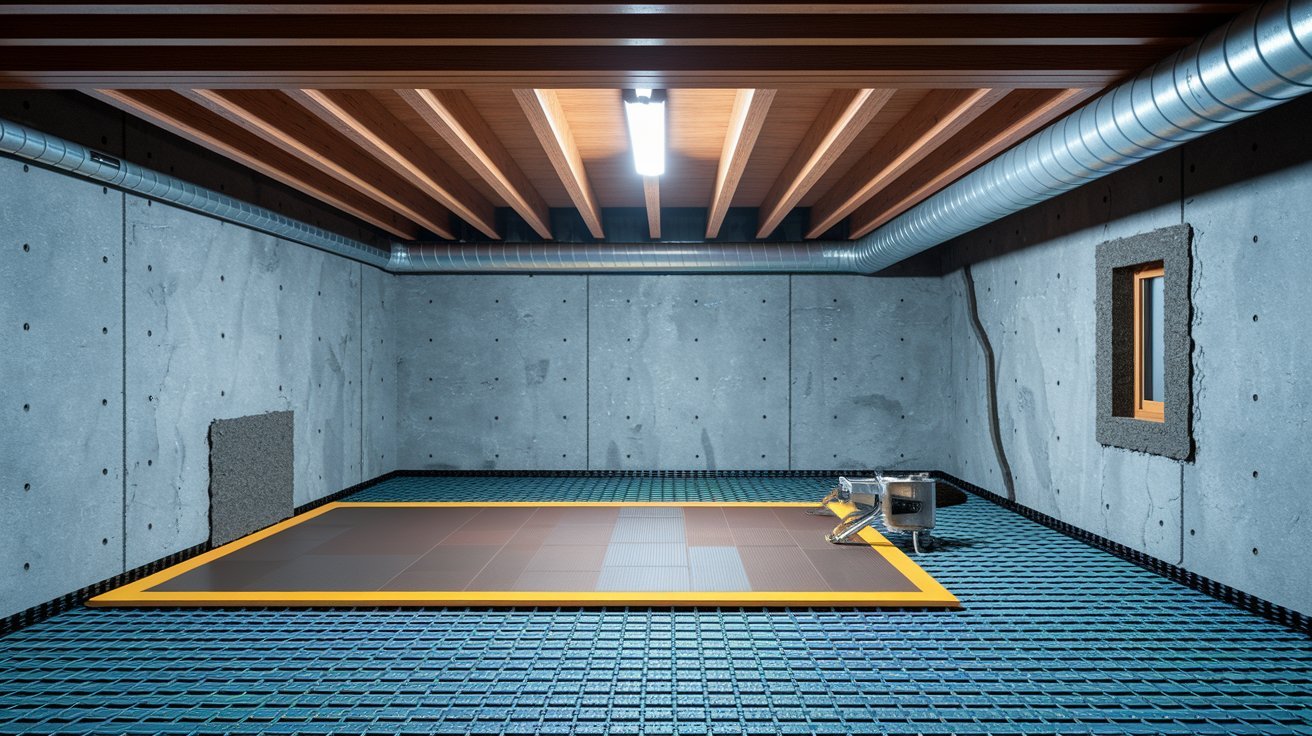
Basement temperatures shift more dramatically than other areas of your home, creating stress on flooring materials that weren’t designed for such conditions.
During summer months, cool basement air meets warm, humid air from upstairs, causing condensation issues. Winter brings a different challenge, with heating systems creating temperature fluctuations that cause materials to expand and contract repeatedly.
This constant movement demands careful consideration of installation methods and material selection. Subfloors become crucial for creating a stable, insulated barrier between your finished floor and the concrete slab below.
They provide thermal breaks that reduce temperature transfer while creating space for proper ventilation. Vapor barriers work hand-in-hand with subfloors, preventing ground moisture from reaching your flooring materials and causing damage over time.
Durability and Use Case Scenarios
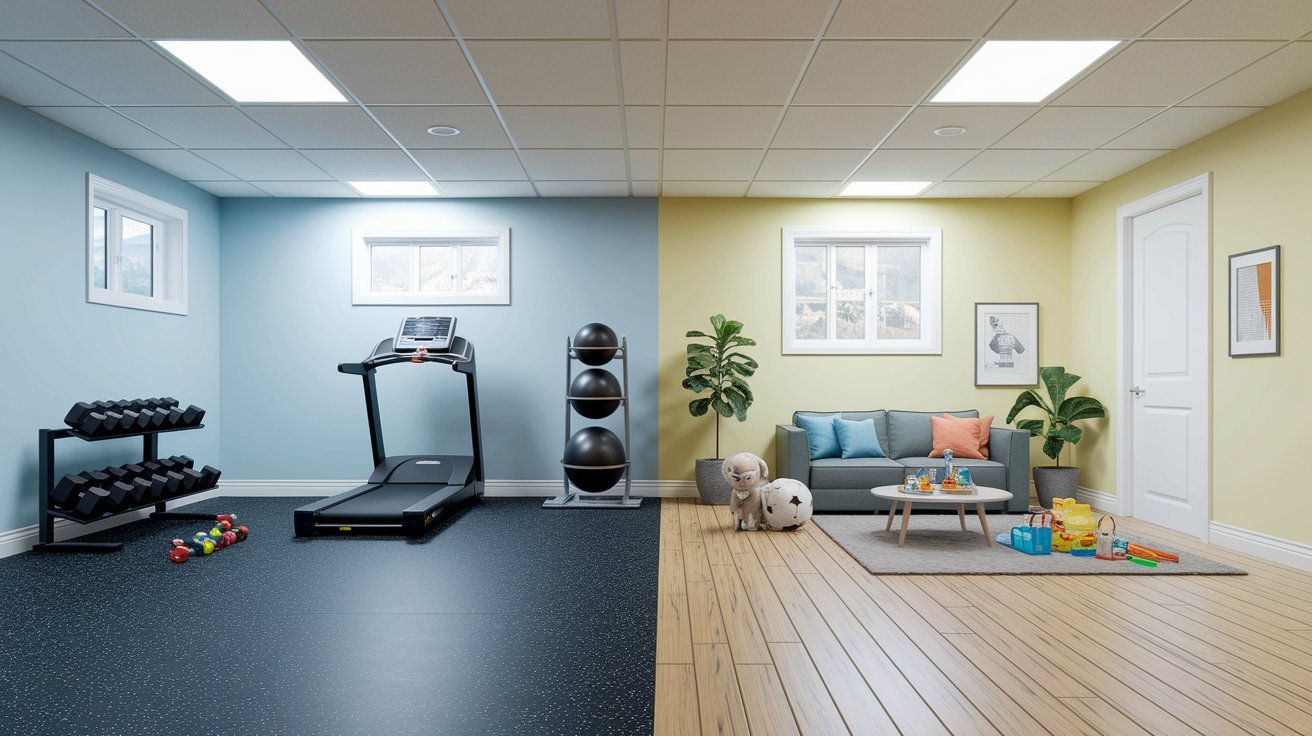
The way you plan to use your basement directly impacts which flooring materials will serve you best. A home gym requires surfaces that can handle dropped weights and exercise equipment, plus easy cleanup after workouts.
Rubber flooring or specialized athletic surfaces excel in these high-impact situations.
Family playrooms need comfortable surfaces where children can play safely, along with materials that resist spills and frequent cleaning.
Luxury vinyl planks or quality laminate options provide warmth underfoot while standing up to daily wear from active families.
Top Basement Flooring Ideas
1. Modern Appeal with Gray Tile Flooring
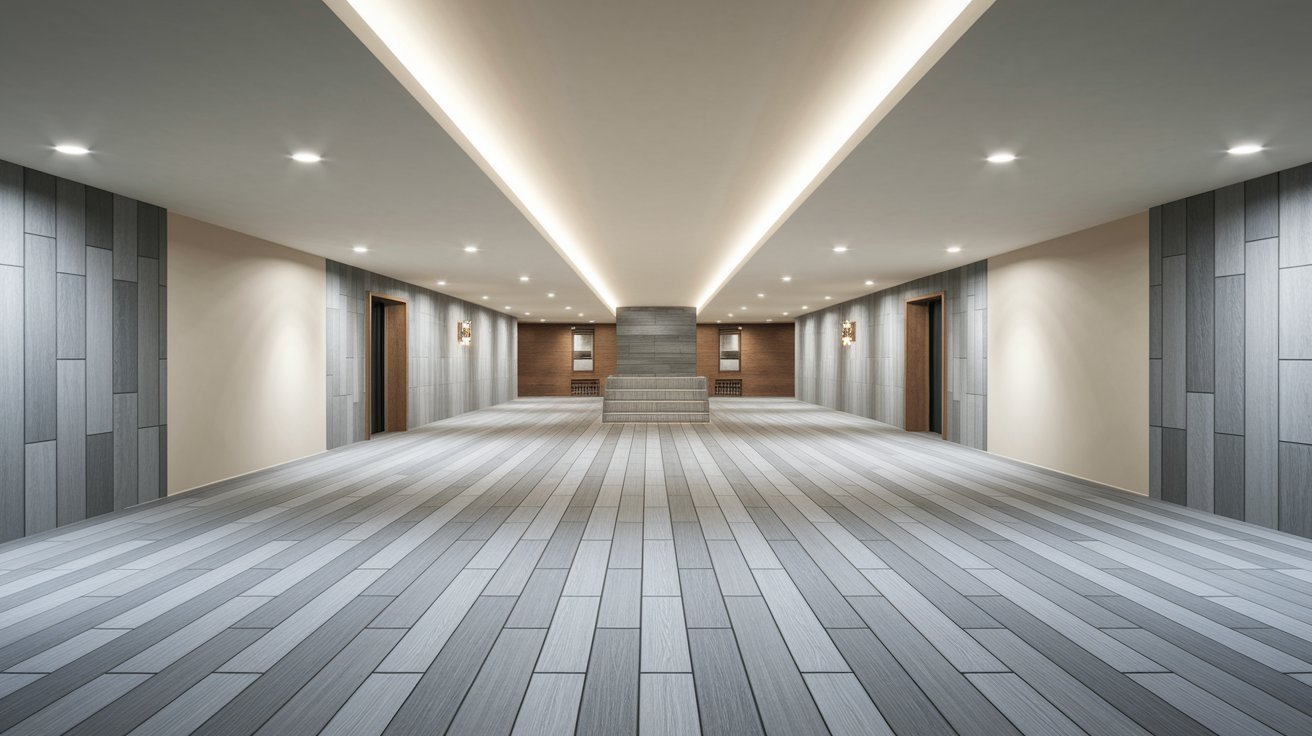
Wood-look tile in soft gray tones offers the perfect marriage of style and substance for basement spaces. These tiles capture the natural grain patterns and texture of real wood while providing the moisture resistance that basements demand.
Light gray shades help brighten naturally darker below-ground spaces, creating an open, airy feeling that makes the room feel larger.
The ceramic or porcelain construction means you can mop up spills without worry, while the wood appearance brings warmth that cold concrete simply can’t match.
2. Cozy Comfort with Plush Carpet
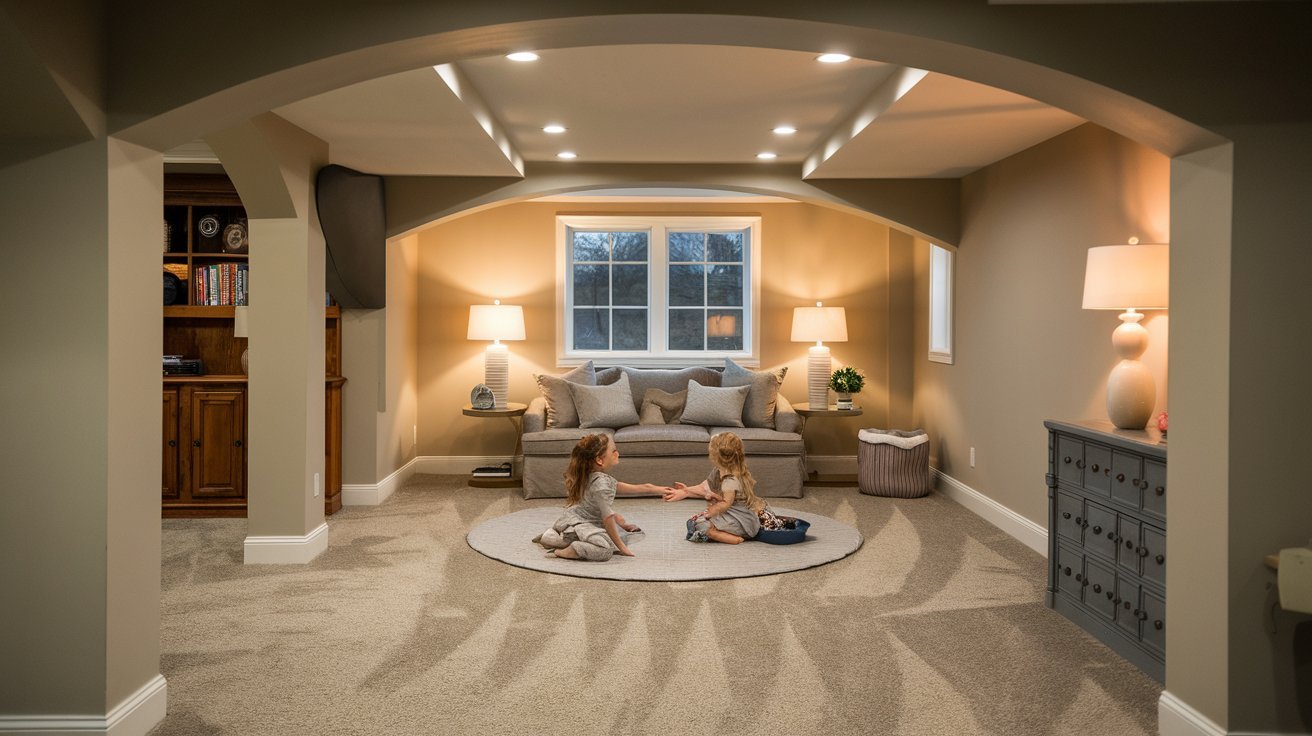
Nothing beats carpet when you want a space that invites bare feet and relaxation. High-quality carpet with moisture-resistant backing changes basements into genuine living spaces where families gather comfortably.
The soft surface makes floor time enjoyable for children’s play and provides cushioning that’s easier on joints during exercise routines.
Modern carpet options include built-in antimicrobial treatments that prevent mold and mildew growth, addressing the primary concern with below-grade carpet installation.
3. Industrial Simplicity with Painted Concrete
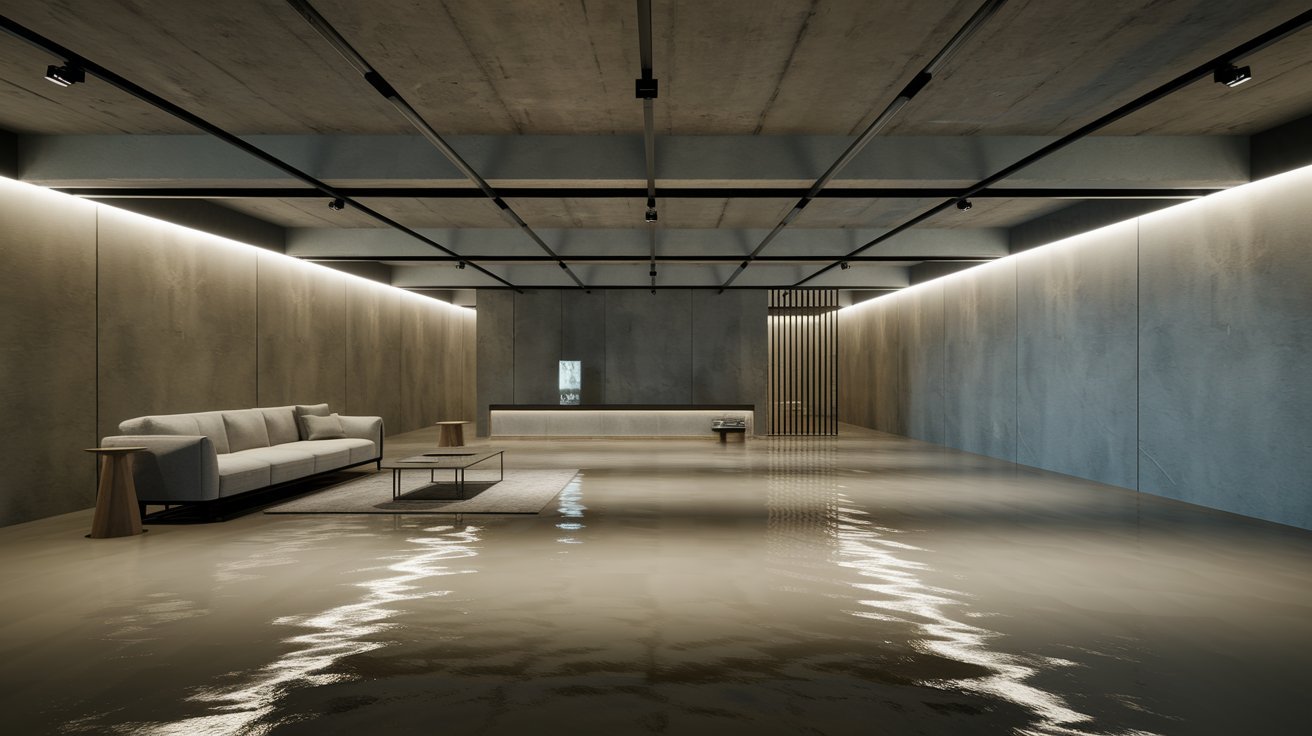
Sometimes the most straightforward approach creates the most striking results. Epoxy-coated or specially painted concrete floors offer durability that’s hard to beat while keeping renovation costs reasonable.
These seamless surfaces clean up easily with basic mopping and resist stains from spills or tracked-in dirt.
The smooth finish reflects available light, helping combat the naturally dim conditions many basements face, while the minimal maintenance requirements appeal to busy homeowners.
4. Luxurious Depth with Dark Marble Flooring
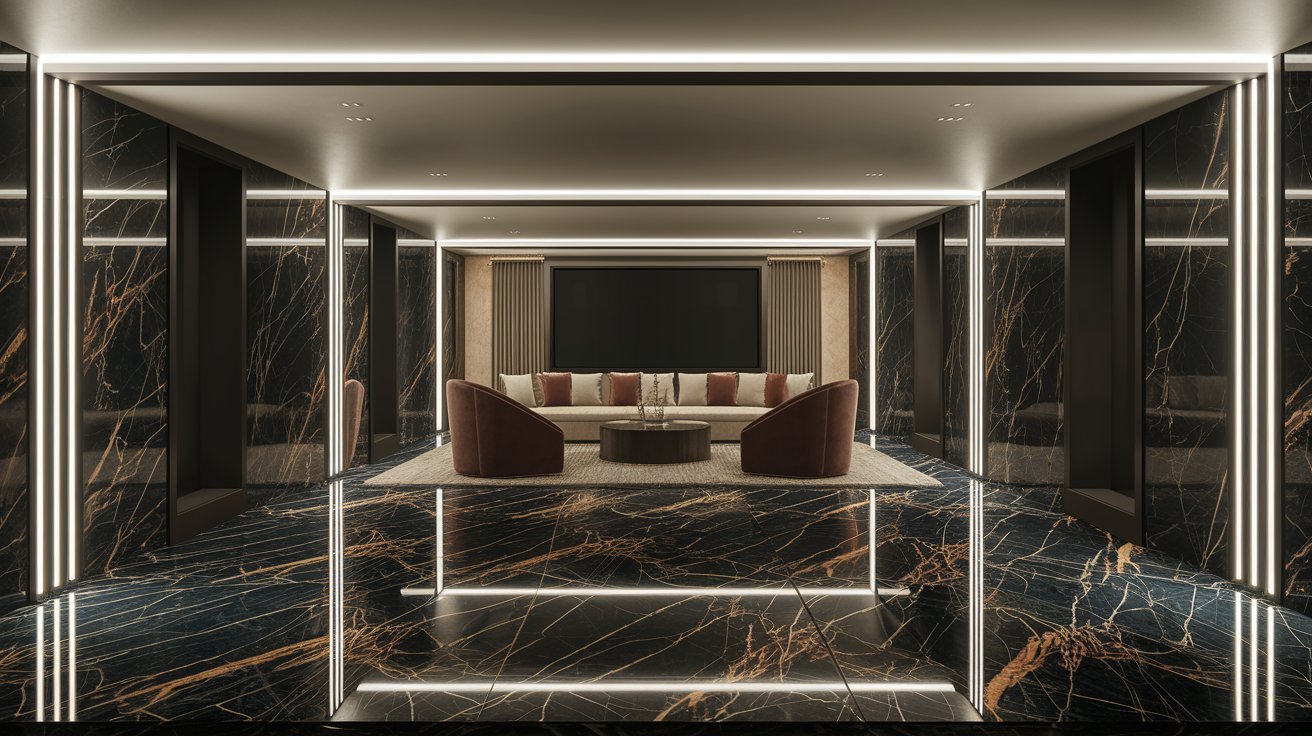
Rich, dark marble brings instant look to basement spaces, creating dramatic focal points that rival any upstairs room.
The deep colors hide minor dirt and scuff marks while the natural stone patterns provide visual interest that never grows old.
For budget-conscious renovations, porcelain tiles that mimic marble appearance deliver the same visual impact at a fraction of the cost, with superior moisture resistance that makes them ideal for basement conditions.
5. Classic Combo: Tile and Carpet Zones
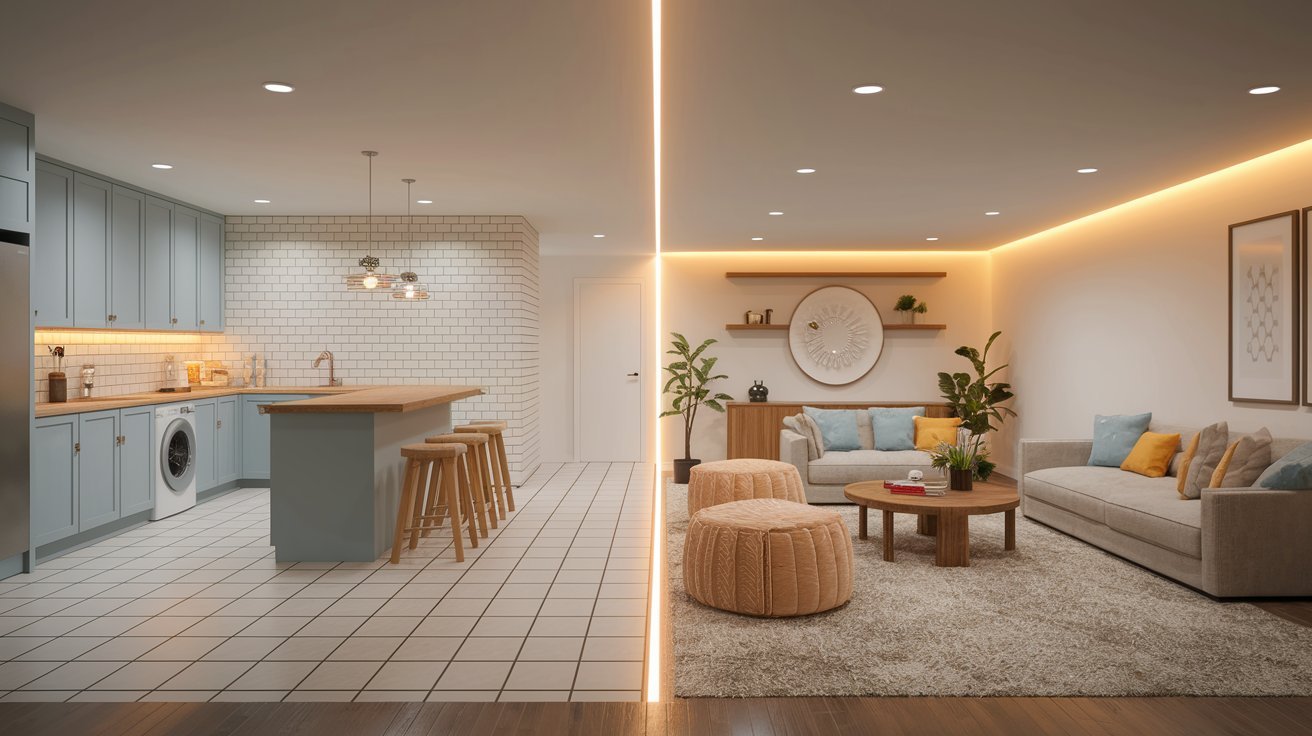
Strategic combinations of different flooring materials help define separate areas within open basement layouts.
Hard surfaces like tile work perfectly near utility areas, kitchenettes, or entryways where spills and moisture are more likely.
Transition to comfortable carpet in seating areas, game zones, or sleeping spaces where comfort takes priority. This approach maximizes the benefits of each material type while creating natural boundaries between different functional areas.
Basement Flooring Materials: Pros & Cons
Luxury Vinyl Flooring (LVF)
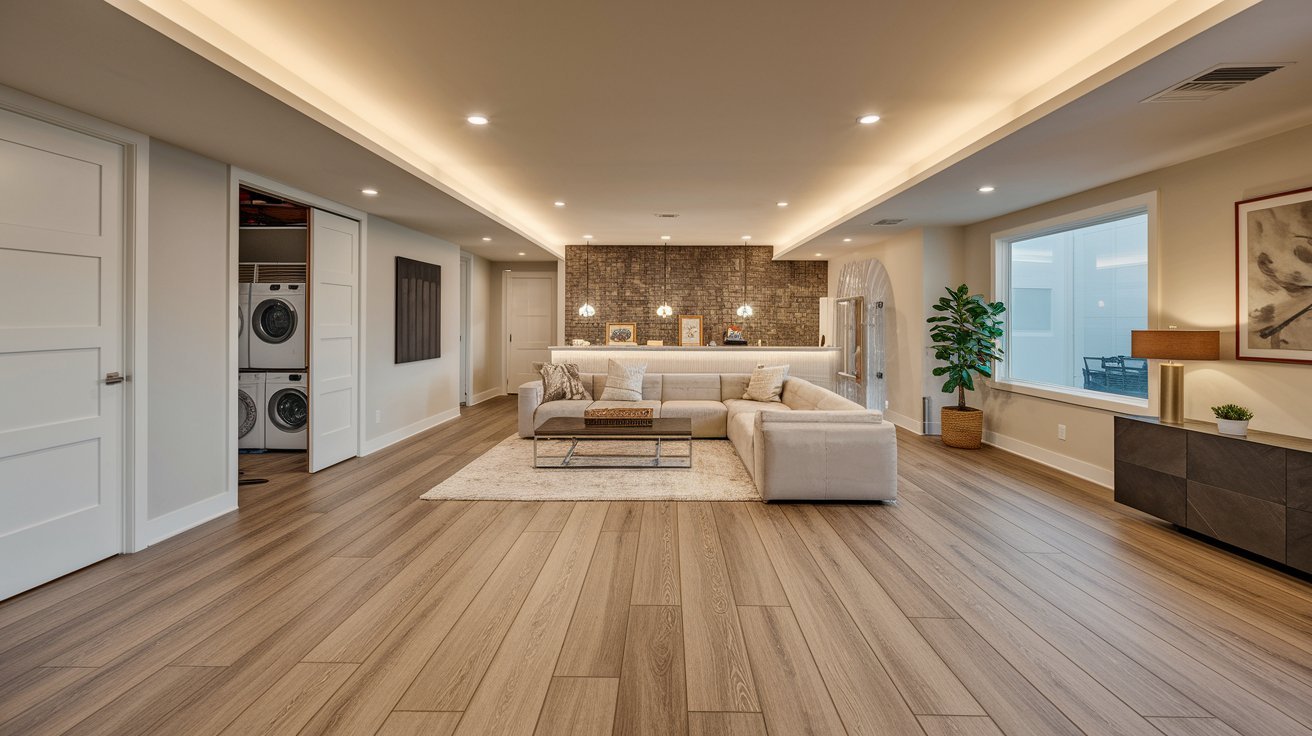
Luxury vinyl stands out as one of the most practical choices for basement renovations, offering complete waterproof protection that gives homeowners peace of mind.
Spills, humidity, and even minor flooding won’t damage these floors, making them ideal for spaces where moisture concerns run high.
Installation typically involves click-together planks that most DIY enthusiasts can handle, keeping project costs reasonable while achieving professional-looking results.
Engineered Hardwood
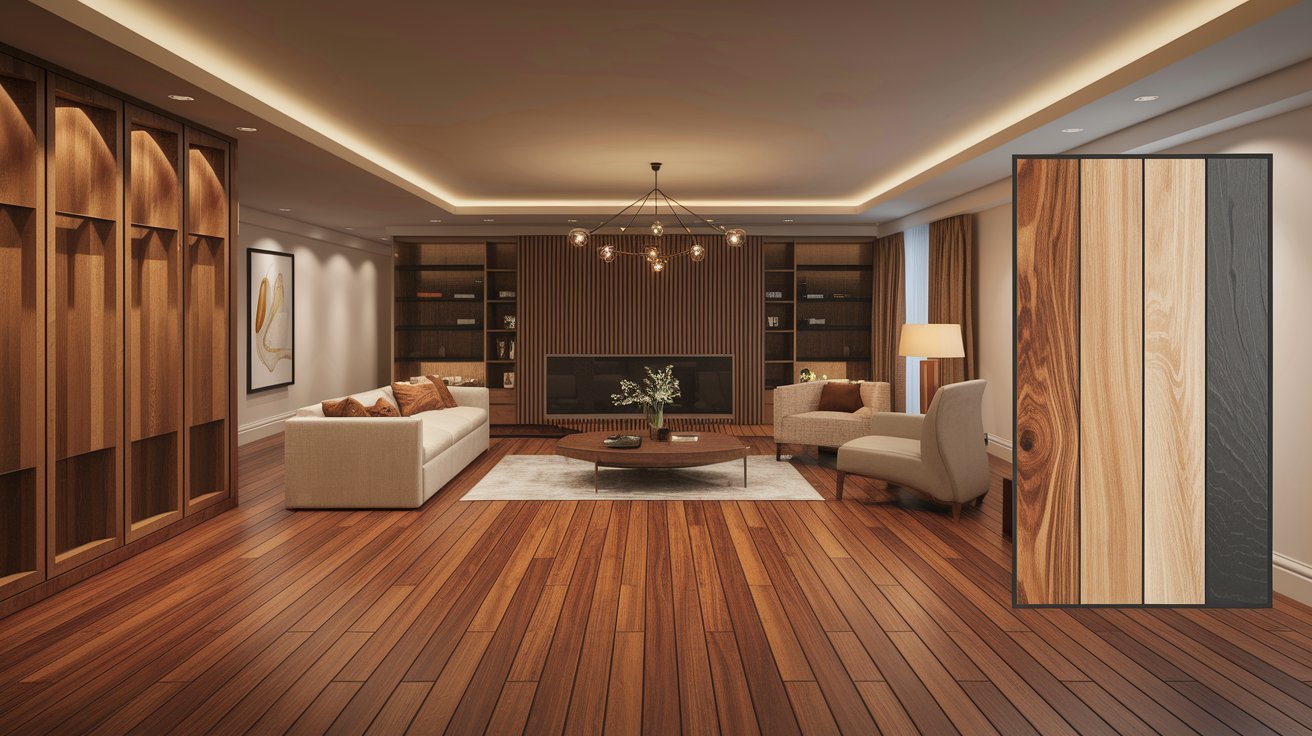
Engineered wood products handle basement humidity fluctuations far better than solid hardwood, thanks to their layered construction that resists expansion and contraction.
The real wood veneer on top provides authentic wood grain patterns and the warm feel homeowners love, while the stable core prevents the warping and buckling that plague solid wood in basement environments.
Ceramic or Porcelain Tile
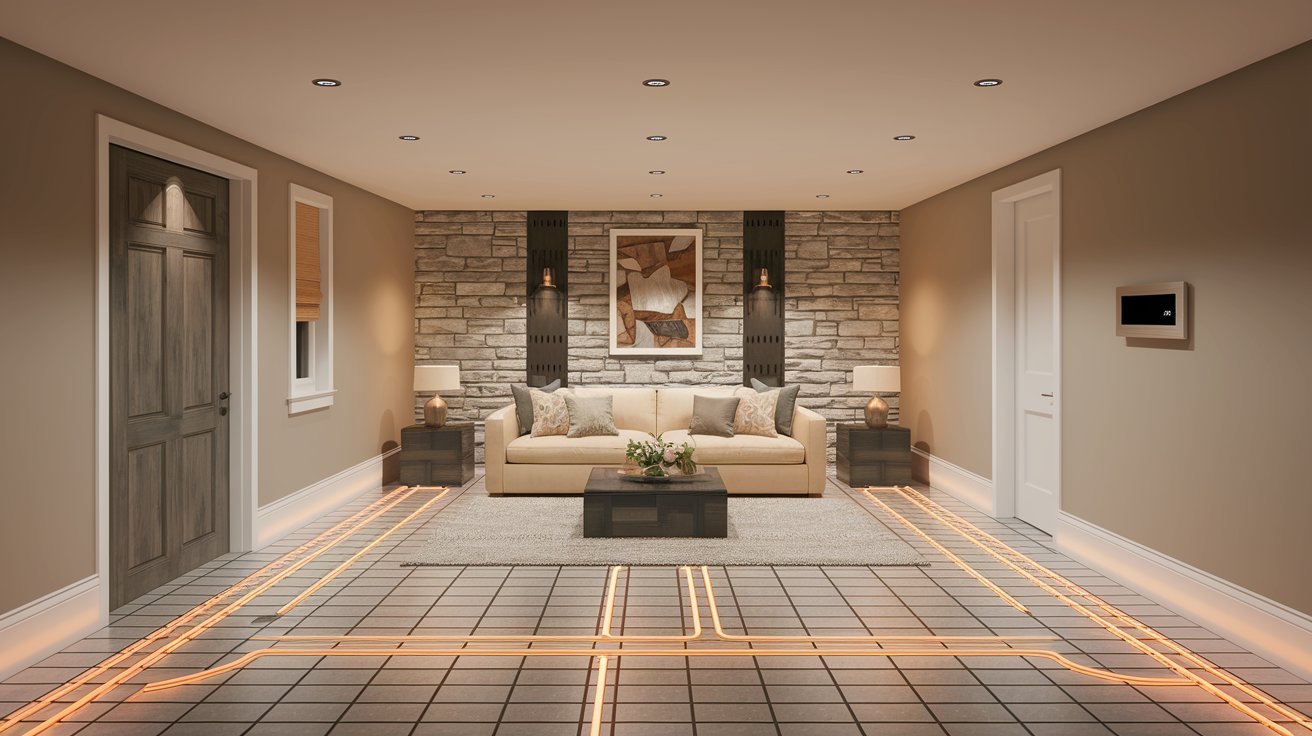
Tile flooring offers unmatched durability and waterproof performance that can last decades with minimal maintenance.
These materials work exceptionally well with radiant heating systems, creating warm, comfortable surfaces even in naturally cool basement environments.
The variety of sizes, colors, and patterns available means tile can achieve virtually any design goal, from rustic to ultra-modern.
Epoxy Flooring
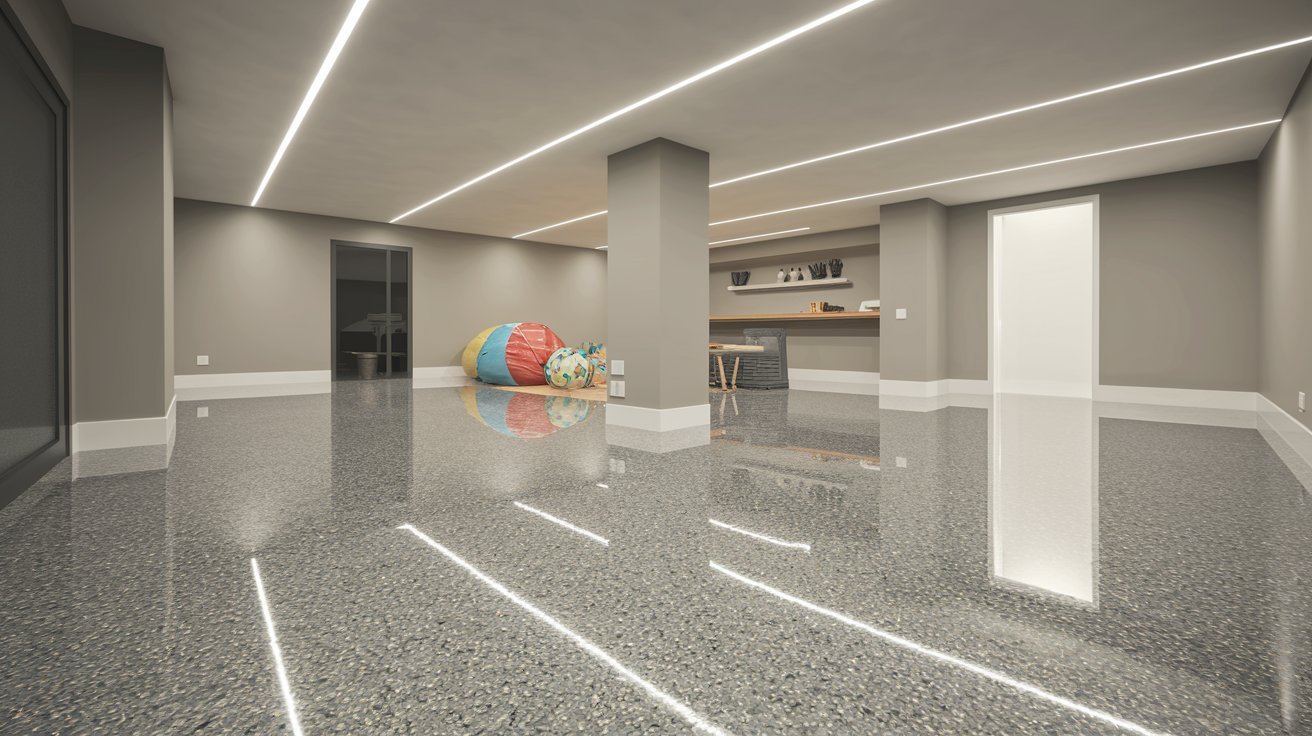
Epoxy creates seamless, highly durable surfaces that resist chemicals, water, and heavy wear with minimal maintenance requirements.
These floors clean easily with basic mopping and can handle everything from workshop activities to children’s play without showing damage.
Modern epoxy systems come in numerous colors and can incorporate decorative flakes or patterns for visual interest.
Carpet Tiles
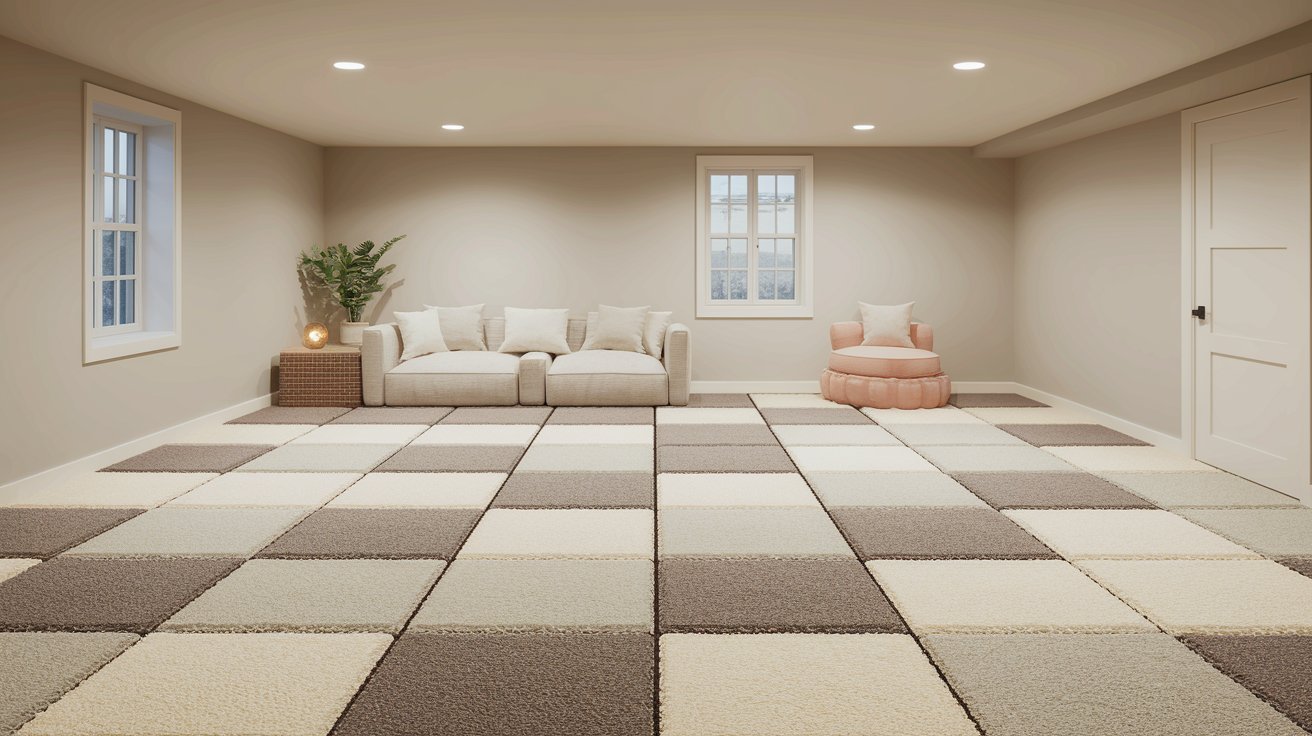
Modular carpet tiles combine the comfort of traditional carpet with practical benefits that make sense in basement applications.
Individual tiles can be replaced if damaged by moisture or stains, avoiding the need for complete carpet replacement.
The cushioned surface provides warmth and comfort that hard surfaces can’t match, making basement spaces more inviting for family activities.
How to Prepare Your Basement for Flooring
Step 1: Address Moisture Issues
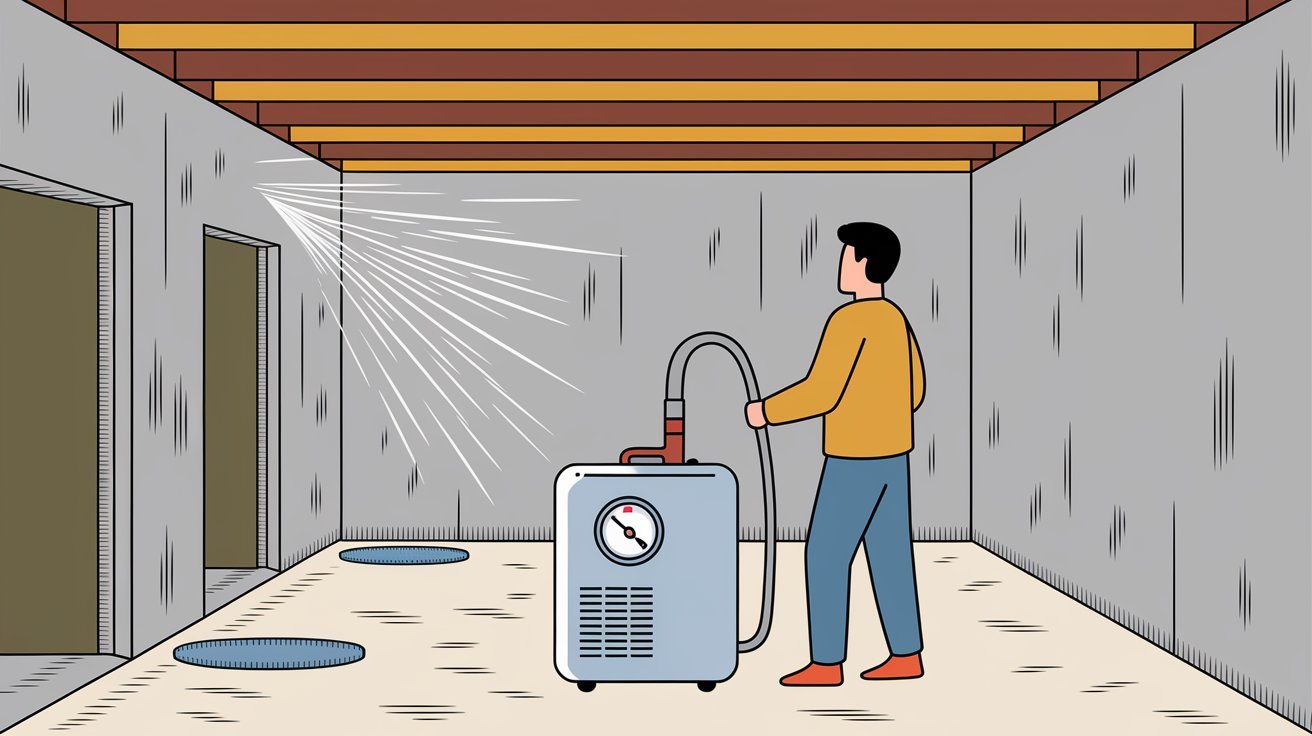
Before any flooring installation begins, you must tackle the moisture problems that plague most basement spaces. Start by running a dehumidifier for several weeks to establish baseline humidity levels – aim for 30-50% relative humidity for optimal conditions. Check your basement after heavy rains or during humid summer months to identify problem areas where water might be entering.
Sealing foundation walls and floors creates the first line of defense against moisture intrusion. Use quality concrete sealers on walls and floors, paying special attention to corners and joints where water most commonly finds its way inside. Small cracks in foundation walls should be filled with appropriate concrete crack fillers, while larger issues may require professional waterproofing services.
Step 2: Level the Subfloor
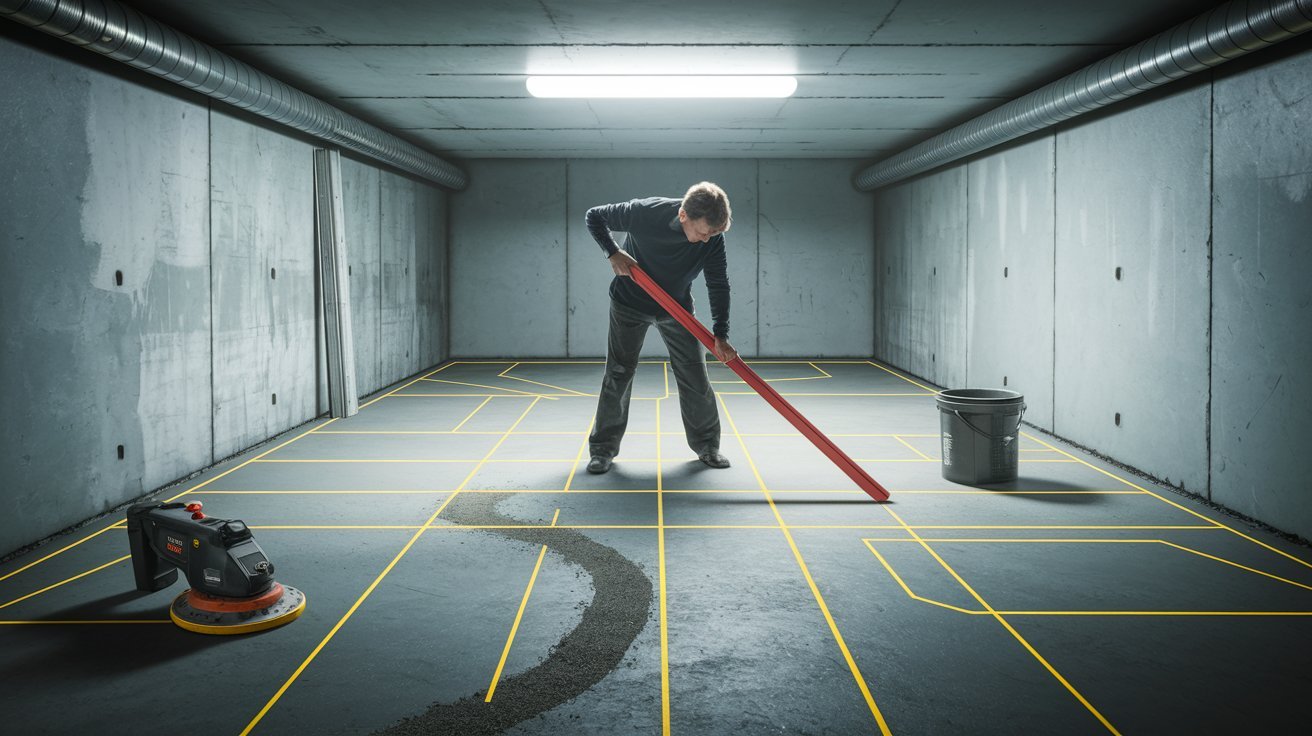
Concrete basement floors rarely offer the level surface that quality flooring installation requires. Use a long straight edge or laser level to identify high and low spots across the entire floor area. Mark these areas with chalk so you can address them systematically during the leveling process.
Low spots need filling with self-leveling compound, which flows to create smooth, even surfaces when properly mixed and applied. High spots may require grinding down with concrete grinders, though this creates significant dust and noise that requires proper protection and ventilation. For minor irregularities, some flooring types allow for adjustment through underlayment materials rather than concrete modification.
Step 3: Use a Vapor Barrier
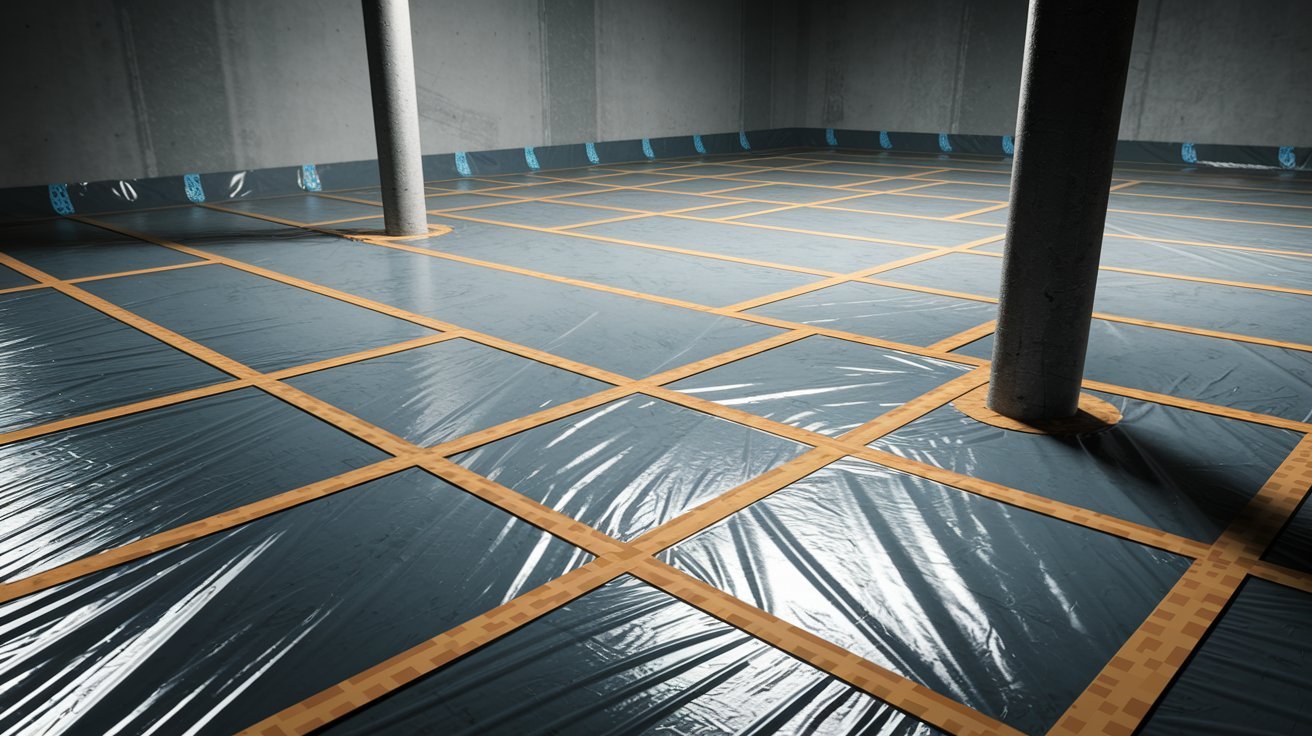
Vapor barriers create essential protection between your concrete subfloor and finished flooring materials, particularly important for moisture-sensitive options like carpet or hardwood products. Plastic sheeting rated for vapor barrier applications should cover the entire floor area with seams overlapped by at least six inches and sealed with appropriate tape.
The barrier installation requires careful attention to edges and penetrations where pipes or posts come through the floor. Use acoustic sealant or specialized tape to create watertight seals around these areas, preventing moisture from bypassing the barrier system. Pay particular attention to corners where walls meet floors, as these areas often experience the highest moisture levels.
Essential Tips for Basement Flooring Success
- Test moisture levels with a concrete moisture meter before selecting materials – readings above 4% indicate potential problems that need addressing first
- Install a sump pump if your basement experiences regular water intrusion, as even waterproof flooring can fail with standing water
- Choose flooring materials rated for below-grade installation, as standard products may not handle basement conditions properly
- Create expansion gaps around room perimeters when installing rigid flooring materials to accommodate temperature-related movement
- Use antimicrobial treatments on subfloors before installation to prevent mold growth in humid conditions
Conclusion
Your basement flooring choices span from practical luxury vinyl and durable tile options to comfortable carpet solutions and sleek epoxy finishes.
Each material brings distinct advantages, whether you prioritize moisture resistance, comfort, or visual appeal. The key lies in matching your selection to your basement’s specific conditions and intended use.
Don’t limit yourself to single-material installations. Creative combinations of tile and carpet, or concrete with marble accents, can define separate zones while maximizing each material’s strengths.
These mixed approaches often create more interesting, functional spaces than uniform flooring throughout.
For complex installations or moisture-related concerns, professional guidance ensures proper preparation and material selection.
Companies like Builders Interiors or My New Floors, Inc. bring expertise that can save costly mistakes while achieving the basement transformation you envision.
Frequently Asked Questions
What is the best flooring for basements with moisture issues?
Luxury vinyl planks and ceramic tile offer the strongest moisture resistance for problem basements. Both materials can handle humidity and minor water exposure without damage or warping.
Can I install hardwood flooring in my basement?
Engineered hardwood works better than solid wood in basements due to its layered construction that resists humidity changes. Proper vapor barriers and moisture control are still essential for successful installation.
How much does basement flooring typically cost?
Basic options like painted concrete or carpet tiles start around $2-4 per square foot installed. Premium materials like engineered wood or high-end tile can range from $8-15 per square foot including installation.
Do I need professional installation for basement flooring?
Simple click-together vinyl planks or carpet tiles work well for DIY installation with basic tools. Complex materials like tile, hardwood, or epoxy coatings typically require professional expertise for proper results.
How do I know if my basement is ready for flooring installation?
Test concrete moisture levels with a meter and ensure readings stay below 4% consistently. The space should also have proper ventilation, level subfloors, and resolved water intrusion problems before installation begins.
